
Here’s a puzzle straight from Reddit. A patient gets a hair transplant on the front of his scalp only, the crown is left completely untreated. Yet in the follow-up photos, the crown looks covered too. No grafts went there. So what grew the hair? The answer is the single most important thing to understand before you judge any transplant result.
The Reddit Case
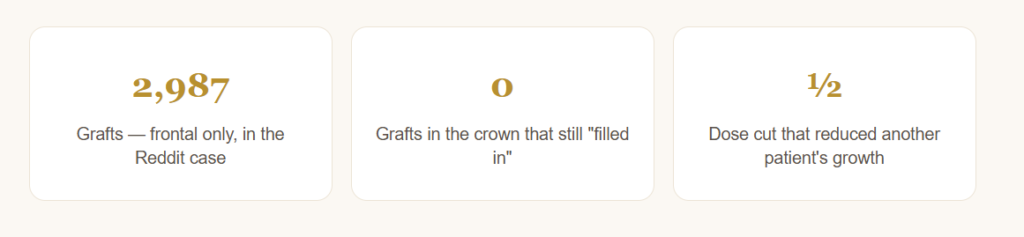
2,987 Grafts to the Front, but the Crown Filled In Too
The patient reports a transplant of 2,987 grafts placed in the frontal area. The crown received no grafts at all, yet appears noticeably covered in the after photos, an improvement the surgery alone cannot explain.
Regimen: 1 mg finasteride daily + 5% minoxidil
Dr. Shail’s read is clear: the crown didn’t fill in because of surgery, it filled in because of medication. Finasteride and minoxidil can revitalize miniaturized hair, the thin, weakened follicles that are still alive in an area that looks bald. Thicken those, and an untreated zone can look genuinely restored.
A Patient of My Own That Proves the Point
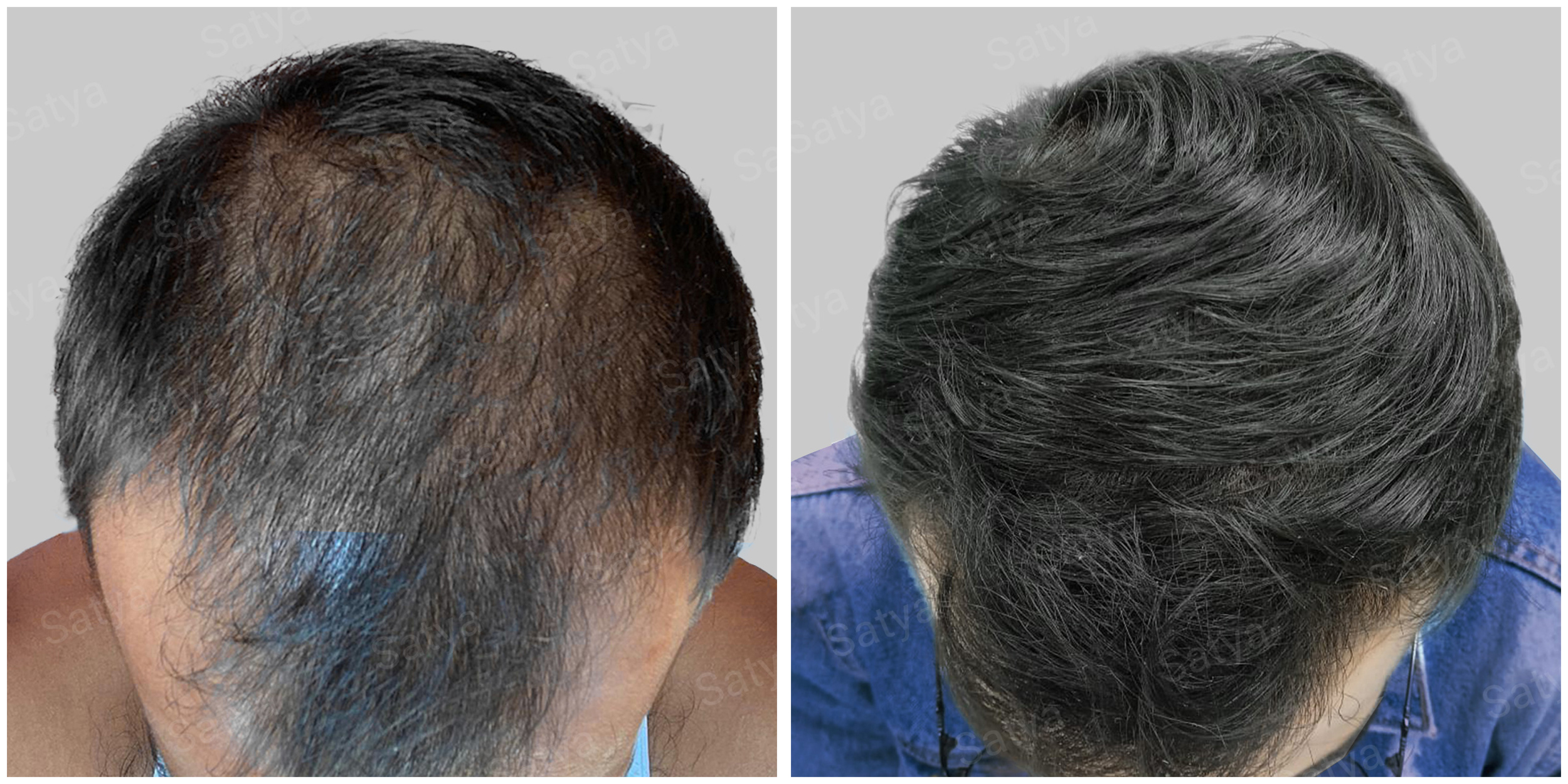
To show this isn’t a one-off, Dr. Shail contrasts the Reddit post with one of his own patients, a case with an even sharper contrast between what was operated on and what improved.
Satya Patient · Comparison
2,500 Grafts to the Front, Density Gains Everywhere Else
This patient received 2,500 grafts in the frontal region only. The temple, mid-scalp and crown received no grafts whatsoever. Yet after being prescribed low doses of finasteride and minoxidil, those untreated regions showed significant density improvements.
Low-dose finasteride + minoxidil
Two different patients, same lesson: medicine can produce visible density in areas the surgeon never touched. Which means when you look at a “great transplant,” you genuinely cannot assume the surgery did all, or even most, of the work.
“If untreated areas improved too, that’s not the surgeon’s scalpel talking. That’s the medicine.”
Dosage Isn’t a Detail, It’s the Whole Result
If medicine is doing this much of the lifting, then the dose matters enormously. Dr. Shail points to another telling example: a patient whose hair growth visibly decreased when their finasteride dose was halved because of side effects.
That’s the tell. If lowering the dose reduces the density, the density was leaning on the drug in the first place. It’s direct proof that a big part of the result was pharmacological, not permanent, and it sets up the warning every patient needs to hear.
The Warning: What Happens If You Stop
Here’s why all of this is more than a technical curiosity. If a result is being held up by medication and the patient stops taking it, that borrowed density doesn’t just plateau, it can disappear.
The 3–6 Month Reality
If the medicines stop, the hair the drugs improved, and potentially even some of the thickness of the transplanted hair, can shed within roughly 3 to 6 months, leaving empty spaces where density used to be.
Month 0: Medication stops
Month 3–6: Drug-dependent hair sheds
After: Empty spaces reappear
This is the danger of crediting surgical skill for a result that is quietly dependent on continuous medication. The patient believes their transplant is permanent and stops the drugs, and months later watches the very areas they were proud of thin out again.
The Honest Way to Read Any Result
None of this means medicine is bad or transplants don’t work. It means you have to separate the two to understand what you’re really looking at. A responsible plan is transparent about how much of your density is surgical and permanent versus pharmacological and ongoing, so you can make the decision to stay on medication (or not) with your eyes open.
Before You Trust a “Transplant” Result
Ask these before you’re impressed:
Did untreated areas (like the crown) improve too? If so, that’s medicine.
What dose of finasteride and minoxidil is the patient on?
How much of this density survives if the medication stops?
Is the plan honest about what’s permanent versus medication-dependent?
How Long Do the Results of Hair Transplant Surgery Last?
Quick Answer Hair transplant results are considered long-lasting because transplanted follicles are taken from a…
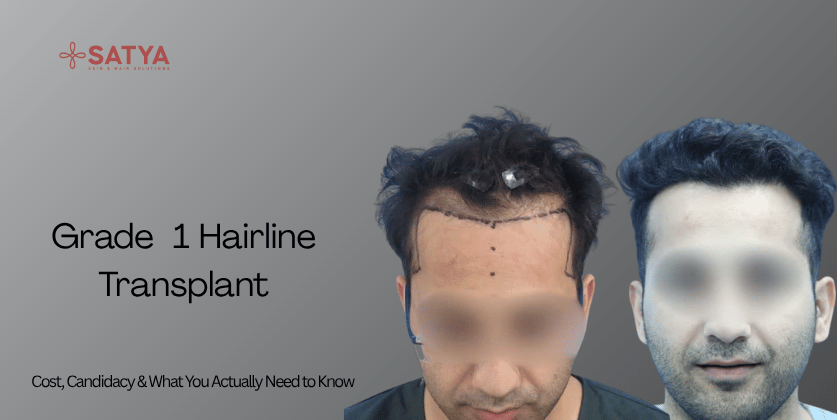
Grade 1 Hairline Transplant: Cost, Candidacy & What You Actually Need to Know (2026)
Before you read further: Clinically, “Grade 1” on the Norwood-Hamilton scale, the classification hair restoration…
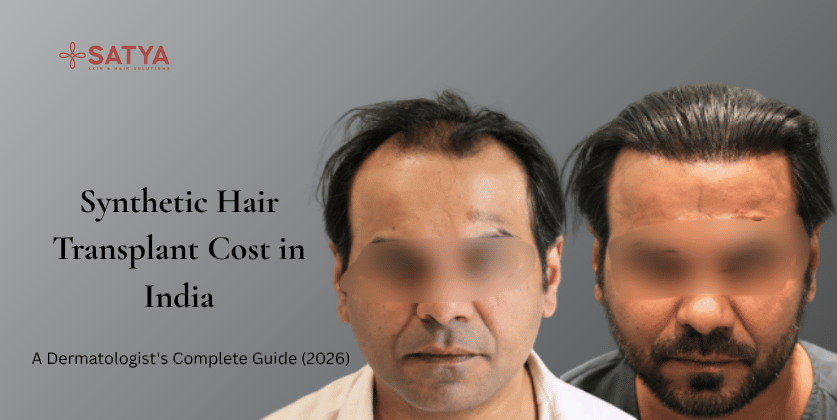
Synthetic Hair Transplant Cost in India: A Dermatologist’s Complete Guide (2026)
Before you read further: A synthetic hair transplant is not the same procedure as a…
Frequently Asked Questions
Because medication, not surgery, is doing the work there. Finasteride and minoxidil can revitalize miniaturized hairs, thin, weakened follicles still present in areas that look bald. When those thicken, an untreated region like the crown can appear restored despite receiving no grafts.
Yes. In one example, a patient’s growth decreased when their finasteride dose was halved due to side effects. If lowering the dose reduces density, it shows that density was dependent on the medication rather than being permanent.
Hair improved by the drugs, and potentially some thickness of the transplanted hair, can shed within about 3 to 6 months, leaving empty spaces. Many patients are blindsided because they assumed the whole result was permanent surgery.
A transparent consultation should tell you how much of your density comes from grafts versus medication. A useful clue in any before/after: if areas that were never operated on also improved, medication is a major contributor.