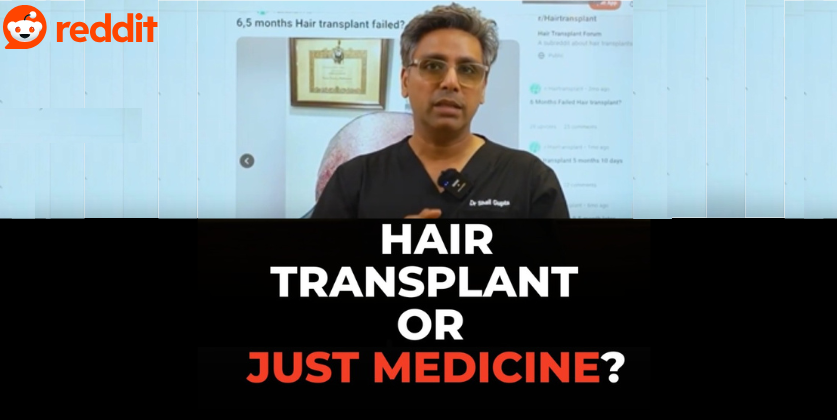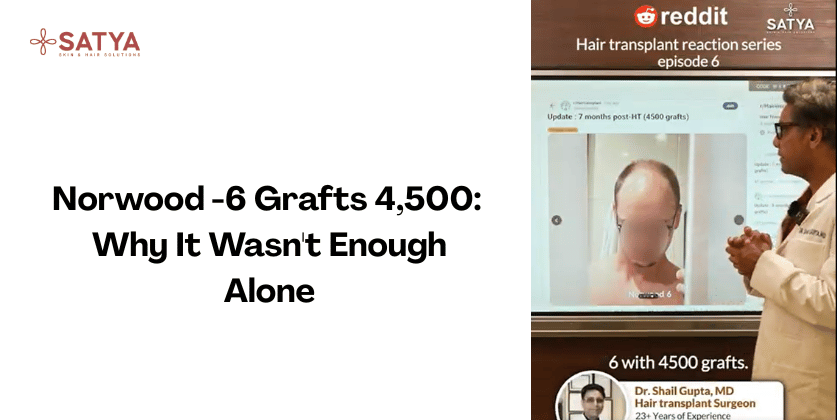
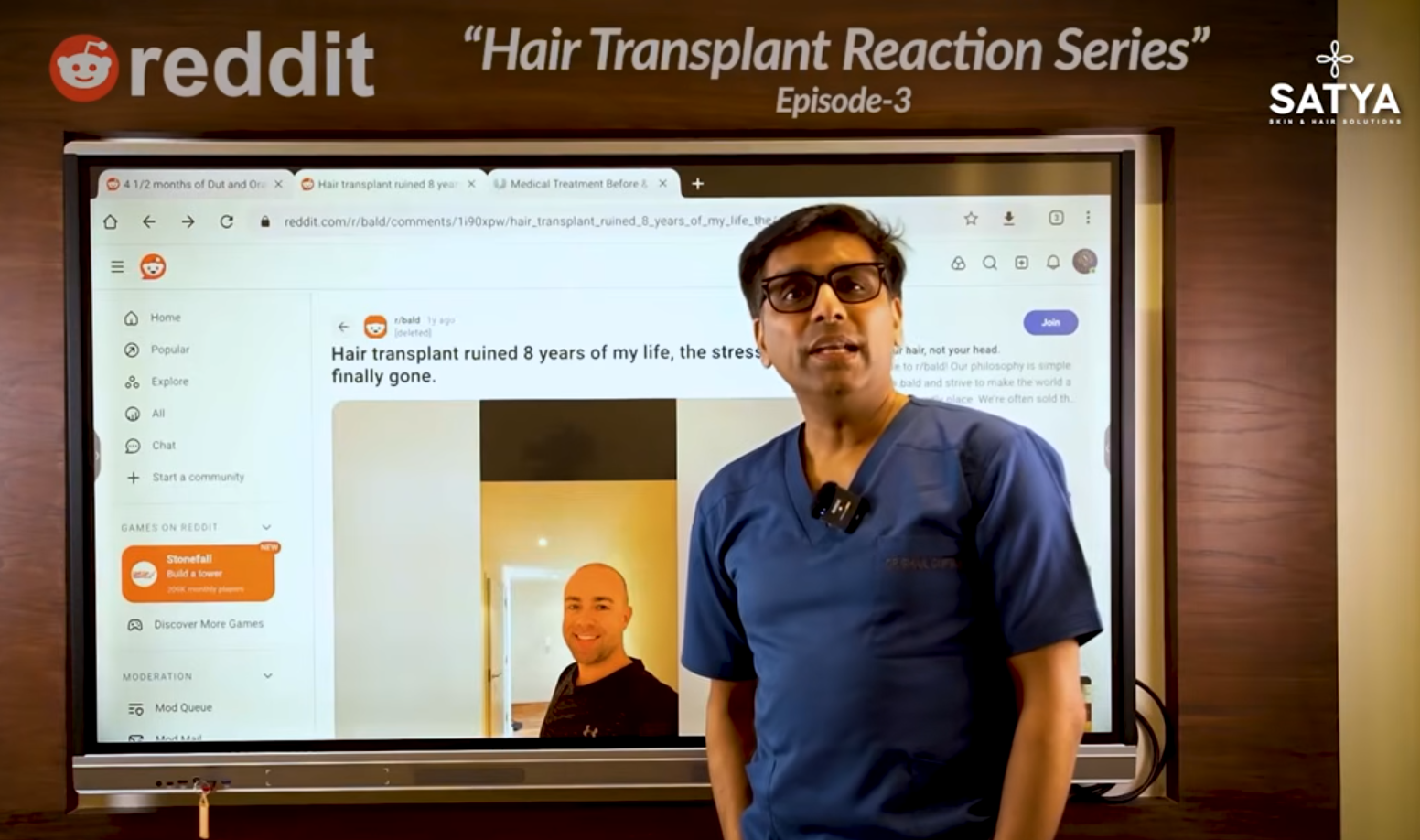
Most hair transplant stories end at the “after” photo. This one didn’t. A Reddit user described eight years of distress following his procedure, not a technical failure so much as a slow, grinding emotional ordeal. His post is a window into the part of hair restoration almost nobody talks about, and it forces a genuinely difficult question: Is Finasteride actually mandatory after a transplant, or not?
The Reddit Post
Eight Years of Distress After a Transplant
The user doesn’t describe a botched surgery, he describes years of anxiety about how his hair looks and whether it will hold. It’s a reminder that a transplant is a psychological journey as much as a surgical one.
The Emotional Cycle Nobody Warns You About
Dr. Shail highlights a pattern that plays out again and again: the emotional arc of a hair transplant rarely stays positive in a straight line. For many patients, it moves through distinct phases.
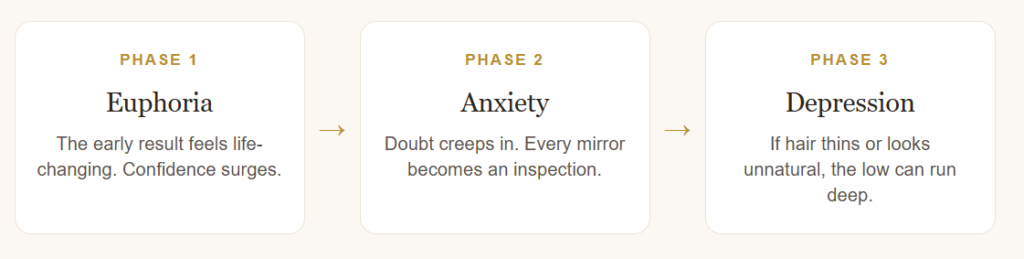
This cycle often has a specific trigger: the fear that the result will start to look unnatural as surrounding native hair thins. And that fear sits at the very center of the medication debate.
Why Some Insist Finasteride Is Mandatory
The argument for post-transplant Finasteride is straightforward and, on its face, compelling. Transplanted hair is generally permanent, but the native hair around it is not. If that native hair continues to recede while the transplanted hair stays put, a patient can be left with an unnatural, patchy look where only the grafts remain. Finasteride, by lowering DHT, is used to protect that native hair and keep the overall result cohesive
The case for
“You need it to protect native hair”
Transplanted hair stays; native hair can keep thinning.
Losing native hair can leave an unnatural, islands-of-hair look
Finasteride can also help maintain the thickness of transplanted hair, not just native hair.
The caution
“It isn’t right for everyone”
It doesn’t work for every patient.
It can cause side effects: sexual dysfunction, depression, brain fog.
Some report severe mood effects, including suicidal thoughts.
“Finasteride can genuinely protect a result, but it is not mandatory for every single patient. That distinction matters enormously.”
What Finasteride Actually Does, and Doesn’t
There’s a common belief that medicine only “supports” native hair. In reality, Finasteride can also help maintain the thickness of transplanted hair itself. So its role can be broader than many patients assume.
But, and this is the crux, that does not make it compulsory for everyone. Whether a patient truly needs it depends on their individual pattern of hair loss, not on a blanket rule applied to every case that walks through the door.
A Real Data Point: Six Years, No Medication
To show this isn’t just theory, Dr. Shail shares his own experience: a hair transplant six years ago, without Finasteride or Minoxidil, and results that have persisted. It’s a single case, not a promise, but it directly challenges the idea that medication is universally required for a transplant to last.
The deciding factor is usually the trajectory of your baldness. Medication tends to be most necessary for people with progressive hair loss, where native hair is actively and predictably receding. For someone whose loss has stabilized, the calculation can look very different.
The Middle Path: Individualized, Not Automatic
The honest answer to “is Finasteride mandatory?” is: it depends, and that’s exactly why it shouldn’t be prescribed on autopilot. For patients who do need DHT control but worry about side effects, safer alternative dosing approaches may exist, such as using the lowest effective dose or gentler delivery methods, always under a doctor’s supervision.
This mirrors Satya’s own medication philosophy: the lowest effective dose, full transparency about trade-offs, and a plan built around the individual rather than a one-size-fits-all script. Medicine should be a considered choice, not a reflex.
Dr. Shail leads Satya’s hair restoration practice with an education-first, individualized philosophy, treating medication as a considered decision, never an automatic one.
Frequently Asked Questions
Not for everyone. Finasteride can protect native hair and help maintain density, which matters greatly for patients with progressive hair loss. But whether it’s necessary depends on your individual pattern; it should be an individualized decision, not a blanket rule.
If your native hair is actively receding and left untreated, it can continue to thin while the transplanted hair stays. Over time, this can create an uneven or unnatural look. If your loss has stabilized, the risk is lower, which is why assessment matters.
It doesn’t affect everyone, but reported side effects include sexual dysfunction, mood changes such as depression, and “brain fog.” Some individuals report severe effects, including suicidal thoughts. These should be discussed openly with your doctor before and during treatment.
Possibly. For patients who need DHT control but are concerned about side effects, approaches like lower effective doses or alternative delivery methods may be options. Any such plan must be guided by a qualified doctor based on your specific situation.