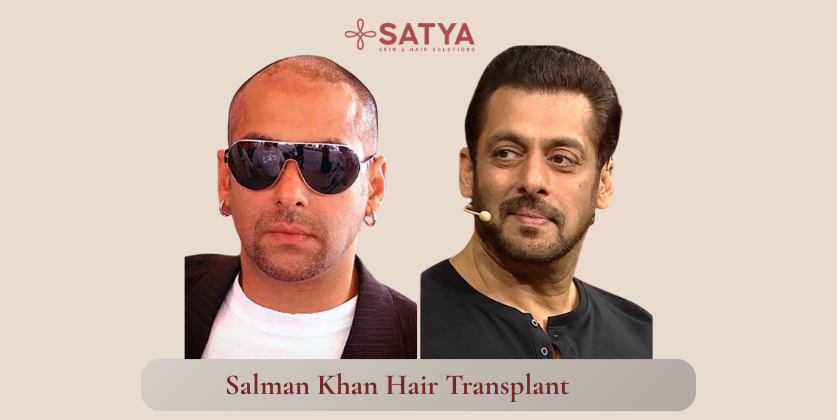
Salman Khan hair transplant discussions have dominated Bollywood gossip columns for over two decades. But beneath the speculation lies a genuinely instructive medical story, one that mirrors the journey of thousands of men in India who quietly struggle with hair loss before seeking expert help.
Whether Salman Khan had a hair transplant is no longer a matter of debate among dermatologists. The more meaningful question is: what can his hair restoration journey teach you about your own?
This blog examines Salman Khan’s hair loss timeline through a clinical lens covering the techniques that were likely used at each stage, why the results evolved the way they did, and what modern FUE hair transplant science in India can achieve for patients today.
The Hair Loss That Bollywood Could Not Hide
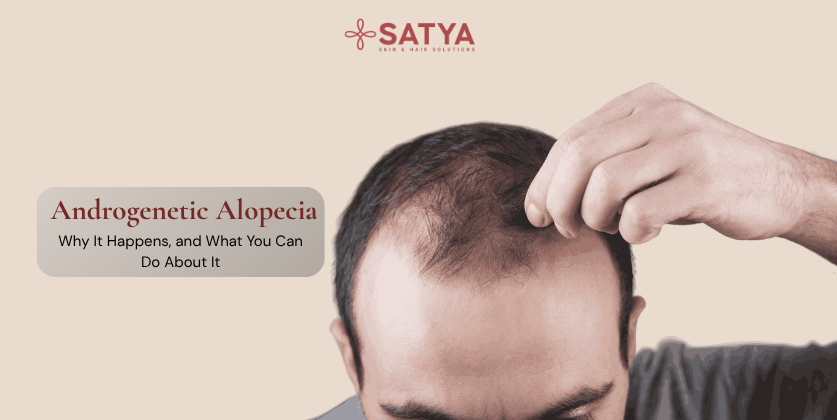
Male pattern baldness, or androgenetic alopecia, follows a well-documented progression mapped on the Norwood Scale. For public figures like Salman Khan, this progression plays out under constant media scrutiny making early-stage thinning visible in film stills, award show photographs, and promotional footage.
Observers who track the Salman Khan hair transplant timeline note that visible thinning at the crown and temples became apparent in the late 1990s and early 2000s. This is clinically consistent with Norwood Grade III to IV presentation a stage at which hair transplantation becomes both medically appropriate and aesthetically necessary for many patients.
Hair loss at this stage is not vanity it is a measurable medical condition driven by dihydrotestosterone (DHT) sensitivity in the follicular units. Understanding this is the first step in any honest clinical consultation.
Understanding the Hair Transplant Techniques Reportedly Used
Based on the timeline of his public appearances and the techniques available in India during each period, clinicians widely believe that Salman Khan’s hair restoration involved more than one intervention over the years. Here is a medically grounded overview of what each phase likely entailed:
Phase One: Early Restoration (circa 2003)
The primary technique available in India at that time was FUT Follicular Unit Transplantation, also called the strip method. In FUT, a strip of scalp is surgically removed from the donor area (typically the back of the head), follicular units are dissected under microscopes, and individual grafts are implanted into the recipient area.
FUT is an effective and proven technique, particularly for patients requiring high graft counts. However, it does leave a linear scar in the donor zone. Early FUT results can also appear denser than natural in texture, which trained observers sometimes identify in media photographs from that period.
Phase Two: Refinement and Density Improvement (circa 2007–2011)
By the mid-2000s, FUE Follicular Unit Extraction was becoming the gold standard for hair restoration globally, and leading clinics in India began adopting it. FUE extracts individual follicular units directly from the scalp using a micro-punch, leaving no linear scar and allowing faster recovery.
A second or third session is clinically common and appropriate. As donor hair density allows, additional grafts are used to refine the hairline, improve the crown, and increase overall density. The Salman Khan hair transplant timeline follows this multi-session pattern precisely what responsible hair restoration medicine recommends when hair loss is progressive.
Phase Three: Natural Hairline Artistry (Post-2016)
By the 2016–2020 period, Salman Khan’s hairline had visibly improved in both density and natural appearance. This is consistent with advances in graft handling, hairline design, and implantation angle techniques available at leading centres. Modern FUE allows surgeons to control the precise direction and angulation of each graft what Satya Skin & Hair Solutions calls the Mimic Nature Hairline concept.
FUE vs FUT: Which Technique Is Right for You?
Understanding the distinction between these two primary techniques is critical for any patient exploring a hair transplant. The table below outlines the key clinical differences:
| Parameter | FUE (Follicular Unit Extraction) | FUT (Follicular Unit Transplantation) |
| Scarring | Minimal (tiny dots) | Linear scar in donor area |
| Recovery Time | 7–10 days | 10–14 days |
| Graft Yield per Session | 1,500–4,000 grafts | 2,000–5,000 grafts |
| Best For | Mild to moderate loss, active lifestyle | Large coverage needs, cost consideration |
| Hairline Naturalness | Excellent with skilled surgeon | Good with refined technique |
| Multiple Sessions | Easily supports repeat sessions | Scar may complicate repeat sessions |
What Salman Khan’s Hair Transplant Journey Reveals About Hair Restoration Science
The Salman Khan hair transplant story illustrates several principles that dermatologists and hair restoration surgeons discuss in clinical practice every day:
- Hair loss is progressive: a single session may not be the final answer. A well-planned Future-Ready Transplant approach, one that accounts for future hair loss, protects donor supply and ensures natural results over time.
- Technique selection should match the patient’s loss pattern, donor density, and lifestyle, not merely the procedure’s popularity or price.
- Hairline design is a surgical art form. An anatomically sound, age-appropriate hairline, not an artificially low one, is the hallmark of expert-level work.
- Multi-session planning allows for refinement. Results seen in Phase Three of Salman Khan’s journey reflect the cumulative benefit of multiple carefully spaced interventions.
- Early consultation changes outcomes. Patients who seek advice at Norwood Grade II or III preserve more options than those who wait until advanced loss.
Hair Loss in Men: Why Stigma Delays Treatment
One of the most important aspects of the Salman Khan hair transplant conversation is what it has done culturally: it has normalized seeking help for hair loss. In India, male pattern baldness remains significantly undertreated, not because solutions are unavailable, but because stigma and misinformation delay the decision.
Common myths that delay treatment:
- Hair transplants look fake or obvious: Modern FUE with skilled hairline design produces results that are visually indistinguishable from natural growth.
- It’s only for severe baldness: Early intervention at Grade II or III yields the most natural and sustainable outcomes.
- It’s too expensive: FUE hair transplant costs in Gurgaon and Delhi NCR vary widely by graft count, clinic expertise, and technique; a consultation provides a precise estimate.
- Results don’t last: Transplanted follicles from the DHT-resistant donor zone are permanent. They behave like native hair and continue to grow for life.
The Satya Skin & Hair Solutions Approach to Hair Restoration
At Satya Skin & Hair Solutions with clinics in Gurgaon (DLF Phase 4, Galleria Market) and Pitampura, Delhi, Dr. Shail Gupta and Dr. Ruchi Agarwal bring over two decades of combined experience in hair restoration and dermatology. Founded in 2005, the clinic has guided thousands of patients through medically sound, aesthetically refined hair transplant decisions.
Our philosophy: Less Medicine. Less Donor. Maximum Skill.
Every hair transplant consultation at Satya begins with an honest assessment of your current hair loss grade, donor density, and long-term loss pattern not a sales pitch. We believe a conservative approach to donor harvest, combined with technical precision in graft placement, produces results that look natural today and age gracefully over decades.
Proprietary Techniques at Satya
- DSFT (Direct Stimulated Follicular Transplant): A refined FUE-based approach that minimises graft handling time and maximises follicle survival rates.
- MHT (Maximum Harvesting Technique): Designed to extract the optimal number of grafts from the donor zone without compromising future donor availability.
- Zero-Pain Anaesthesia: A patient comfort protocol that eliminates the anxiety and discomfort typically associated with the anaesthesia phase of hair transplant surgery.
- Mimic Nature Hairline Concept: Hairline design that replicates the natural zone of irregularity, ensuring no artificial or straight-edge appearance in any lighting condition.
- Future-Ready Transplant: A planning framework that accounts for projected future hair loss at the time of the first session protecting both aesthetics and donor reserves over time.
Dr. Shail Gupta and Dr. Ruchi Agarwal: Dual Expertise, One Outcome
Hair restoration is not a single-specialty discipline. At Satya Skin & Hair Solutions, Dr. Shail Gupta leads all hair transplant surgical procedures, from pre-operative donor mapping to the precision of graft extraction and placement. His clinical focus is on surgical outcomes: graft survival, hairline architecture, and density distribution.
Dr. Ruchi Agarwal brings her expertise in clinical dermatology and non-surgical hair loss management to the consultation process. She evaluates scalp health, assesses underlying causes of hair loss including hormonal and nutritional factors, and designs complementary treatment protocols, including PRP therapy and topical regimens, that support and sustain transplant results.
This dual-specialist model means that patients at Satya receive both a surgical and a dermatological perspective before any procedure is recommended a standard of care that is not uniformly available across hair transplant clinics in Gurgaon or Delhi NCR.
Are You a Good Candidate for a Hair Transplant?
The Salman Khan hair transplant story prompts many patients in their 30s and 40s to ask the same question: am I ready for a hair transplant? The honest answer depends on a clinical evaluation, not a celebrity comparison. Key factors include:
- Stable donor density: Sufficient follicles must be available in the DHT-resistant donor zone at the back and sides of the scalp.
- Degree and pattern of loss: Norwood Grade II through VI patients are typically candidates; Grade VII cases require careful planning.
- Age and loss trajectory: Younger patients (under 28) may require a waiting period to ensure loss has stabilised before intervention.
- Scalp health: Conditions including seborrheic dermatitis, scarring alopecia, or active infection must be addressed prior to surgery.
- Realistic expectations: A hair transplant restores density and coverage it does not restore hair to its original pre-loss volume.
Frequently Asked Questions About Hair Transplants
Did Salman Khan really have a hair transplant?
Most dermatologists and hair restoration specialists who have reviewed his public photographs across different decades observe changes consistent with multiple hair transplant procedures. His hairline density, texture, and progression over time are medically consistent with FUT and later FUE interventions. We cannot make confirmed claims about any individual’s private medical history, but the clinical evidence from visible changes is widely discussed in professional circles.
FUE (Follicular Unit Extraction) removes individual follicular units using a micro-punch tool, leaving no linear scar and allowing a faster recovery. FUT (Follicular Unit Transplantation) involves removing a strip of scalp tissue, which yields a higher graft count per session but leaves a linear scar. The right choice depends on your degree of hair loss, lifestyle, and the surgeon’s clinical assessment of your donor density.
What is the cost of a hair transplant at the best clinics in India?
At premium hair transplant clinics in Gurgaon and Delhi NCR, FUE costs typically range from Rs. 40 to Rs. 120 per graft, depending on graft count, technique, and clinic expertise. A session involving 2,000–3,000 grafts may cost between Rs. 80,000 and Rs. 3,60,000. An in-person consultation at Satya Skin & Hair Solutions provides a precise estimate based on your individual assessment, contact us at [PHONE NUMBER] for an appointment.
How many hair transplant sessions are typically needed?
Many patients achieve their goals in a single session. However, patients with progressive loss, larger coverage requirements, or those seeking density refinement in areas treated in an earlier procedure may benefit from two to three sessions spaced 12 to 18 months apart. Multi-session planning is incorporated into Satya’s Future-Ready Transplant approach from the first consultation.
Is a hair transplant permanent?
Yes. Follicular units transplanted from the DHT-resistant donor zone, typically the back and sides of the scalp, are genetically programmed to continue growing throughout a patient’s lifetime. They are not susceptible to the hormonal processes that cause native hair loss. However, surrounding non-transplanted hair may continue to thin, which is why a Future-Ready Transplant plan is important from the outset.
Most hair restoration specialists recommend waiting until hair loss has stabilised, which typically occurs in the late 20s to early 30s for most men. Earlier intervention can be considered in specific clinical situations, but carries the risk that continued native hair loss will create inconsistencies around the transplanted area. A consultation at Satya Skin & Hair Solutions will include an assessment of your current Norwood Grade and projected loss trajectory.
Is hair transplant surgery painful?
Discomfort is minimal with modern anaesthesia protocols. At Satya Skin & Hair Solutions, a Zero-Pain Anaesthesia technique is used during the procedure. Most patients report that the anticipation is far more significant than the actual experience. Post-operative discomfort is mild and manageable with standard analgesics for two to three days.