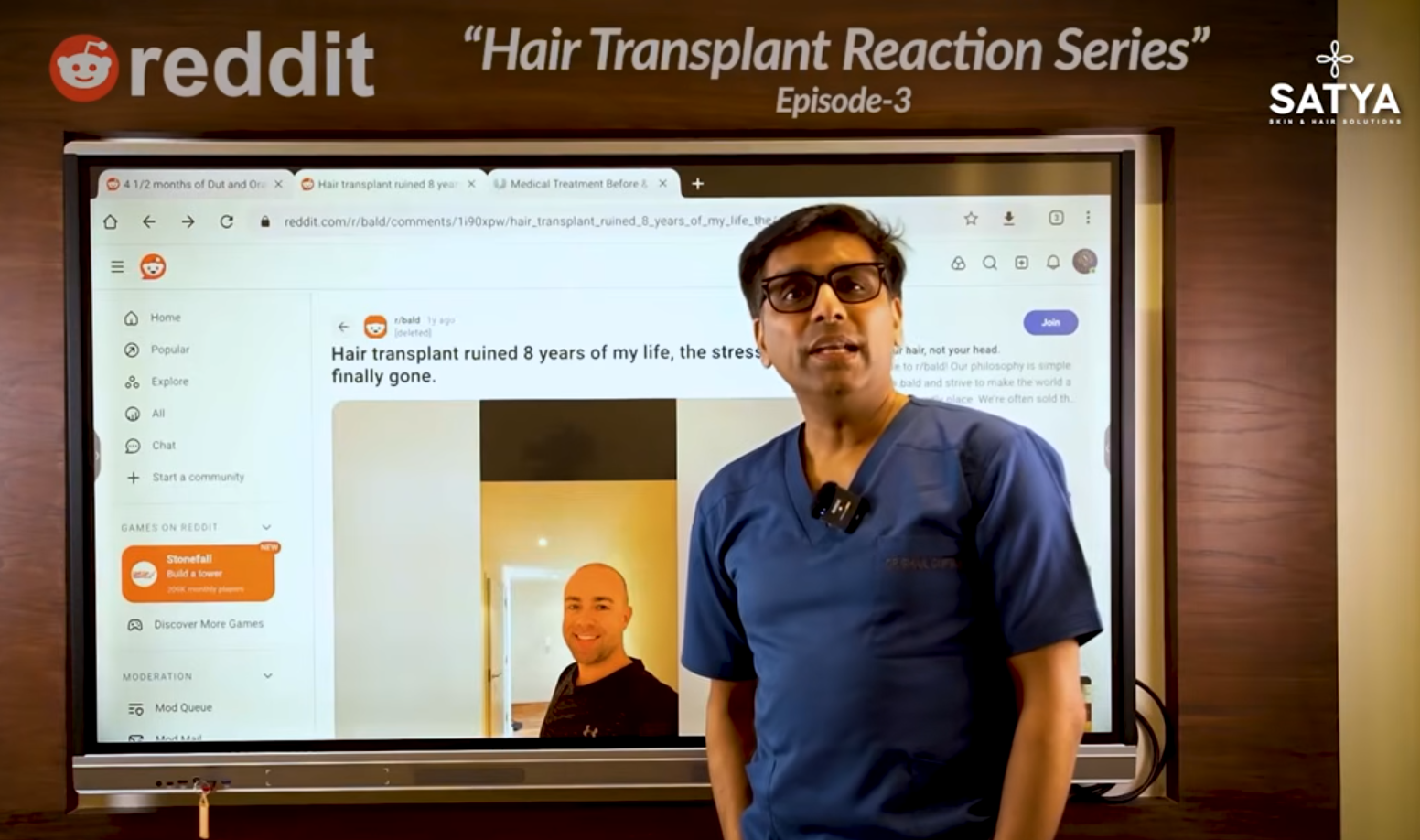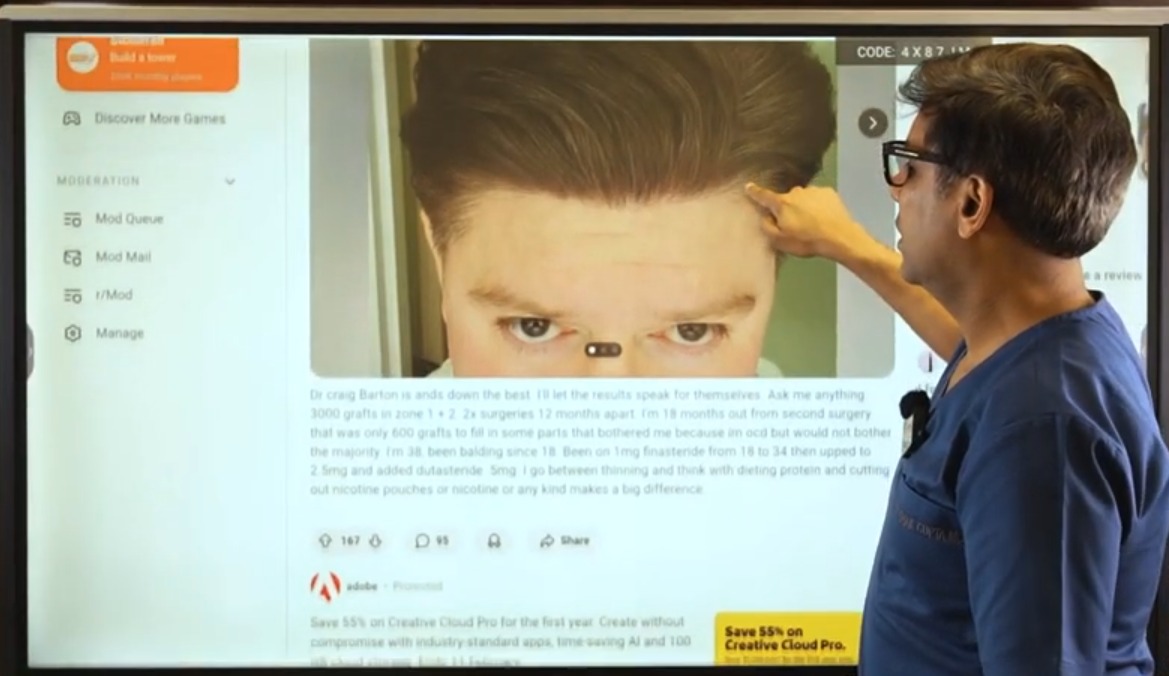
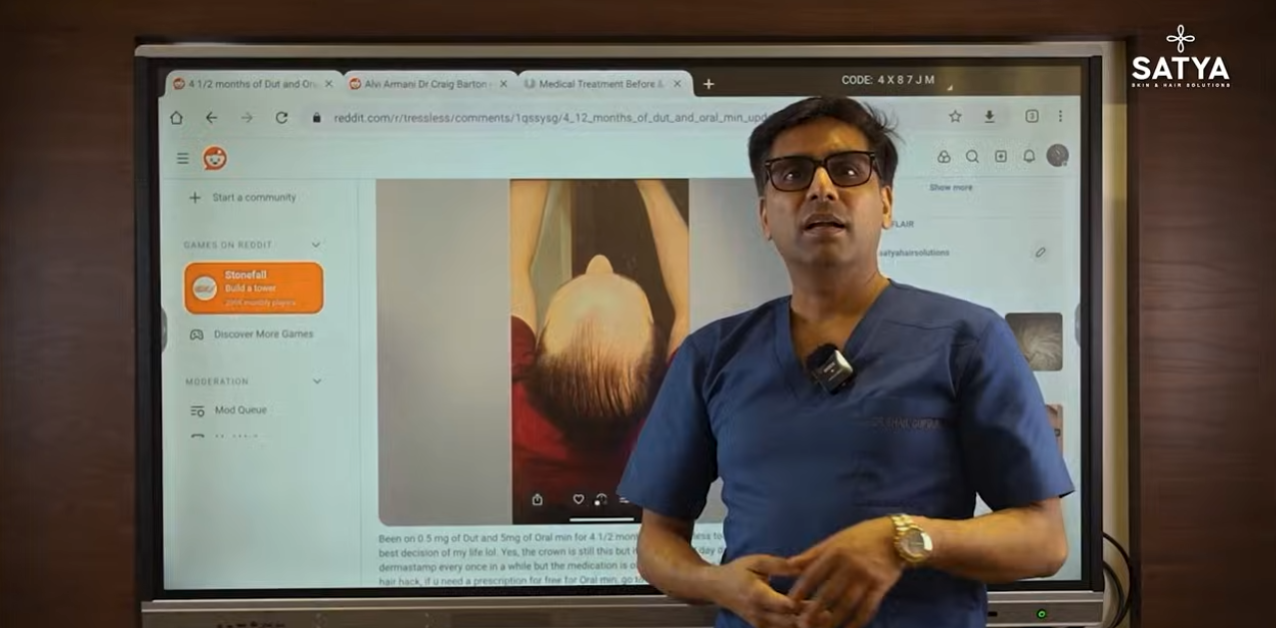
A Reddit user shared something that looked almost too good to be true: a striking jump in hair density after just 4.5 months, with no hair transplant at all, only medication. Within hours, the comments filled with doubt. Was it real? Was it lighting? Was it paid for? Dr. Shail Gupta uses this exact case to settle a question that trips up thousands of patients: can medicine alone actually regrow this much hair?
The Reddit Case
Major Density Gain in 4.5 Months, No Surgery
The poster reported a significant improvement in hair density over roughly four and a half months, using medication only. No grafts, no procedure, just a daily regimen.
Regimen: 0.5 mg dutasteride + 5 mg oral minoxidil
Why the Internet Cried “Fake”
The original post drew a wave of skepticism. That reaction is worth taking seriously, because these are exactly the objections any smart patient should raise before believing a transformation photo. The main criticisms fell into four buckets:
What the skeptics argued
01 Inconsistent angles. The before and after weren’t shot from the same position, which can exaggerate a change.
02 Wet vs. dry hair. Different styling between photos can make thin hair look dramatically fuller, or sparser.
03 Length, not density. Some argued the “after” simply showed longer hair, not more of it.
04 “It’s sponsored.” A few suspected the post was quietly backed by a pharmaceutical company.
Healthy skepticism is a good instinct, photo tricks are real, and angle and styling genuinely can distort a comparison. But skepticism about one photo is different from claiming the underlying result is impossible. And that’s where the medical evidence comes in.
So Can Medicine Alone Actually Do This?
To answer it properly, Dr. Shail points to documented medical before-and-after cases from Dr. Bernstein, a respected name in hair restoration. These cases show substantial density improvements achieved with medication only, specifically finasteride and minoxidil, and no surgical transplant whatsoever.
The takeaway is clear: the right medicines, in the right patient, genuinely can produce dramatic regrowth on their own. So while any single Reddit photo deserves scrutiny, the core claim, that medicine alone can meaningfully increase density, is entirely consistent with what the medical evidence already shows.
“Medicine isn’t just ‘supportive.’ In the right patient, it can regrow
hair on its own, and that changes how you should read every
transplant result.”
The Dangerous Misconception
Here’s why this matters far beyond one Reddit thread. Many patients firmly believe that medicine is merely “supportive”, that it can only protect existing hair, never regrow it. The medical cases show that belief is simply wrong. And that misunderstanding leads to a costly blind spot.
The credit goes to the wrong place
When a surgical transplant result is shown off, the significant contribution of the medication running alongside it is routinely overlooked. The patient, and everyone admiring the photo, credits the surgery for density that the drugs are partly, sometimes largely, responsible for.
And here’s the trap
If that patient later stops their medication, the density the drugs provided can vanish, even though they assumed their transplanted hair was permanent. The grafts remain, but the medicine-driven fullness fades, and the result quietly deteriorates. People who never understood how much the medicine was doing are the ones most blindsided when it stops.

Before You Trust, or Dismiss, a Result
Whether it’s a Reddit post or a clinic’s portfolio, ask:
- Are the before/after photos the same angle, lighting and styling?
- Is the person on medication, and if so, which ones and what dose?
- If this is a transplant, how much of the density depends on the medicine?
- What happens to this result if the medication stops?
The Honest Bottom Line
Medicine genuinely works, sometimes dramatically. That’s the good news and the warning in the same sentence. Real regrowth from medication means real dependence on it, so every serious hair plan should be transparent about how much of your density is surgical, how much is pharmacological, and what your result looks like if the medicines ever stop. Understanding that split up front is what separates an informed patient from a disappointed one.
Dr. Shail Gupta
Hair Transplant Surgeon
Dr. Shail leads Satya’s hair restoration practice with an education-first, transparency-driven philosophy, helping patients understand exactly what’s driving their results and what keeps them.
Frequently Asked Questions
They can do both. While many people assume medication is only “supportive,” documented medical cases show substantial density gains from medicines alone, no surgery involved. Response varies from person to person, but the idea that medicine can’t regrow hair is a misconception.
Not automatically. Angle, lighting, and wet-vs-dry styling can all exaggerate or distort a comparison. That’s why it’s fair to scrutinise photos, but a shaky photo doesn’t mean the underlying treatment doesn’t work.
Your transplanted grafts remain, but any density that came from medication thickening your other hair can fade. Many patients are caught off guard because they credited the surgery for density the medicine was actually providing.
No. These are prescription medicines, often used off-label for hair loss, and they carry real considerations and potential side effects. Dosing and suitability must be decided with a qualified doctor, never self-prescribed from a Reddit thread.