
1 mg grew more hair, and brought side effects. 0.5 mg still kept the gains. Dr. Shail Gupta connects a 4,500-graft Reddit case, a dose step-down, and his own 5,200-graft patient on just 2 mg a week.
Most hair transplant discussions ask one question: how many grafts? This case asks a second, just as important one: how much medicine, and at what cost to your health? For advanced hair loss like Norwood Grade 6, the answer to both has to be balanced, not maximised.
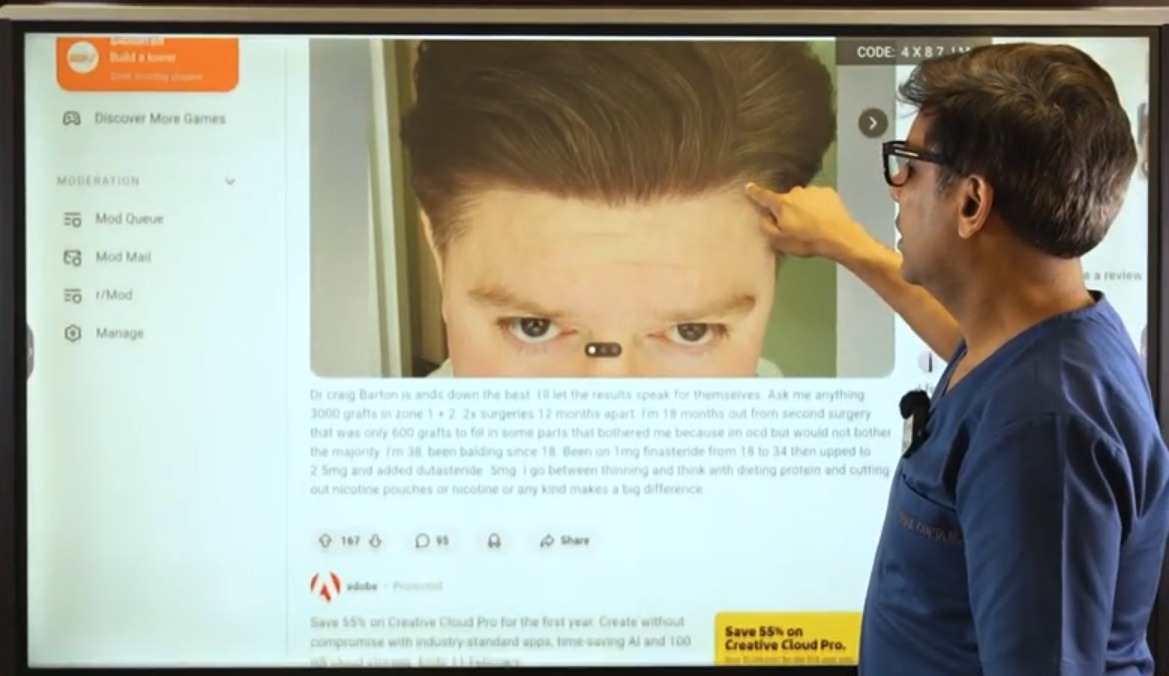
The Reddit Case: 4,500 Grafts on a Norwood 6 Scalp
Dr. Shail reviews a patient with Norwood Grade 6 hair loss who received 4,500 grafts. At seven months, the hairline and temples look well executed, the design and placement are good. But look closer at the hairline zone and there are visible gaps, partly softened by the lighting in the photos.
Reddit Case
Norwood 6 – 4,500 Grafts at 7 Months
Well-executed hairline and temples, but gaps remain in the hairline zone. Dr. Shail notes it is technically impossible to fully cover a Grade 6 area with only 4,500 grafts, so the patient’s medication is doing a significant share of the work toward the final result.
Support regimen: oral minoxidil + finasteride + PRP sessions
⚠ Read Transplant Photos Carefully
Lighting can hide gaps. Bright, angled or overhead light can make a partially covered area look fuller than it is. When judging any result, someone else’s or your own, look for photos in consistent, neutral lighting and from the same angles as the “before”.
This is not a criticism of the surgery. A Grade 6 scalp simply has more bald area than any single 4,500-graft session can fill. The real question is what fills the rest, and how heavily the patient needs to lean on medication to get there.
The Dose Experiment: 1 mg vs 0.5 mg Finasteride
To show how powerful, and how double-edged,medication can be, Dr. Shail presents a separate patient whose response tracked his dose almost step for step.
Months 0–4
Finasteride 1 mg daily
Significant visible hair growth, but the patient developed sexual side effects at this dose.
After reduction
Finasteride 0.5 mg daily
Growth was less than at 1 mg, but still clearly better than his pre-treatment state, with health protected.
The lesson is not “finasteride is dangerous” or “finasteride is magic”. It is that hair can often be sustained on smaller doses than patients are commonly prescribed. A higher dose may produce more growth, but every extra milligram has to be weighed against the side effects it can bring.
Unnecessarily high doses can end up serving the
provider’s before-and-after photos more than
the patient’s long-term health.
Dr. Shail is direct on this point. A clinic that pushes medication to the maximum can make its transplant results look more impressive, but the patient is the one who lives with the side effects. The right dose is the lowest one that achieves the patient’s goal.
The Satya Case: 5,200 Grafts and 2 mg Finasteride a Week
For contrast, Dr. Shail shares one of his own advanced-loss patients. Here, a combination of techniques was used to harvest roughly 5,200 grafts, including beard grafts to supplement the scalp donor supply.
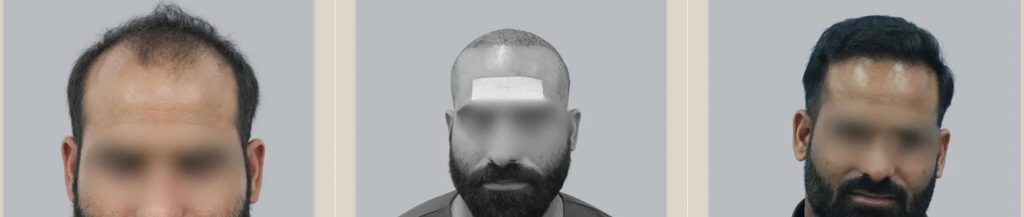
Satya Case
5,200 Grafts, Combination Techniques + Beard Grafts
Even with more grafts than the Reddit case, medication support was still essential for full coverage. The difference is the dose: just 2 mg of finasteride per week, a small fraction of the common 1 mg daily prescription.
Regimen: finasteride 2 mg/week
4,500
Grafts in the Reddit Norwood 6 case, not enough alone
0.5 mg
Daily dose that kept gains after side effects at 1 mg
2 mg
Finasteride per week in the 5,200-graft Satya case
For perspective: 1 mg a day equals 7 mg a week. The Satya patient achieved full coverage support on less than a third of that weekly amount, because the surgery was planned to do as much as donor supply safely allowed, using every available source, so the medicine didn’t have to carry the gap alone.
The Minimum Approach: Grafts and Dose in Balance
This is the core of Dr. Shail’s “minimum approach”, refined over two decades. Instead of maximising either side, it finds the balance point:
- Surgery does what it reasonably can, combining FUE, FUT and beard or body grafts where scalp donor runs short, without over-harvesting.
- Medication fills the remainder at the lowest effective dose, adjusted the moment side effects appear.
- Health is never traded for density. If a dose causes problems, it comes down.
Questions to Ask About Your Medication Plan
- What dose are you prescribing, and why that amount specifically?
- Could a lower or weekly dose maintain my result?
- How much of my expected coverage depends on medication versus grafts?
- How will side effects be monitored, and what happens if I get them?
- For advanced loss, will beard or body grafts be used to reduce the medicine burden?
For Norwood 6 patients especially, a transparent plan should explain all of this before surgery, not after the side effects start.
Frequently Asked Questions
In the case discussed here, 0.5 mg produced less growth than 1 mg, but still a clear improvement over the patient’s pre-treatment hair, and it resolved his concern about side effects. Response varies by person, and dosing should only be changed under medical supervision.
In Dr. Shail’s 5,200-graft case, the patient used 2 mg per week alongside the transplant. Low-dose and intermittent regimens are individual decisions made by the treating doctor based on the patient’s response and tolerance.
Not fully on their own. A Grade 6 area is too large for that graft count, which is why medication, and sometimes additional donor sources like beard grafts, is needed to complete coverage.
Speak to your doctor rather than stopping or changing the dose yourself. As this case shows, a supervised dose reduction can sometimes maintain much of the benefit while easing side effects.
A strategy built over two decades that balances graft count with the lowest effective medication dose, using combination techniques and beard grafts where useful, so neither surgery nor medicine is pushed further than the patient needs.