QUICK ANSWER
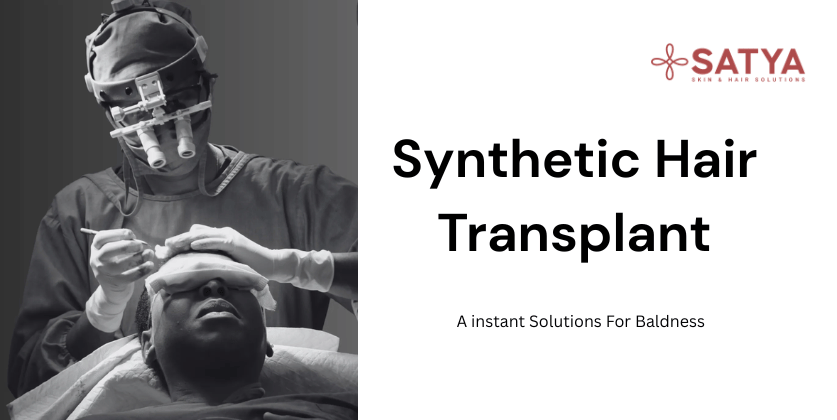
A synthetic hair transplant implants artificial fibres into the scalp to add the look of hair without using your own follicles. It offers instant density and needs no donor area, which sounds appealing. The honest picture is more cautious. Artificial fibres do not grow, they are not permanent, they shed over time and need regular re-implantation, and they carry a higher risk of infection and rejection than your own hair. This procedure was banned in the United States in 1983 and remains a limited, last-resort option. For most people, restoring their own hair is safer and lasts far longer.
What Is a Synthetic Hair Transplant?
A synthetic hair transplant is a procedure in which artificial fibres, rather than living hair follicles, are implanted into the scalp to create the appearance of hair.
The fibres are usually made from a medical-grade polymer such as polyamide, and modern versions are marketed under names like biofibre. They can be matched to your colour and texture. The key thing to understand is that these fibres are not alive. They do not grow, they do not renew themselves, and the body always recognises them as foreign material. This single fact explains almost every difference between a synthetic hair transplant and a real one.
This is completely different from a traditional hair transplant, where your own permanent follicles are moved from the back of your scalp into thinning areas, where they keep growing for life.
Is a Synthetic Hair Transplant Good?
A synthetic hair transplant can be useful in very specific situations, but for most people it is not the best or safest choice.
Its genuine strengths are speed and independence from a donor area. You see density immediately, and it can be considered by people who have little or no donor supply left. Those are real benefits worth acknowledging honestly.
The trade-offs are equally real. Because the fibres are a foreign material, the risk of infection, inflammation, and rejection is higher than with your own hair, and the result needs ongoing maintenance for as long as you keep it. So the honest answer is that it is good for a narrow group of people in the right hands, and not a shortcut that suits everyone.
Synthetic or Human Hair: Which Is Better?
For almost everyone with a usable donor area, a transplant using your own human hair is the better and longer-lasting choice.
The comparison below lays out the real differences side by side.
| Feature | Synthetic fibres | Your own hair (FUE or FUT) |
|---|---|---|
| Source | Artificial polymer fibres | Your own living follicles |
| Growth | Does not grow | Grows naturally for life |
| Longevity | Sheds, needs re-implanting | Permanent after healing |
| Donor needed | No | Yes |
| Infection risk | Higher, foreign material | Low |
| Maintenance | Ongoing, lifelong | Normal hair care |
| Status | Banned in the US since 1983 | Established worldwide |
The main reason someone chooses synthetic over human hair is a lack of donor supply. Before accepting that, it is worth a proper assessment, because options such as body hair as a donor source can sometimes make a real transplant possible when it first seemed impossible.
How Long Does Synthetic Hair Last, and Is It Permanent?
A synthetic hair transplant is not permanent. Artificial fibres shed gradually and usually need re-implantation every one to two years to maintain the look.
Because the fibres do not grow and are slowly lost through normal wear and the body’s response, the density fades over time. Keeping the result means returning for top-up sessions, along with careful scalp care in between. This is very different from a transplant of your own hair, which settles once and then grows for life like the rest of your hair. If permanence is your priority, your own hair is the honest answer, not artificial fibre.
Does Synthetic Hair Feel Fake, and Is It Like Real Hair?
Good quality fibres can look convincing at first, but they do not behave like living hair, and they can feel different to the touch.
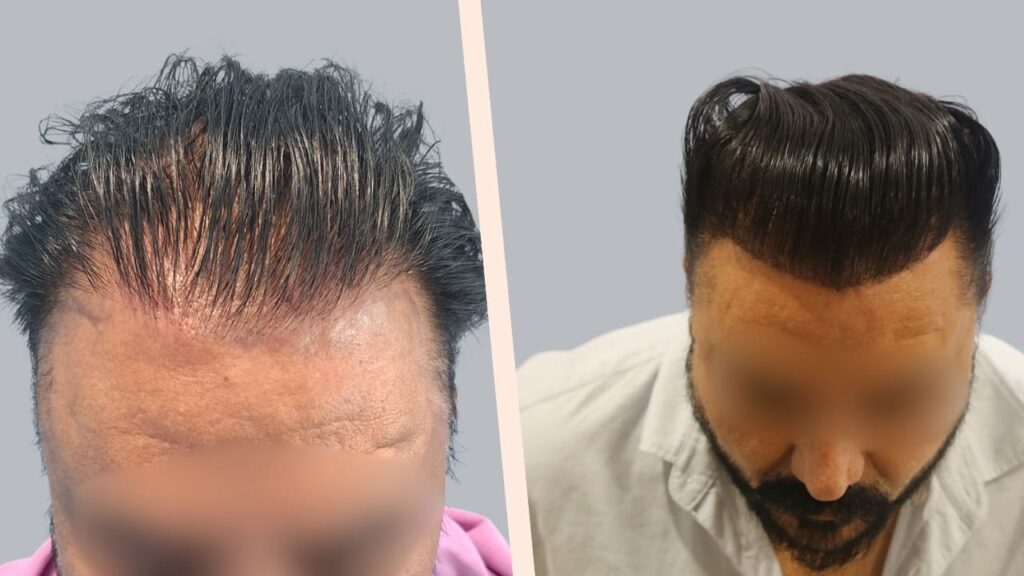
Modern fibres are designed to match natural colour and texture, so a fresh result can look full and reasonably natural in photos. The difference shows over time and up close. Real hair grows, sheds, and regrows in a natural cycle, responds to weather and styling, and blends seamlessly because it is alive. Synthetic fibres stay a fixed length, do not grow, and rely on careful maintenance to keep looking their best. Many people can tell the difference on close contact, which is worth knowing before you decide.
The Risks You Should Understand
This is the part that honest clinics must not skip. Placing a non-living material into living skin carries risks that your own hair does not.
- Infection: reported infection rates for artificial fibres are significantly higher than for a transplant of your own hair.
- Foreign body reaction: the immune system can treat the fibres as invaders, causing chronic inflammation, cysts, or small nodules.
- Rejection and faster loss: fibres can be shed sooner than expected, and some people react with allergy or irritation.
- Scarring: deeper anchoring of fibres can leave scarring that may limit future treatment options on that scalp.
This is why the procedure was banned in the United States decades ago and why it is still treated with caution worldwide, even in its modern biofibre form.
FROM DR. RUCHI AGARWAL, DERMATOLOGIST AND CO-FOUNDER“ As a dermatologist, my concern with artificial fibres is simple. The scalp is living skin, and it does not forget that a foreign material has been placed inside it. Even biocompatible fibres can trigger low-grade inflammation, infection, or a foreign body reaction, sometimes months or years later. That is why we assess the scalp very carefully and treat synthetic hair as a considered last resort, never a casual quick fix.”
When Might a Synthetic Hair Transplant Be Considered?
It is reasonable to consider artificial fibres only when a person genuinely has no usable donor hair and understands the maintenance and risks involved.
Examples include very advanced baldness with an exhausted donor area, or scarring that has left no viable follicles to move. Even then, the decision should follow a full assessment, a tolerance test where appropriate, honest counselling about upkeep, and clear informed consent. Chosen carefully it can give some people coverage they could not otherwise have. Chosen casually, it often leads to disappointment and complications.
The Satya Philosophy: Your Own Hair First
Our approach is guided by a simple belief: Less Medicine. Less Donor. Maximum Skill. We would rather use skill to make the most of your own living hair than reach for an artificial shortcut. In most cases, that is also what protects you over the long term.
FROM DR. SHAIIL GUPTA, LEAD HAIR TRANSPLANT SURGEON“
Patients often come to me asking for synthetic hair because they believe they have no donor left. Very often, after a proper examination, they do. With careful planning, our Maximum Harvesting Technique, and sometimes body hair as an extra donor source, we can give them a result from their own living hair that grows for life. I only consider artificial fibres when there is truly no biological option, and I always explain the maintenance and the risks first. My job is to protect the patient, not to sell a procedure.”
Where donor supply seems limited, we look at every real-hair option first, including FUE and FUT techniques, beard and body hair transplant as a donor source, and medical support for the hair you still have.
Taking the Next Step
If you are considering a synthetic hair transplant, the most valuable first step is not booking the procedure. It is an honest assessment of whether you still have real-hair options, because most people have more than they think. That single conversation can change your entire plan.
| Book an evidence-based consultation with our team at Satya Skin & Hair Solutions in Gurgaon or Delhi. We will assess your scalp and donor supply honestly, explain every option including its risks, and recommend the path that protects your hair for the long term.Call: +919999570494 |
Frequently Asked Questions
It can be useful for a small group of people who have no usable donor hair, because it gives instant density without a donor area. For most people, however, a transplant using their own hair is safer and lasts far longer, so synthetic fibres are best seen as a limited, last-resort option.
For almost everyone with a usable donor area, human hair is better. Your own follicles grow for life, need only normal care, and carry a low risk of complications. Synthetic fibres do not grow, need ongoing maintenance, and carry a higher risk of infection and rejection.
It is not permanent. Artificial fibres shed gradually and usually need re-implantation every one to two years to keep the density, along with careful scalp care in between. Your own transplanted hair, by contrast, settles once and grows for life.
Good quality fibres can look natural at first, especially in photos, but they can feel different to the touch and do not behave like living hair. Because they stay a fixed length and do not grow, the difference can become noticeable up close and over time.
It is designed to resemble real hair in colour and texture, but it is not alive. Real hair grows, sheds, and regrows in a natural cycle and blends seamlessly. Synthetic fibres are static and depend on maintenance to keep looking their best, so they are similar in appearance but not in behaviour.
No. Artificial fibres are not permanent and are slowly lost over time, which is why regular top-up sessions are needed. If a permanent result is your goal, a transplant of your own living hair is the honest and lasting choice.