QUICK ANSWER
A Q-switched laser produces very short, high-power pulses of light, measured in nanoseconds or billionths of a second, to break unwanted pigment into tiny particles the body can clear. It has been a trusted tool for pigmentation for decades and works well for sun spots, freckles, certain birthmarks, and tattoos. How many sessions of Q-switch laser you need depends on the type of pigmentation, from as few as one to three for surface spots to several for deeper or hormone-related pigment. Pigmentation is always managed, not permanently cured.
Pigmentation is one of the most common skin concerns in Indian patients, and also one of the most heavily marketed. You will see the term Q-switched laser used on almost every clinic menu, often with bold before and after photos and little explanation. This guide clears that up. It explains what a Q-switched laser actually is, how it treats pigment, how many sessions you should realistically expect, and where it needs real caution on Indian skin. The goal is to help you ask better questions before you sit under any laser.
What Is a Q-Switched Laser?
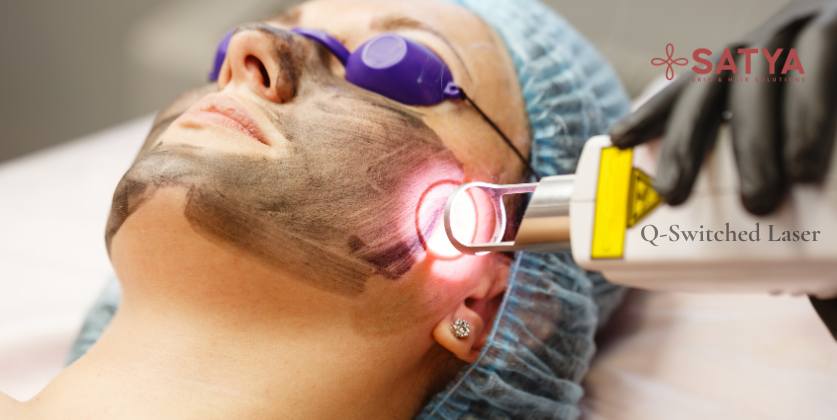
A Q-switched laser is a pigment-targeting laser that releases its energy in a single, extremely brief and powerful pulse lasting only nanoseconds.
That burst of energy is absorbed by the pigment far faster than the surrounding skin can heat up. The pigment shatters into fine particles, and your immune system slowly carries them away over the following weeks. This is why results appear gradually rather than instantly. These lasers have been used in dermatology for many years and remain a dependable, well-studied choice for the right kind of pigment.
What Does Q-Switched Actually Mean?
The name describes how the laser is built, not the brand. The Q stands for quality factor, a measure of energy stored inside the laser. A Q-switch holds that energy back, then releases it all at once as one giant pulse. The result is a very high peak power delivered in a tiny fraction of a second. That design is what lets the laser hit pigment hard while sparing the skin around it, and it is the reason this technology can treat pigment that ordinary creams cannot reach.
How Does a Q-Switched Laser Treat Pigmentation?
It works on a principle called selective photothermolysis, which means the laser light is tuned to be absorbed mainly by pigment rather than normal skin.
Different colours of pigment sit at different depths, so different wavelengths are used. The laser commonly offers two settings for the skin. The 532 nanometre wavelength targets shallow, surface pigment such as freckles and sun spots. The 1064 nanometre wavelength reaches deeper, dermal pigment and is generally safer for darker Indian skin. Choosing the correct wavelength and energy for your pigment is the whole skill of the treatment, and it is why the same machine can give a beautiful result in one clinic and a poor one in another.
What Pigmentation Problems Can It Treat?
Q-switched technology is most predictable for clearly defined surface pigment and certain birthmarks, and far more cautious with melasma.
- Sun spots and solar lentigines, the flat brown marks from years of sun exposure.
- Freckles, which often respond well but can return with fresh sun exposure.
- Dermal birthmarks such as nevus of Ota and Hori’s nevus, which need several sessions.
- Tattoo pigment, where Q-switched lasers have long been considered a gold standard.
- Post-inflammatory marks from old acne or injury, treated selectively.
- Melasma, only with low-energy laser toning and alongside medical treatment, never as a standalone cure.
How Many Sessions of Q-Switch Laser for Pigmentation?
There is no single number. How many sessions of Q-switch laser you need depends entirely on what kind of pigmentation you have and how deep it sits.
Surface spots often clear in very few visits, while deeper pigment and melasma need a longer, carefully spaced course. The table below gives realistic ranges, but your own plan should come from an examination, not from a package deal.
| Type of pigmentation | Typical sessions | Notes |
|---|---|---|
| Sun spots and lentigines | 1 to 3 | Often clears quickly at the surface setting |
| Freckles | 1 to 3 | Can return with new sun exposure |
| Nevus of Ota, dermal pigment | 6 or more | Spaced around two months apart |
| Melasma, laser toning | Around 6 to 10 | Managed not cured, spaced two weeks, high relapse |
| Tattoo pigment | 6 to 12 or more | Depends on ink colour and depth |
A word of honesty about melasma. Even after a full course of laser toning, relapse is very common, and some studies report recurrence in a large majority of patients once treatment stops. This is not a failure of the laser. It is the nature of melasma as a chronic condition, and it is why we treat it with medicine first and laser as a careful support.
Is Q-Switch Laser Safe for the Face?
Q-switched laser treatment is safe for the face when used by an experienced dermatologist with the right settings, but it is not risk free on Indian skin.
Because Indian skin holds more active melanin, the main risk is post-inflammatory hyperpigmentation, where the skin darkens in response to the laser rather than lightening. There is a second, less talked about risk that matters just as much.
When low-energy laser toning is done too often, usually for melasma, it can cause the opposite problem: small white spots of lost colour, sometimes described as a confetti or mottled pattern. This is why responsible clinics space toning sessions at least two weeks apart and limit the total number, rather than offering weekly or even thrice weekly laser facials. Faster is not safer. Signs of these white spots are a signal to stop, not to push on.
Q-Switched Laser or Pico Laser: Which Is Better?
This is a common question, and the honest answer is that neither is simply better. It works in nanosecond pulses, while a pico laser works about a thousand times faster, in picoseconds, relying more on a shockwave than on heat. Pico lasers can clear some pigment in fewer sessions with a little less thermal risk. Q-switched lasers are proven, widely available, often more affordable, and excellent for many pigment types and tattoos. The better choice depends on your diagnosis, your skin, and your budget, not on which sounds newer.
The Satya Approach to Pigmentation Lasers
At Satya Skin & Hair Solutions, a laser is never the starting point. Our guiding principle is simple: diagnose before you treat, and healthy skin before beautiful skin. The device is only as good as the diagnosis behind it.
FROM DR. RUCHI AGARWAL, DERMATOLOGIST AND CO-FOUNDER
“Patients often ask me for a Q-switched laser by name, the way they would order a product. My first job is to slow that down and find out what we are actually treating. Sun spots, dermal birthmarks, and melasma can look alike but behave completely differently under the same laser. Treat melasma too aggressively and you can trigger rebound darkening or permanent white spots. So we examine the skin, repair the barrier, and use the laser only where it genuinely helps. Restraint is part of good dermatology.”
In practice this means we look for the driver behind your pigmentation, whether that is sun exposure, hormones, medication, friction, or harsh home remedies. We then choose the safest effective wavelength and energy, start conservatively, and monitor your skin between sessions rather than committing you to a fixed count in advance.
Aftercare and Realistic Expectations
Results build gradually over a course, and aftercare decides whether they last. Treated spots often darken slightly and then flake away over about a week, and the skin can look pinker for a day or two. Picking or scrubbing at this stage is the fastest way to cause a mark.
| FROM DR. RUCHI AGARWAL ON AFTERCARE “The laser does maybe half the work. The other half is sun protection. Pigment cells react to ultraviolet and visible light, so daily sunscreen, reapplied through the day, is not optional after these sessions. If you do the sessions and skip the sunscreen, especially in our climate, the pigment comes back and the effort is wasted.” |
Depending on your diagnosis, we may combine or sequence the laser with medical melasma treatment, chemical peels, or a broader pigmentation treatment plan chosen for your skin.
Taking the Next Step
If pigmentation is troubling you, the most valuable first step is a proper diagnosis, not a laser package. Knowing exactly what type of pigment you have, how deep it sits, and what is driving it decides whether a Q-switched laser will help you and how many sessions you truly need.
Frequently Asked Questions
A Q-switched laser is a pigment-targeting laser that releases energy in a single, extremely short pulse lasting nanoseconds. That burst shatters unwanted pigment into fine particles that the body clears over the following weeks, which is why it is used for sun spots, freckles, birthmarks, and tattoos.
It depends on the pigment. Surface spots like sun spots and freckles often need only one to three sessions, deeper birthmarks can need six or more, and melasma laser toning usually runs around six to ten carefully spaced sessions while being managed rather than cured. A proper examination gives you a realistic number.
Yes, when performed by an experienced dermatologist with the correct wavelength and settings. The main risks on Indian skin are temporary darkening, called post-inflammatory hyperpigmentation, and, if laser toning is done too often, small white spots of lost colour. Correct spacing, conservative energy, and good aftercare keep it safe.
It can clear many surface spots durably, especially with good sun protection, but pigmentation is generally managed rather than permanently cured. Conditions like melasma relapse commonly, so ongoing care and sun protection are part of keeping the result.
A Q-switched laser works in nanosecond pulses and is proven, widely available, and often more affordable. A pico laser works about a thousand times faster, in picoseconds, and relies more on a shockwave than heat, sometimes clearing pigment in fewer sessions. The right choice depends on your diagnosis and skin, not on which is newer.
Most people tolerate it well. The sensation is often described as tiny hot flicks against the skin, and numbing cream can be used. Downtime is usually short, with mild redness settling within a day or two and treated spots flaking away gently over the following week.