Before you read further: A synthetic hair transplant is not the same procedure as a natural hair transplant and carries a different, well-documented risk profile. International regulators and Indian dermatology literature have flagged safety concerns about synthetic hair fibres since the 1980s. This guide covers cost honestly, alongside the clinical and regulatory context you need. Nothing here recommends for or against the procedure; that decision depends on individual suitability and requires medical assessment.
Synthetic Hair Transplant Cost in India
Synthetic hair transplant cost in India varies according to the number of fibres required, treatment area, fibre brand and material, clinic expertise, and your individual treatment plan. Per-fibre pricing generally falls between ₹50 and ₹180, and a single session (roughly 800 to 3,000 fibres) typically totals ₹50,000 to ₹4,50,000 or more; extensive baldness may need multiple sessions. A personalised consultation, including a scalp assessment and a discussion of the risks below, is recommended to determine your exact requirement, suitability, and estimated cost.
| Fibre Count (per session) | Typical Cost Range in India |
|---|---|
| 800 – 1,000 fibres | ₹50,000 – ₹1,50,000 |
| 1,500 – 2,000 fibres | ₹1,00,000 – ₹3,00,000 |
| 2,500 – 3,000+ fibres | ₹2,50,000 – ₹4,50,000+ |
These figures reflect the current Indian market broadly and are not a Satya price list. Costs also compound over time, since fibres are not permanent and typically require replacement, covered in the results section below.
What Is a Synthetic Hair Transplant?
A synthetic (or “artificial”) hair transplant surgically implants manufactured fibres, not your own living hair follicles, into the scalp to create the visual appearance of hair. This is a meaningful distinction: a natural hair transplant (FUE or FUT) relocates your own biologically active follicles, which continue growing for life in most cases. A synthetic implant places an inert material into the scalp; it does not grow, and the body does not treat it as its own tissue.
The Indian market broadly offers two categories: older nylon-based synthetic fibres, responsible for widely reported complications since the 1980s due to poor biocompatibility, and Biofibre systems, a more refined, CE-marked polyamide fibre developed to reduce, not eliminate, some of these risks. Both remain a foreign material implanted into living tissue, and that fact shapes every risk discussed in this guide.
What Is Biofibre Hair Transplant?
Biofibre is a specific, branded synthetic hair implant system built from medical-grade polyamide, engineered to be more inert and better tolerated than the older nylon fibres tied to the 1980s controversies. Manufacturers describe it as sterile, UV-resistant, and pigmented at a molecular level to resist fading.
The typical protocol: a tolerance test (roughly 100 fibres implanted about a month before the main procedure, to check for an early allergic or rejection response), then implantation, where a hooked needle or mechanical implanter places each fibre into the scalp’s dermal layer, anchored by a reversible knot as surrounding tissue heals over approximately 20 to 30 days, followed by a structured aftercare period (gentle washing, no heat styling, no tension on the implanted area).
Biofibre is a refinement of earlier synthetic hair technology, not a risk-free alternative. Independent clinical literature, covered in the risks section below, still documents meaningful complication rates with modern synthetic fibre systems, including Biofibre.
Synthetic Hair Transplant Before and After: What the Photos Actually Show
Before-and-after images are one of the most persuasive, and most frequently misleading, elements of synthetic hair transplant marketing. Most photos circulating online capture the immediate post-procedure result, often the same day or within the first two weeks, when fibres are freshly placed and at their fullest density. Fibre shedding, scalp reaction, and complications typically emerge later, over the following months, and are far less likely to appear in promotional photo sets. A single before-and-after pair tells you almost nothing about durability, complication history, or whether the same result is reproducible for your scalp.
At Satya, we do not currently have Biofibre or synthetic hair transplant case documentation to publish, since this is not a procedure we offer as a primary recommendation, consistent with the donor-preservation philosophy explained further below. If and when genuine, consented documentation exists, that is the only kind we would publish. We would encourage you to ask any clinic showing you before-and-after photos how long after the procedure each image was taken, and whether that patient has documented follow-up beyond six months.
Synthetic Hair Transplant Results: What to Realistically Expect
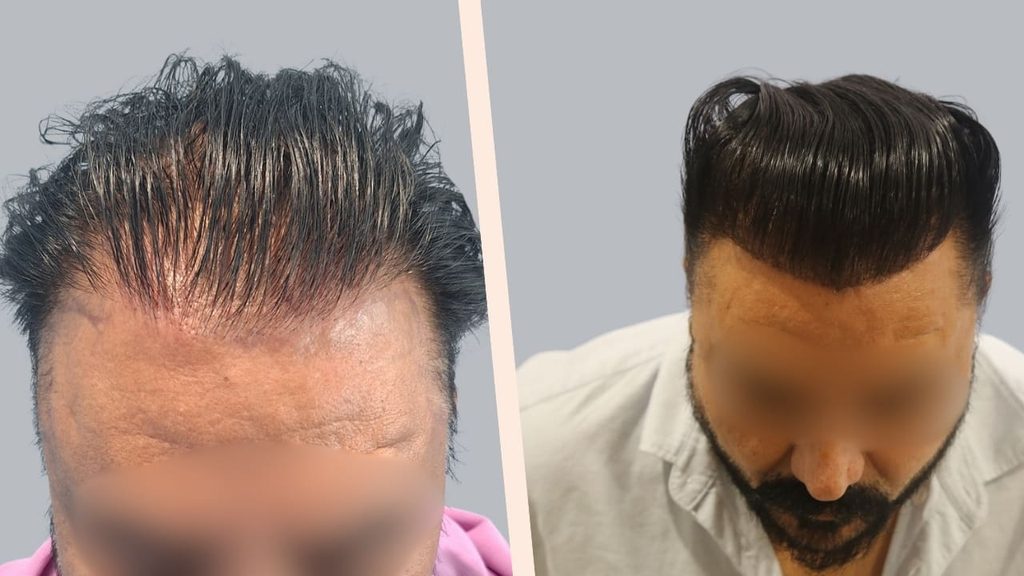
Synthetic hair transplant results are not static; they change over time in ways that differ meaningfully from a natural transplant.
| Timeframe | What Typically Happens |
|---|---|
| Day 0–2 | Full cosmetic density visible immediately after implantation |
| Weeks 1–4 | Healing period; scalp sensitivity, mild redness, tissue closing around fibre anchors |
| Months 1–12 | Manufacturer data cites fibre shedding of roughly 10–30% per year under normal conditions |
| Year 1 onward | Annual top-up sessions are typically required to maintain density; manufacturer literature cites an average usable lifespan in the range of several years with ongoing maintenance |
| Any point | Premature fibre loss, inflammation, or removal may occur if a complication develops, independent of the expected shedding rate |
A few honest caveats: manufacturer-published shedding and lifespan figures vary considerably between sources, and independent, long-term, peer-reviewed follow-up data on Biofibre specifically remains limited compared to conventional hair transplantation. Results vary from patient to patient, and no clinic can responsibly guarantee a specific density, duration, or complication-free outcome. Any figure you are quoted should be treated as an estimate, not a guarantee.
The Procedure: What to Expect Step by Step
Pre-procedure: scalp examination, a tolerance test where recommended, and a discussion of fibre count, treatment area, and maintenance schedule.
During: the scalp is cleaned and numbed with local anaesthesia; fibres are implanted individually with a hooked needle or mechanical implanter, following a planned density and direction pattern. A session generally takes 2 to 4 hours, depending on fibre count.
After: mild redness, tenderness, or scalp sensitivity for several days is common. Fibres remain vulnerable to dislodgement during the initial healing window (roughly 20–30 days), so aftercare instructions on washing, sleeping, and avoiding tension are followed closely. Follow-up visits check for early signs of infection, inflammation, or rejection, since post-procedure monitoring matters as much as the procedure itself.
Risks and Safety Considerations You Should Know
This is the section we consider most important in this guide, and we would rather you read it before the cost table than after.
Regulatory history. The US FDA banned synthetic hair implants for scalp use in 1983, citing non-biocompatibility, lack of demonstrated long-term safety, and misleading marketing claims. That ban remains in effect today, and the International Society of Hair Restoration Surgery (ISHRS) has not endorsed synthetic hair implants as a standard treatment.
Documented complications. Peer-reviewed Indian dermatology literature (Indian Journal of Dermatology, Venereology and Leprology) describes complications including recurrent infections, fibre rejection, periodic fibre loss requiring replacement, allergic contact dermatitis, under-studied carcinogenicity concerns, cicatricial (scarring) alopecia, granulomatous hypersensitivity, and cyst formation. Independent case series report infection rates meaningfully higher than the sub-1% typically associated with standard FUE or FUT.
India-specific context. Synthetic hair fibres continue to be marketed in India despite the FDA position, and hair transplant and cosmetic clinics here are regulated at the state level rather than through a dedicated national framework for this procedure. In practice, the responsibility for candidacy, technique, and disclosure sits heavily with the individual treating physician, which is exactly why credentials and transparency matter as much as the fibre brand used.
What this means practically. Complications are not universal, and manufacturers of refined systems like Biofibre report lower rejection rates than older nylon fibres. But “lower than before” is not the same as “low risk,” and no responsible clinician should present it that way. If you are considering this procedure, ask directly about infection and rejection rates, what happens if fibres need removal, and whether the treating doctor has documented experience managing complications, not just performing implantations.
What Actually Drives Synthetic Hair Transplant Cost in India
- Number of fibres required, driven by treatment area size and desired density, not a fixed package.
- Fibre brand and specification (material grade, length, texture); different manufacturers price differently.
- Doctor involvement and expertise, since technique and complication management differ meaningfully between a dermatologist-led session and a technician-only one.
- Geographic location, with metro-city clinics generally priced higher.
- Number of sessions, since extensive baldness or higher target density may need more than one.
- Ongoing maintenance — annual top-up sessions to replace shed fibres, a recurring cost most headline quotes omit.
Synthetic Hair Transplant vs. Natural Hair Transplant vs. Non-Surgical Options
| Factor | Synthetic (Biofibre) Implant | Natural Hair Transplant (FUE/FUT) | PRP / GFC (non-surgical) |
|---|---|---|---|
| Material | Manufactured polyamide fibre | Your own living hair follicles | Your own blood-derived growth factors |
| Biological integration | None; foreign material | Full; grows as living hair | Supports existing follicles |
| Regulatory status | Banned in the US; regulatory patchwork elsewhere, including India | Standard, widely practised surgical technique | Established adjunct therapy |
| Documented complication rate | Meaningfully higher (infection, rejection, granuloma) | Low (typically well under 1% infection) | Low; mild, self-limiting side effects |
| Permanence | Not permanent; requires periodic replacement | Permanent in the vast majority of cases | Requires maintenance sessions |
| Best suited for | Very limited donor supply or specific scarred/burned areas, with risks accepted | Adequate donor supply and viable recipient area | Early to moderate thinning with active follicles |
This is not a value judgment on every individual case; it reflects the current weight of clinical evidence and regulatory history. A conventional transplant, a combination technique, or a non-surgical option is appropriate for most patients we assess, which is why our default approach rules these out first, rather than treating synthetic fibres as a routine alternative.
Synthetic Hair Transplant Near Me: What to Check Before Booking in India
If you are searching for a “synthetic hair transplant near me,” treat the search as the beginning of due diligence, not the end of it. Before booking with any clinic in India offering this procedure, confirm:
- Who performs the implantation — a qualified dermatologist or hair restoration surgeon, not a technician working independently.
- The fibre brand and its CE marking or equivalent certification, with documentation on request.
- Whether a tolerance test is offered before the full procedure, and how a flagged reaction would be handled.
- A written, itemised quote covering fibre count, session count, and the expected cost of annual maintenance, not just the headline first-session price.
- A documented complication and removal policy — what happens, procedurally and financially, if fibres need removal due to infection or rejection.
- Whether the clinic discusses alternatives, including conventional transplant or non-surgical options, rather than presenting synthetic fibres as the only solution.
A clinic willing to discuss these points candidly, including telling you that you may not be a suitable candidate, is a more reliable signal than proximity or a low advertised price alone.
Where Satya Skin & Hair Solutions Stands on Synthetic Hair Transplant
We do not position synthetic hair fibres as superior to a natural hair transplant, and we do not offer it as a routine, first-line recommendation. Our approach follows the same donor-preservation philosophy we apply to every hair restoration case: evaluate donor capacity, hair loss trajectory, and non-surgical options first, and consider synthetic fibres only in the narrow scenarios above, after a full discussion of the risks in this guide.
If a patient’s donor supply is genuinely exhausted or a scarred area cannot support conventional grafts, that decision deserves the same rigour as any surgical recommendation: a documented scalp assessment, a transparent conversation about complication rates and maintenance requirements, and no promise of a guaranteed outcome. We would rather tell you this is not the right option for your case than implant a material we cannot stand behind long-term.
Frequently Asked Questions
Per-fibre pricing typically ranges from ₹50 to ₹180, with a full session (800–3,000 fibres) costing roughly ₹50,000 to ₹4,50,000 or more, depending on fibre count, brand, and clinic. This does not include ongoing maintenance sessions.
Synthetic hair implants, including Biofibre, carry a documented risk of infection, rejection, allergic reaction, and scarring, meaningfully higher than conventional hair transplantation. The US FDA banned the procedure in 1983, and Indian dermatology literature continues to flag these concerns. Individual risk depends on the fibre system, the treating physician’s technique, and your health profile.
Biofibre is a branded synthetic hair implant system using medical-grade polyamide fibre, designed to be more biocompatible than older nylon-based synthetic hair. It still implants a foreign material into the scalp and carries documented risks, so it should not be assumed risk-free.
Manufacturer data cites annual fibre shedding of roughly 10–30%, meaning most patients require yearly maintenance sessions to sustain density. Results vary by individual and can be shortened significantly if a complication develops.
Fibres can generally be removed if complications occur, though removal is itself a procedure with its own risks and should be discussed with your treating doctor before the initial implantation, not after a problem arises.
Not for most patients. A natural hair transplant uses your own living follicles, has a well-documented safety profile, and produces a permanent result in the majority of cases. Synthetic implants are generally considered only when donor hair is genuinely insufficient.
Several clinics across major Indian cities offer Biofibre or synthetic fibre implants. Before booking on proximity or price, verify the treating doctor’s qualifications, the fibre brand’s certification, and the clinic’s complication and removal policy, as outlined above.
It is not our default or first-line recommendation. We evaluate donor capacity and non-surgical options first, and would only discuss synthetic fibres for specific, limited cases after a complete risk assessment.
Don’t Decide on Price Alone: Get Your Scalp Assessed First
Hair loss is progressive, and the treatment decision you make now, synthetic implant, natural transplant, or non-surgical therapy, shapes your options for years to come. Every week spent comparing online prices without an actual scalp assessment is a week your donor capacity and realistic options go unevaluated for your specific case.
Don’t choose a treatment based only on an online price. Get your individual hair-loss condition assessed and receive a personalised treatment recommendation and cost estimate before you commit to any clinic or procedure. Schedule your evidence-based consultation with our dermatology and hair restoration team at Satya Skin & Hair Solutions, Gurgaon & Delhi, today. Results vary from person to person, and any recommendation you receive will be based on your scalp assessment, not a generic price list.