
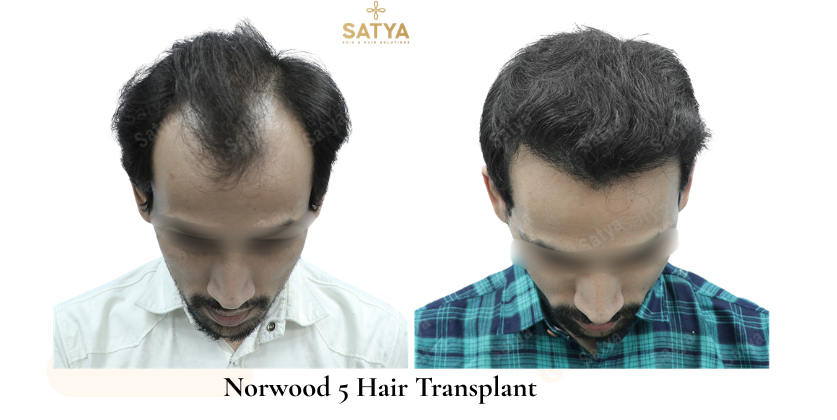
A Norwood 5 hair transplant is surgery done at an advanced stage of male pattern baldness. At this stage, the front hairline has receded deeply and the crown has thinned, leaving only a narrow bridge of hair between the two areas. Surgery is usually possible at this stage, but the result depends heavily on your donor hair supply and on careful surgical planning. Most stage 5 cases need a larger number of grafts and a doctor who plans for long term coverage rather than a quick cosmetic fix.
If you have reached Norwood 5, you already know hair loss has stopped being a small worry. The receding front and the thinning crown have started to meet, and you may be asking a harder question now: is it even worth getting a transplant at this stage, or is the area simply too large? These are fair concerns, and you deserve a clear, honest answer rather than a sales pitch.
This guide explains what a Norwood 5 hair transplant can and cannot do, how stage 5 baldness is assessed, how many grafts are usually involved, and why donor planning matters more here than at any earlier stage.
What Does Norwood 5 Mean? Understanding Stage 5 Baldness
The Norwood scale is the standard system doctors use to grade male pattern baldness, from stage 1 (almost no loss) to stage 7 (the most advanced). Stage 5 baldness sits in the advanced range. At this point the recession at the front and the bald patch at the crown have both grown, and the strip of hair separating them has become noticeably thinner and narrower.
In simple terms, Norwood 5 is the stage where the two main bald zones are close to joining into one large area. It is still a stage above the most extensive forms of baldness, which is why it remains a treatable case for many men when planned correctly.
How Stage 5 Differs From Earlier Stages
The key difference at stage 5 is the ratio between bald area and available donor hair. At Norwood 2 or 3, the bald area is small and the donor zone at the back and sides is rich. At stage 5 baldness, the area needing coverage is much larger, while the donor supply is the same finite resource it always was. This is why a stage 5 plan is about smart distribution of a limited number of grafts, not unlimited filling.
Can Stage 5 Baldness Be Cured?
This is the most common question patients ask, so it deserves a direct answer. Stage 5 baldness cannot be cured in the literal sense, because male pattern baldness is genetic and tends to progress slowly over time. No surgery or medicine permanently switches off the underlying process.
What can be done is restoration and stabilisation. A hair transplant relocates your own permanent follicles from the back and sides into the bald areas, and those transplanted follicles usually keep growing for life. Alongside this, medical therapy can help slow further loss of your existing native hair. So the honest framing is this: stage 5 baldness is managed and restored, not cured. Any clinic that promises a permanent cure is overstating what the science supports.
Is a Norwood 5 Hair Transplant Possible?
For most men at Norwood 5, the answer is yes, but with realistic goals. The decision comes down to one main factor: how much healthy donor hair you have at the back and sides of your scalp, and how well that supply matches the size of the area you want covered.
A good surgeon will assess your donor density, hair calibre, scalp laxity, and the likely future pattern of your loss before agreeing to operate. If the donor area is strong, a Norwood 5 hair transplant can rebuild a natural front hairline and add meaningful coverage to the mid scalp and crown. If the donor area is limited, the plan may focus first on framing the face and restoring the front, because that gives the biggest visual return for the hair available.
How Many Grafts Does a Norwood 5 Hair Transplant Need?
Most Norwood 5 cases need a larger graft count than earlier stages, often somewhere in the region of 3,000 to 4,500 grafts, sometimes spread across more than one session. The exact number depends entirely on your donor supply, the density you want, and how much area is being treated. Be cautious of any figure quoted before a proper scalp assessment, as honest planning cannot be done from a single photograph alone.
How a Norwood 5 Hair Transplant Works, Step by Step
The procedure follows a clear clinical sequence. Understanding it helps set the right expectations.
- Assessment and planning: your donor area is measured, the future hairline is designed, and grafts are allocated across the front, mid scalp, and crown based on priority.
- Donor harvesting: individual follicular units are extracted, most often using the FUE method, so the donor area heals with no linear scar in most cases.
- Recipient site creation: tiny sites are made at the correct angle and direction so the new hair grows the way natural hair would.
- Graft placement: follicles are placed with attention to density at the front and softer, natural spacing toward the crown.
- Recovery: most people return to desk work within a few days, with detailed aftercare to protect the new grafts.
The Satya Approach to Stage 5 Baldness
At Satya Skin & Hair Solutions, advanced cases like Norwood 5 are where careful technique matters most. Our guiding philosophy is straightforward: Less Medicine. Less Donor. Maximum Skill. When the donor supply is limited and the demand is high, every single graft has to count.
| FROM DR. SHAIIL GUPTA, LEAD HAIR TRANSPLANT SURGEON“In a Norwood 5 hair transplant, the real skill is not placing the most grafts in one day. It is protecting the donor area so the patient still has options ten years from now, when their pattern may have advanced further. We plan the front and the frame first, harvest conservatively, and keep a reserve. A stage 5 result should look natural the day it is done and still look sensible a decade later.” |
To support this, we use techniques developed for exactly these high demand cases. The Maximum Harvesting Technique focuses on safely sourcing grafts while keeping the donor area looking full. Direct Stimulated Follicular Transplant aims to support graft survival, and our Mimic Nature Hairline design avoids the flat, pluggy look that dates an older transplant. Future-Ready Transplant Planning means we always design with the next ten years in mind, not just the mirror today.
Why Scalp Health and Medical Therapy Matter
Surgery restores what is already lost, but it does not protect the native hair you still have. This is where dermatology and medical management play a quiet but important role in a lasting result.
| FROM DR. RUCHI AGARWAL, DERMATOLOGIST“At stage 5, we are not only thinking about transplanted hair. We are also protecting the existing native hair around it. A healthy scalp, controlled inflammation, and the right medical support can slow further thinning, so the transplant does not end up as an island surrounded by continued loss. Treating the scalp as living skin, not just a surface to plant into, is part of a result that holds.” |
This is the practical meaning of our wider promise, health bhi, hair bhi. A good outcome is not only about how the front looks after surgery. It is about keeping the whole scalp in good condition so the overall picture stays balanced over the years.
Norwood 5 vs Other Stages: What to Expect
Comparing stages side by side makes the planning logic clearer. The figures below are typical ranges only, and your own assessment may differ.
| Stage | Pattern | Typical graft range | Main planning focus |
|---|---|---|---|
| Norwood 3 | Front recession | 1,500 to 2,500 | Rebuild the hairline |
| Norwood 4 | Front plus early crown | 2,500 to 3,500 | Front and mid scalp |
| Norwood 5 | Large area, narrow bridge | 3,000 to 4,500 | Prioritise front, ration donor |
| Norwood 6 | Bridge mostly gone | 4,000 plus, staged | Coverage over density |
Realistic Timeline: When You Will See Results
Patience is part of the process, and honest timelines protect you from disappointment. Here is what usually happens after surgery.
- First two to three weeks: redness settles and the transplanted hairs shed, which is normal and expected.
- Three to four months: early regrowth begins, often fine and thin at first.
- Six to nine months: noticeable density appears and the new hairline starts to look natural.
- Twelve to fifteen months: the final result matures, especially for the crown, which is always the slowest area to fill.
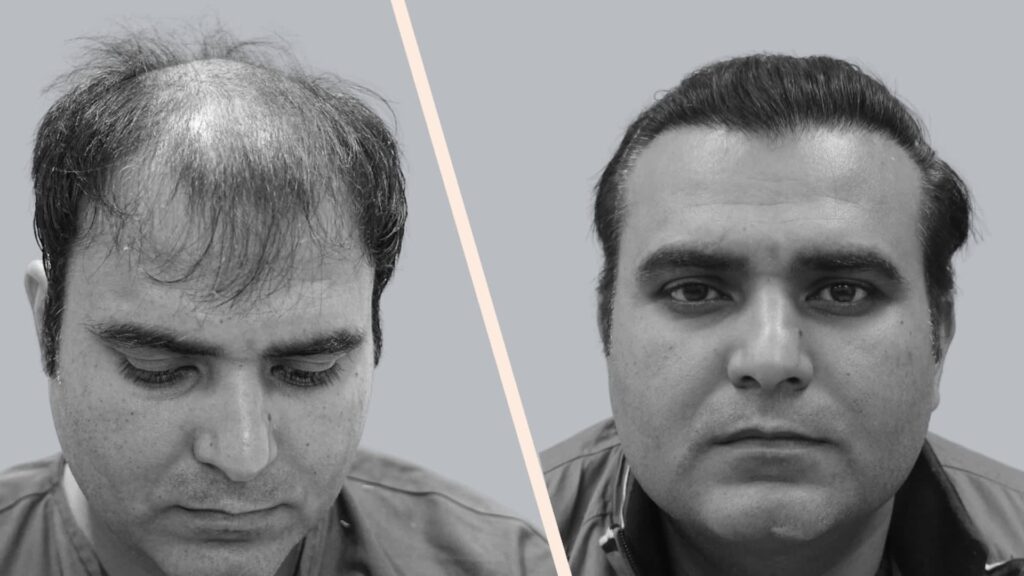
Book an evidence-based consultation with the team at Satya Skin & Hair Solutions
If you are at stage 5, the most useful thing you can do is get an accurate, in person assessment of your donor area before deciding anything. That single step tells you whether a Norwood 5 hair transplant is realistic for you, how many grafts you can safely use, and what coverage to expect.
| Book an evidence-based consultation with the team at Satya Skin & Hair Solutions in Gurgaon or Delhi. Our surgeons will assess your donor supply, explain your realistic options, and design a plan built for the long term, not just the photograph.Call: [+919999570494] |


