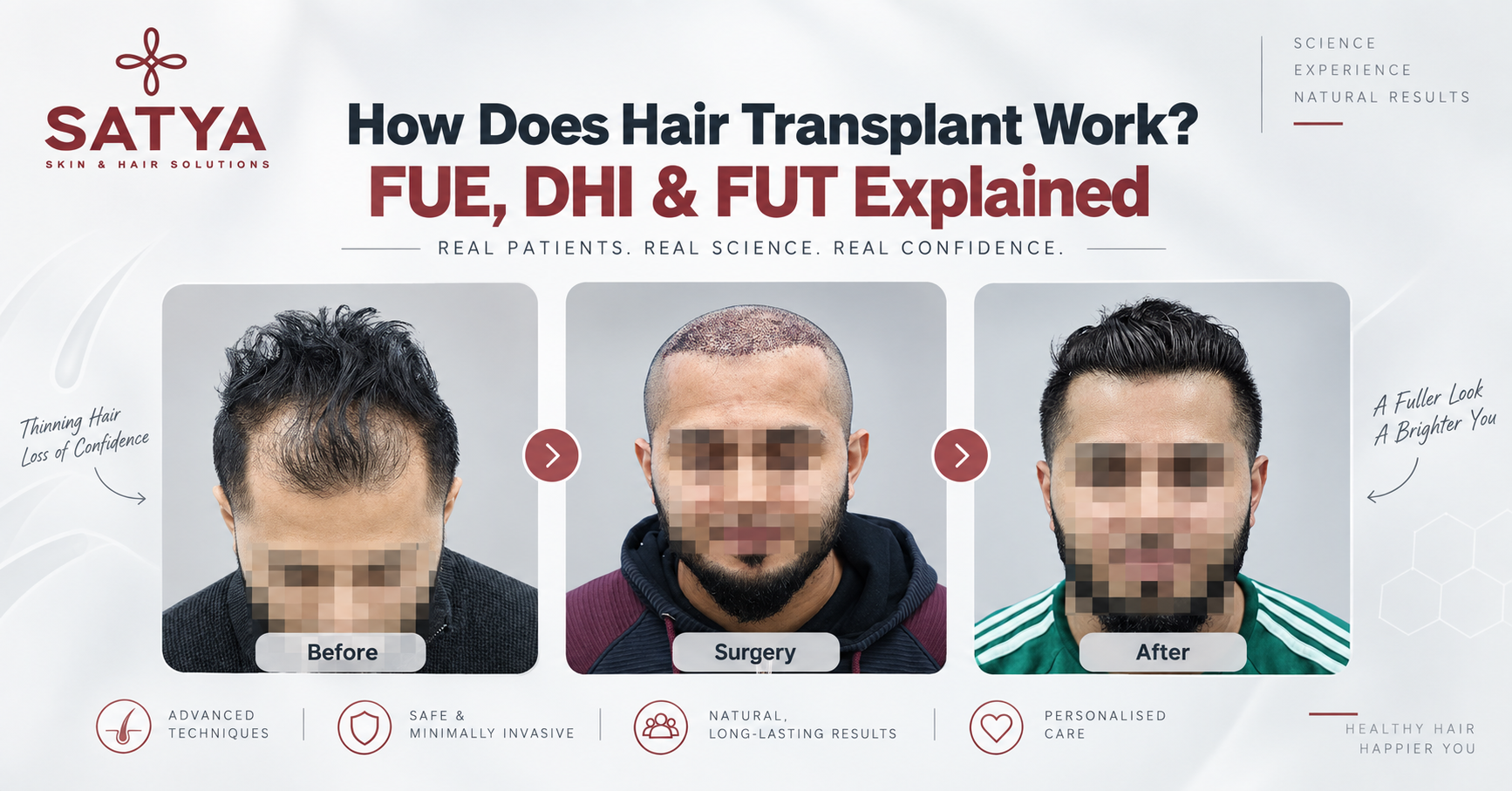
If you’ve been researching hair loss solutions, you’ve probably come across the term “hair transplant surgery” more than once. But what does the procedure actually involve, from the first consultation to the final follicle being placed? Understanding the process can help you set realistic expectations and have an informed conversation with your surgeon.
In this guide, we’ll walk through exactly how a hair transplant works, step by step, and break down the major techniques used today, FUE (Follicular Unit Extraction), DHI (Direct Hair Implantation), and FUT (Follicular Unit Transplantation), so you understand which questions to ask before choosing a treatment path.
What Is a Hair Transplant?
A hair transplant is a surgical procedure in which healthy hair follicles are taken from a “donor area” (usually the back or sides of the scalp, where hair tends to be genetically resistant to thinning) and relocated to areas experiencing hair loss or thinning, known as the “recipient area.”
The underlying principle is called donor dominance: hair follicles generally retain the characteristics of the area they came from, even after being moved. This is why donor-area hair, once transplanted, can continue to grow in its new location, though the extent and pattern of regrowth varies from person to person and requires a proper medical assessment to predict.
Hair transplants are typically considered for:
- Male pattern baldness (androgenetic alopecia)
- Female pattern hair loss (in suitable candidates)
- Receding hairlines or crown thinning
- Scarring alopecia in select cases
- Eyebrow or beard restoration
Not everyone is automatically a candidate, suitability depends on donor hair density, the extent of hair loss, scalp laxity, general health, and the underlying cause of hair loss, all of which a specialist evaluates during consultation.
Step-by-Step: How Hair Transplant Surgery Works
While techniques differ in execution, most hair transplant procedures follow a similar overall framework. Here’s what typically happens, stage by stage.
Step 1: Initial Consultation & Scalp Assessment
Before any procedure is planned, a dermatologist or hair transplant surgeon examines the scalp, evaluates the pattern and stage of hair loss (often using classifications such as the Norwood or Ludwig scale), and reviews the patient’s medical history.
This stage may include:
- A trichoscopy (scalp and hair examination under magnification)
- Assessment of donor area density and hair characteristics
- Blood tests, if medically indicated
- Discussion of expectations, since results can vary based on individual biology
This step is critical; attempting a transplant without proper assessment can lead to unsatisfactory or unnatural-looking outcomes.
Step 2: Designing the Hairline & Planning Graft Distribution
Once a patient is deemed a suitable candidate, the surgeon designs a hairline that suits the patient’s face shape, age, and existing hair pattern. The number of grafts required is estimated based on the area to be covered and the density needed to achieve a natural appearance.
Step 3: Local Anesthesia
The scalp is numbed using local anesthesia. Most patients remain awake and comfortable throughout the procedure, though mild discomfort during the anesthesia injection is common and temporary.
Step 4: Extraction of Hair Follicles (Donor Area)
This is where the chosen technique, FUE, DHI, or FUT, makes the biggest difference (explained in detail below). In general terms:
- In FUE and DHI, individual follicular units are extracted one at a time using a fine punch tool.
- In FUT, a strip of scalp tissue containing hundreds of follicles is surgically removed, and the follicles are separated under microscopic view.
Step 5: Graft Preservation
Extracted grafts are kept in a specialized holding solution at a controlled temperature to maintain their viability until they are implanted. Minimizing the time grafts spend outside the body (“out-of-body time”) is considered important for graft survival.
Step 6: Creating Recipient Sites
Tiny incisions or channels are made in the recipient (balding/thinning) area. The angle, depth, and direction of these incisions are planned carefully, as they directly influence how natural the regrown hair will look.
Step 7: Graft Implantation
The extracted follicles are placed into the recipient sites.
- In FUE and FUT, grafts are implanted after all recipient sites are created.
- In DHI, a specialized pen-like tool (often called an “implanter” or Choi pen) is used to implant each follicle directly, immediately after extraction, without a separate incision step.
Step 8: Post-Operative Care & Bandaging
Once implantation is complete, the treated area is cleaned, and post-op instructions are given. Patients are typically advised on:
- How to sleep and clean the scalp in the first week
- Medications (if prescribed) to reduce swelling or discomfort
- When to expect scabbing to resolve
- Follow-up visits to monitor healing
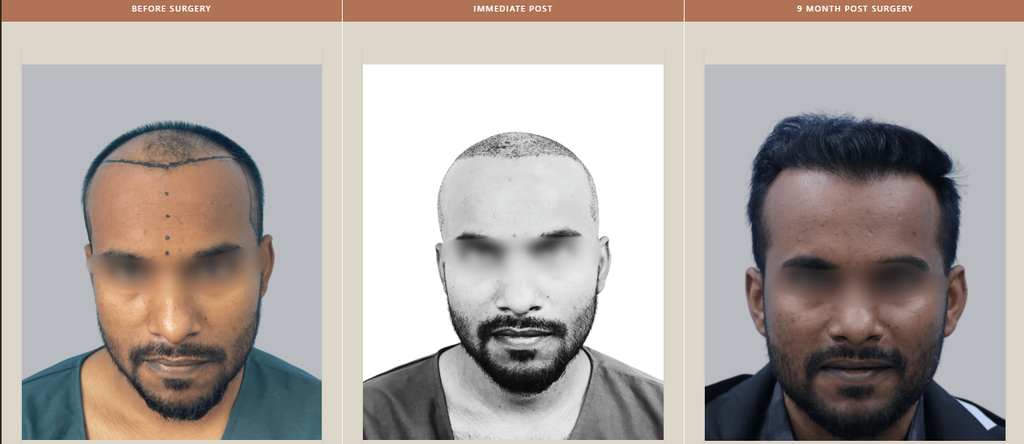
Step 9: Recovery & Growth Timeline
Hair transplant results are not immediate. A general (individual results may vary) timeline looks like:
| Timeframe | What Typically Happens |
|---|---|
| Week 1–2 | Scabbing forms and gradually sheds |
| Week 2–4 | Transplanted hair often sheds (“shock loss”) this is a normal, temporary phase |
| Month 3–4 | New hair growth may begin to appear |
| Month 6–9 | Visible thickening and density improvement in many patients |
| Month 12–18 | Final results are generally assessed around this stage |
Because growth cycles differ between individuals, your surgeon can give you a timeline tailored to your case during consultation.
Types of Hair Transplant Techniques: FUE vs DHI vs FUT
Choosing between FUE, DHI, and FUT depends on factors like the extent of hair loss, donor area availability, scarring preference, budget, and recovery time. Here’s how they compare.
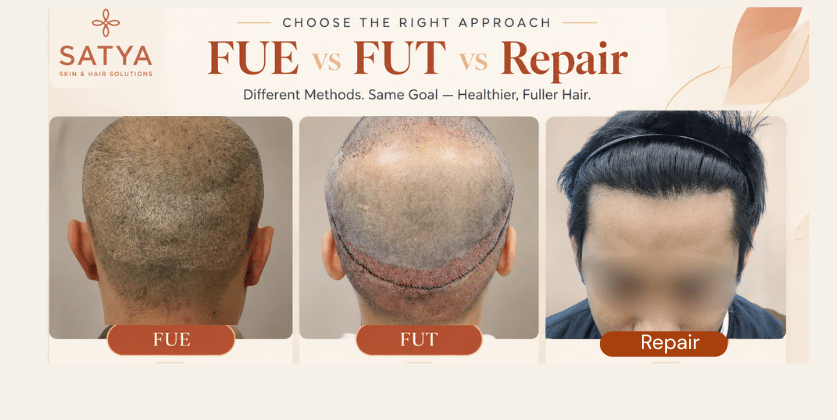
1. FUE (Follicular Unit Extraction)
FUE involves extracting individual hair follicles directly from the donor area using a micro-punch tool, without removing a strip of tissue.
How it works: Each follicular unit (containing 1–4 hairs) is individually extracted, stored, and later implanted into the recipient sites created by the surgeon.
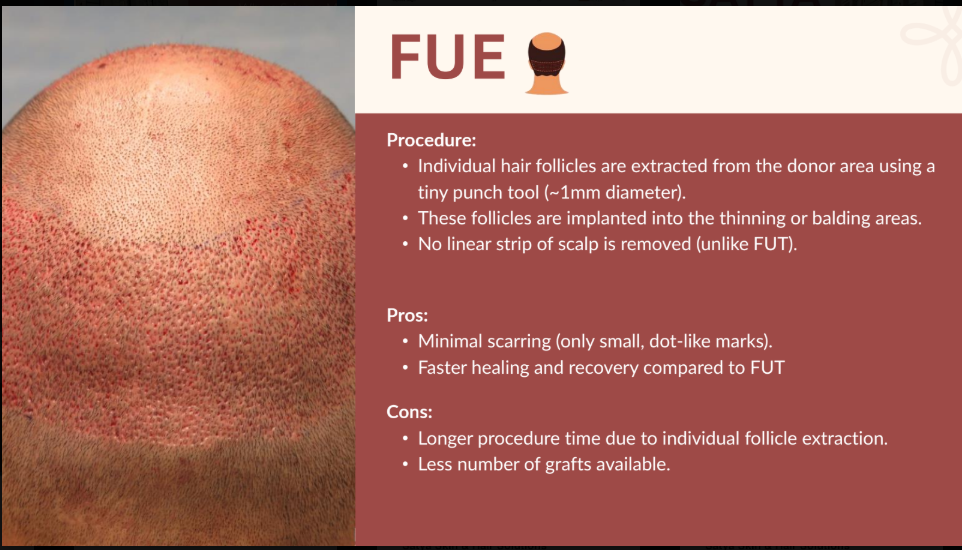
Potential advantages people consider:
- Minimal, dot-like scarring rather than a linear scar
- Generally shorter downtime compared to FUT
- Suitable for patients who prefer to keep hair short
Points to discuss with your surgeon:
- May take longer than FUT for large sessions since follicles are extracted one at a time
- Requires an experienced hand to avoid follicle transection (damage during extraction)
2. DHI (Direct Hair Implantation)
DHI is often considered a refined variation of FUE. The key difference lies in the implantation step.
How it works: Follicles are extracted similarly to FUE, but instead of creating recipient sites first and implanting afterward, each follicle is loaded into a specialized implanter pen and placed directly into the scalp in one motion.
Potential advantages people consider:
- May allow more precise control over the angle, depth, and direction of each hair
- Reduced time grafts spend outside the body, which some surgeons believe can support graft survival
- Little to no need to shave the entire recipient area in some cases
Points to discuss with your surgeon:
- Can be a more time- and labor-intensive process
- Typically involves a specialized technical team, which may affect cost
3. FUT (Follicular Unit Transplantation / Strip Method)
FUT is the more traditional technique, often used for cases requiring a large number of grafts.
How it works: A strip of scalp tissue is surgically removed from the donor area, the donor site is stitched closed, and the strip is dissected under a microscope into individual follicular units for implantation.
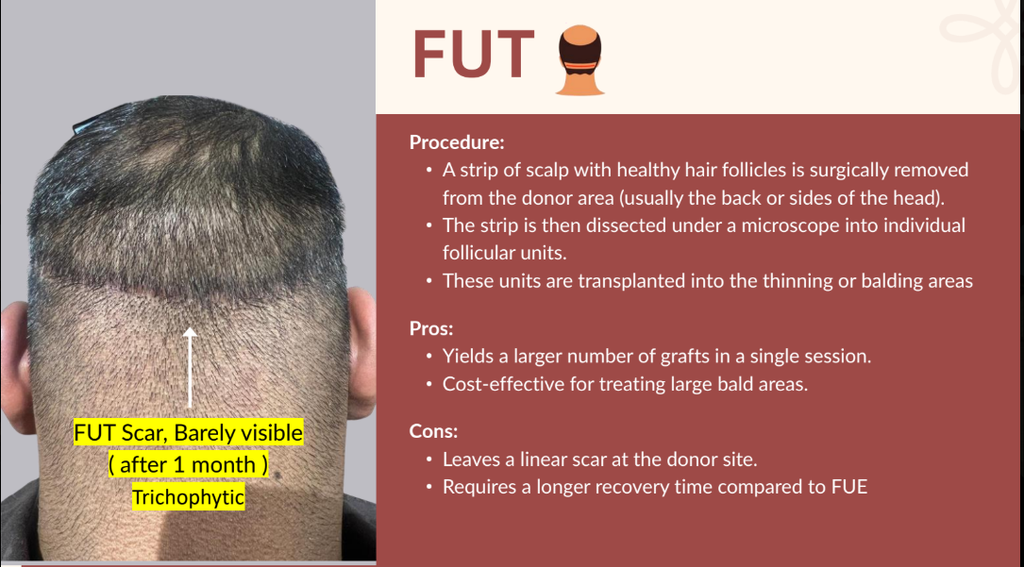
Potential advantages people consider:
- Can allow extraction of a higher graft count in a single session for certain patients
- May be more time-efficient for large sessions compared to follicle-by-follicle extraction
Points to discuss with your surgeon:
- Leaves a linear scar in the donor area, which is typically concealed by surrounding hair
- Recovery of the donor site may take longer than FUE/DHI
- Not ideal for patients who prefer very short hairstyles
Quick Comparison Table
| Factor | FUE | DHI | FUT |
|---|---|---|---|
| Extraction method | Individual follicles | Individual follicles | Strip of tissue |
| Donor scarring | Minimal, dot-like | Minimal, dot-like | Linear scar |
| Implantation | Separate step | Direct, using implanter pen | Separate step |
| Typical downtime | Moderate | Moderate | Comparatively longer |
| Suitable hairstyle post-op | Short hair possible | Short hair possible | Longer hair recommended to cover scar |
| Best suited for | Small to moderate sessions | Precision-focused cases, hairline work | Larger graft requirements |
Which one is right for you? There isn’t a single “best” technique for every patient, the right choice depends on your degree of hair loss, donor supply, scalp characteristics, lifestyle, and goals. This is why a personalized consultation and scalp assessment is an essential first step, not an optional one.
Is Hair Transplant Surgery Painful?
Most patients report only mild discomfort, primarily during the local anesthesia injection. During the procedure itself, patients are typically comfortable, though sensations of pressure or pulling can occur. Some tenderness, swelling, or mild pain in the days following surgery is common and is usually managed with medication as advised by the treating doctor.
Possible Risks & Side Effects
As with any surgical procedure, hair transplants carry some risks, which your surgeon should discuss with you in detail. These can include:
- Temporary swelling, redness, or scabbing
- Temporary shock loss of existing hair in the treated area
- Infection risk, which is minimized through sterile technique and post-op care
- Scarring (linear in FUT, minimal dot scarring in FUE/DHI)
- In rare cases, graft failure or uneven growth
Outcomes and risk levels can vary by individual, which is why pre-procedure evaluation and choosing an experienced, qualified surgical team matters.
How Long Do Hair Transplant Results Last?
Transplanted follicles are typically taken from areas genetically resistant to hair loss, so the transplanted hair may continue to grow long-term in many patients. However, hair loss is a progressive condition, and existing (non-transplanted) hair can continue to thin over time. Many surgeons recommend a combination approach, such as medical therapy alongside surgery, to help manage overall hair health. Your dermatologist can advise on a plan suited to your specific pattern of hair loss.
Also Read: How Long Do the Results of Hair Transplant Surgery Last?
Frequently Asked Questions
Most patients complete their transplant in a single session, though this depends on the number of grafts needed and donor availability. Some patients with extensive hair loss may need more than one session over time.
Yes, in suitable candidates. Female pattern hair loss requires a different diagnostic approach, and a dermatologist should assess whether transplant surgery, medical treatment, or a combination is appropriate.
Many patients return to non-strenuous work within a few days, though this varies based on the technique used and individual healing. Your surgeon will provide guidance specific to your case.
Natural-looking results depend heavily on hairline design, implantation angle, and surgeon expertise. This is why choosing an experienced, qualified team and having a thorough consultation matters.
Transplanted follicles can continue to grow long-term in many patients, but hair loss in non-transplanted areas may continue to progress. Ongoing scalp health management, as advised by your dermatologist, can play a role in long-term results.
Consult a Specialist Before You Decide
Hair transplant surgery is a medical procedure, not a one-size-fits-all cosmetic fix. The right technique, graft count, and treatment plan depend entirely on your scalp condition, hair loss pattern, and health profile, something only a qualified specialist can determine after an in-person evaluation.
At Satya Skin & Hair Clinic, our team evaluates each case individually to help you understand your options, including FUE, DHI, and FUT, and whether hair transplant surgery is a suitable path for you.