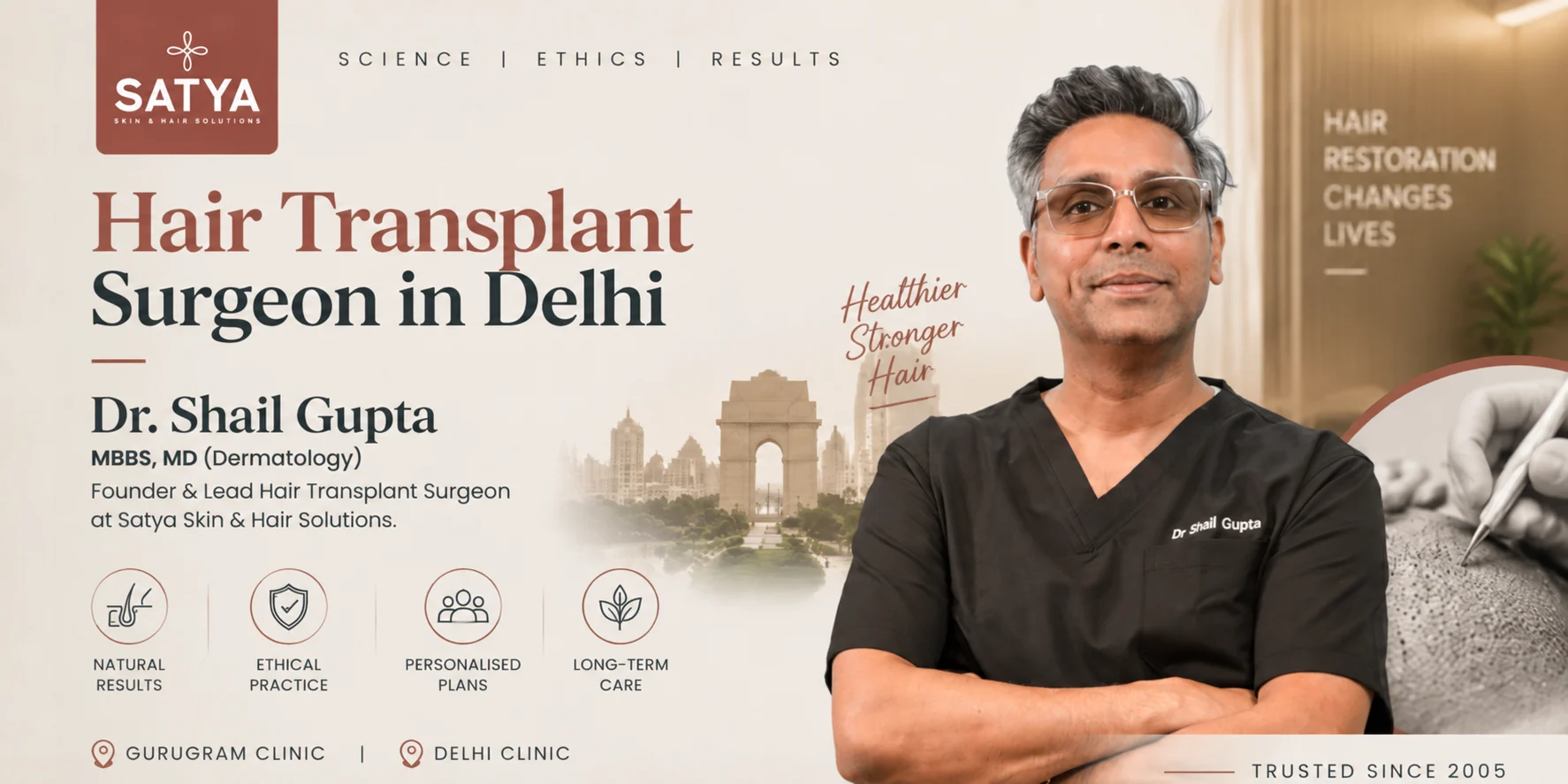
If you’re researching the best hair transplant surgeon in Delhi, you’ve probably noticed that almost every clinic in the city claims to be “the best.” The reality is that a good outcome depends far less on marketing and far more on the surgeon’s qualifications, technique, and honesty about what a graft count and a medication plan can realistically achieve for your scalp.
This is where Dr. Shail Gupta, lead hair transplant surgeon at Satya Skin & Hair Care, has built his reputation, not through inflated graft numbers, but through a conservative, individualised approach that many patients and peers consider among the most trustworthy in the hair transplant in Delhi landscape.
Who Is Dr. Shail Gupta?
Dr. Shail Gupta is a Delhi-based dermatologist and hair transplant surgeon with over two decades of clinical experience.
Qualifications & Registration
- MBBS University College of Medical Sciences & GTB Hospital, New Delhi (2000)
- MD, Dermatology, Venereology & Leprosy G.B. Pant Hospital / Maulana Azad Medical College, New Delhi (2005)
- Certificate in Aesthetic Medicine: Kasemrad Aesthetic Center
- Certified in Hair Transplantation: American Academy of Aesthetic Medicine (AAAM)
- Registered with the Delhi Medical Council
Professional Memberships Dr. Gupta is affiliated with the American Academy of Dermatology (AAD), the Indian Association of Dermatologists, Venereologists and Leprologists (IADVL), the Association of Cutaneous Surgeons of India (ACSI), and the Cosmetic Dermatology Society of India (CDSI), among others.
Experience Dr. Gupta has practised dermatology and hair restoration for over 23 years, including senior consultant roles at Maharaja Agrasen Hospital and Vinayak Hospital before founding his long-term practice at Satya Skin & Hair Solutions Institute, where he has led the hair transplant program for close to two decades.
What Sets Dr. Gupta Apart in Delhi’s Hair Transplant Landscape
He Has Undergone a Hair Transplant Himself
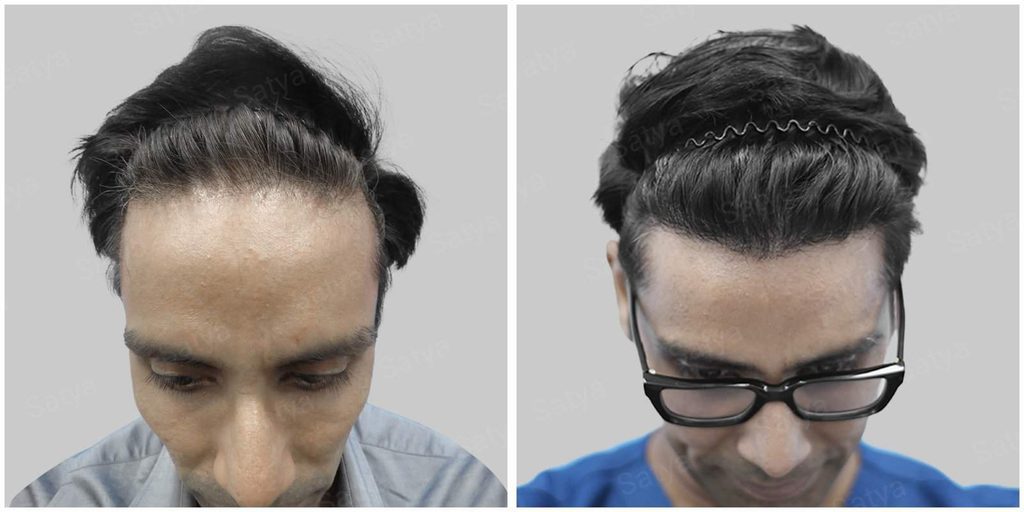
Very few hair transplant surgeons put themselves through the same procedure they perform on patients. At age 44, Dr. Gupta underwent his own FUE hair transplant to address frontal and temple recession. He has since documented his multi-year results transparently, giving patients a rare, first-hand view of how a hair transplant matures over time when performed with a conservative, well-planned approach.
The “Balanced Hair Transplant” Philosophy
Dr. Gupta is known for what his clinic calls a balanced hair transplant approach, a philosophy centred on using the minimum effective graft count and the lowest reasonable medication dose needed to achieve natural, age-appropriate coverage, rather than defaulting to the highest graft numbers a donor area can technically supply.
In practice, this can mean:
- Recommending a more conservative graft count when a smaller, well-placed session can meet the patient’s goals
- Discussing lower-dose finasteride regimens where clinically appropriate, instead of routinely prescribing the maximum standard dose
- Preserving donor density for potential future hair loss, rather than “spending” the entire donor area in one sitting
This approach won’t suit every patient, donor availability, degree of hair loss, and individual goals differ from person to person, but it reflects a treatment philosophy grounded in long-term planning rather than short-term visual impact.
Techniques Offered
Depending on your degree of hair loss, donor characteristics, and goals, Dr. Gupta and his team offer:
- FUE (Follicular Unit Extraction) individual follicular units extracted and implanted, typically suited to patients wanting minimal linear scarring
- FUT (Follicular Unit Transplantation / strip method) often considered for patients needing higher graft yield in a single session
- PRP (Platelet-Rich Plasma) therapy, sometimes used as a supportive treatment alongside or after a transplant
Which technique is appropriate for you depends on a clinical assessment of your scalp laxity, donor density, pattern of hair loss, and overall health, this is not a one-size-fits-all decision, and any recommendation should follow an in-person or video consultation.
Real Patient Results
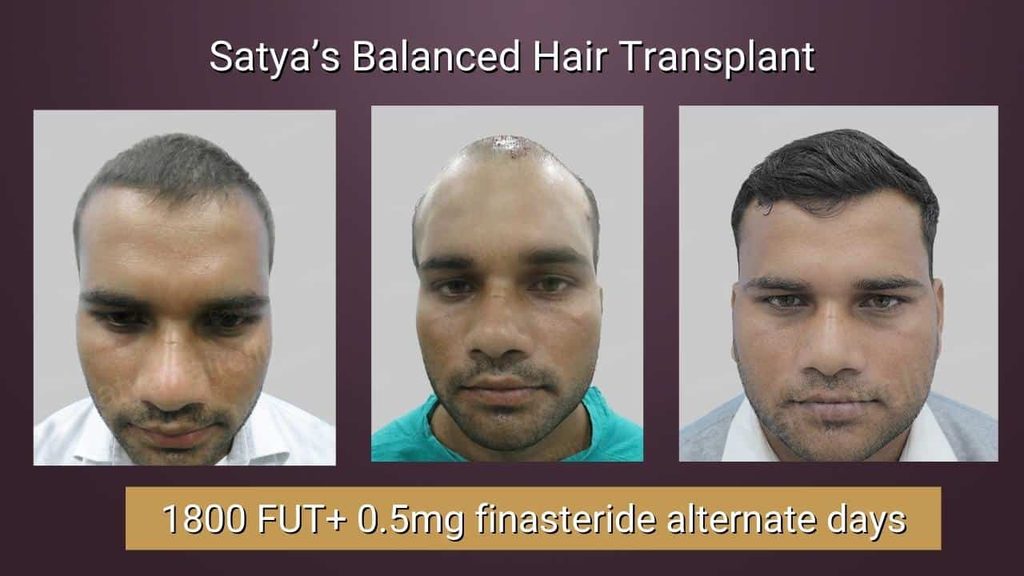
Individual results vary based on donor hair quality, extent of hair loss, adherence to post-procedure care, and individual healing response. Photos shown are of actual patients who have provided consent for their images to be used for informational purposes.
What to Expect at Your Consultation
- Scalp and hair loss assessment: including pattern of loss, donor area density, and scalp characteristics
- Medical history review: to check suitability for surgery and identify any underlying causes of hair loss that may need separate treatment
- Discussion of realistic goals: an honest conversation about what a transplant can and cannot achieve for your specific case
- Personalised treatment plan: including recommended technique, estimated graft count, and whether adjunct treatments (like PRP or medication) are advisable
- Cost and aftercare guidance
A hair transplant is a surgical procedure, and suitability depends on individual assessment, it is not appropriate for everyone, and stable, long-term results generally depend on a combination of surgical technique and, where relevant, ongoing medical management.
Why Patients Consider Satya Skin & Hair Care for Hair Transplant in Delhi
- Surgeon-led consultations rather than sales-led counselling
- A conservative, donor-conscious approach to graft planning
- Founder-level continuity of care, Dr. Gupta established Satya Skin, Laser & Hair Transplant Institute and continues to personally lead its hair transplant program
- Transparent discussion of trade-offs between graft count, medication use, and long-term donor preservation
Frequently Asked Questions
This depends entirely on your degree of hair loss, donor density, and desired coverage. It can only be determined through an in-person or video consultation, be cautious of any clinic that quotes a graft number without examining your scalp.
Transplanted hair in the recipient area is generally resistant to the hormone that causes pattern hair loss, so results can be long-lasting. However, existing untreated hair can continue to thin over time, which is why some patients choose to combine a transplant with ongoing medical management. Results and their longevity vary by individual.
Most patients return to routine activities within about a week, though this varies by procedure type and individual healing. Your surgeon will give you a specific recovery timeline during consultation.
Yes, both techniques are offered, with the recommendation based on your specific case after assessment.
Book a Consultation
If you’re evaluating your options for a hair transplant in Delhi, the most useful next step is a proper scalp assessment rather than relying on generic online graft estimates. You can book a consultation with Dr. Shail Gupta and the team at Satya Skin & Hair Care to discuss whether a transplant is suitable for you and what an individualised plan might look like.