
Whether one would ever be able to stop taking medications like finasteride or minoxidil is one of the most often asked questions by patients about hair loss treatments. Actually, discontinuing medications completely is not always simple and can cause major difficulties, especially in cases of improper prescription writing or medication management.
Dr. Shail Gupta, Founder and Chief Hair Transplant Surgeon at Satya Skin & Hair Solutions, explains why this happens and how a thoughtful, ethical approach to medication use can help patients reduce or even stop their dependency over time.


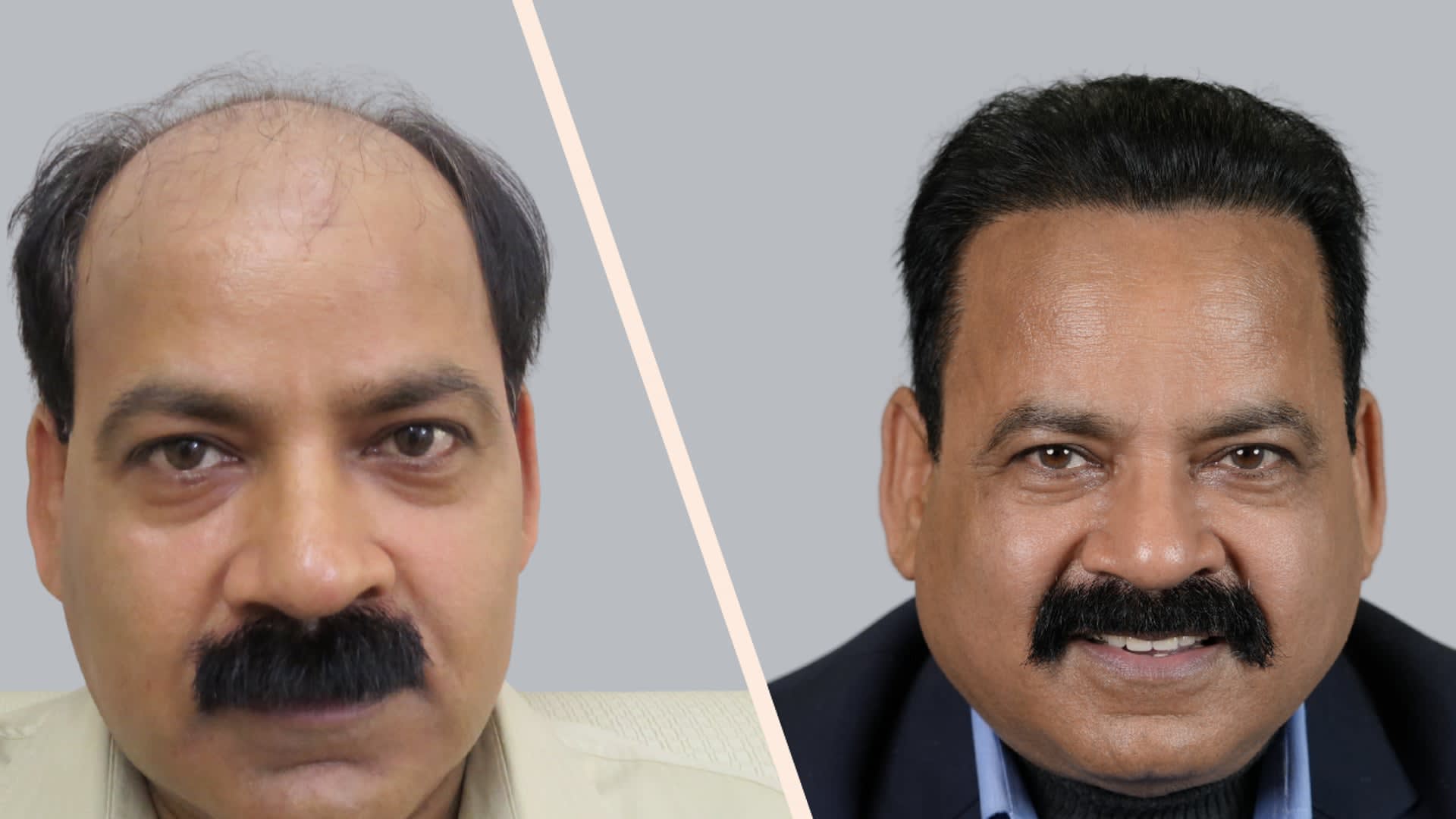
Results from 10 years and still counting and stopped using medicine and followed Satya’s Min Med approach. Still the results are same.
Why Stopping Medication Often Leads to Rebound Hair Loss
When patients stop taking medications abruptly, they often experience rebound hair loss, which can be more severe than the initial hair loss they were trying to treat. This is especially problematic in cases where:
- Full Doses Were Given Without Breaks:
- Many clinics prescribe daily, high-dose medications with no breaks.
- This accelerates the development of tolerance, reducing the medication’s effectiveness over time.
- The sudden withdrawal of medication can cause a dramatic reversal of results, leaving patients disheartened and frustrated.
- Unethical Practices Prioritized Business Over Patient Health:
- Clinics often prescribe full doses of medications to exaggerate results and justify over-promised graft numbers and skill claims.
- Patients are not informed about alternatives like micro-dosing or drug holidays, which could minimize dependency and health risks.
The Concept of a Drug Holiday: A Smarter Approach
A drug holiday refers to strategic breaks from medication, allowing the body to:
- Delay Tolerance: Breaks in medication usage reduce the likelihood of the body becoming resistant to the treatment.
- Minimize Risks: Periodic discontinuation lowers the chances of long-term side effects associated with continuous use.
- Potentially Stop Medications Altogether: In some cases, this approach allows patients to eventually discontinue medications while maintaining good results.
At Satya Skin & Hair Solutions, drug holidays are carefully planned and tailored to each patient’s specific needs, ensuring a balance between maintaining results and protecting health.
Why Daily Medication Without Breaks Is Problematic
- Accelerates Tolerance:
- Taking full doses daily without breaks means the same dose will eventually lose effectiveness, necessitating an increase in dosage, which increases risks.
- Missed Opportunities for Weaning Off:
- Strategic micro-dosing and drug holidays could help reduce dependency over time, but this is not possible with continuous, high-dose regimens.
- Unethical Practices:
- Over-reliance on medications serves the clinic’s interests, boosting short-term results to attract more patients, even at the cost of your long-term health.


The Satya MIN-MED Approach™: A Path to Sustainable Results
Dr. Shail Gupta advocates for the MIN-MED Approach™, which minimizes medication dependence while ensuring lasting, natural results:
- Smallest Effective Dose: Start with the lowest possible dose to achieve results without unnecessary risks.
- Strategic Drug Holidays: Carefully timed breaks to delay tolerance and reduce dependency.
- Customized Plans: Medications are tailored to the patient’s progression, ensuring ethical and sustainable treatment.

A Word from Dr. Shail Gupta
“Stopping medication altogether can be challenging, but it is possible with the right approach. At Satya, we focus on patient health above all else, using ethical practices like micro-dosing and drug holidays to achieve results without unnecessary risks. Your health is too valuable to be compromised by shortcuts or over-promises.”
Conclusion: A Balanced Approach Is Key
While it may not be easy to stop medications entirely, a thoughtful, patient-focused approach like the MIN-MED Approach™ can reduce dependency and improve long-term outcomes. By avoiding unethical practices and prioritizing your health, you can achieve sustainable, natural-looking results without being tied to lifelong medication.
Can you trust a clinic or a Doctor Who is not giving you these options and prioritizing their business over your health?
Contact Satya Skin & Hair Solutions today to learn more about ethical hair restoration practices.
Choose transparency. Choose Satya.
Look good for sometime vs lifetime

Know the secrets of long lasting results
Frequently Asked Questions
Yes, hair transplants are successful in females, especially for treating conditions like female pattern baldness, receding hairlines, or thinning hair. At Satya Skin and Hair Solutions, we specialize in personalized hair transplant techniques, ensuring natural and lasting results for women.
The cost of a hair transplant for women typically ranges from ₹80,000 to ₹3,50,000 in India, depending on the number of grafts and the clinic’s expertise. At Satya Skin and Hair Solutions, we provide tailored treatment plans and transparent pricing for female hair transplants.
A female hair transplant is a permanent solution. Once the transplanted hair follicles take root, they will continue to grow naturally for a lifetime. Results are usually noticeable within 6-12 months post-surgery.
Yes, ₹2 lakh is generally enough for a hair transplant in India, depending on the number of grafts required. Most clinics offer pricing that ranges between ₹50,000 and ₹3,50,000 for a typical procedure. Satya Skin and Hair Solutions provide competitive pricing and excellent results within this budget.
The cost of 2000 hair grafts typically ranges from ₹1,00,000 to ₹4,00,000 in India, depending on the clinic and technique used. At Satya Skin and Hair Solutions, we offer affordable options without compromising quality.
In Delhi, hair transplant costs range from ₹80,000 to ₹4,00,000 depending on the clinic, surgeon’s expertise, and the number of grafts. At Satya Skin and Hair Solutions, we offer customized pricing based on your specific needs.
Yes, hair transplants can be very effective for females experiencing hair thinning, pattern baldness, or scarring alopecia. Clinics like Satya Skin and Hair Solutions offer specialized techniques to ensure natural-looking results for women.
A 5000 graft hair transplant can cost anywhere from ₹2,50,000 to ₹10,00,000 in India, depending on the clinic and procedure complexity. Satya Skin and Hair Solutions offer competitive pricing and high-quality care for large-graft hair transplants.
A failed hair transplant can be corrected through colorful procedures, including hairline form, scar modification, and viscosity enhancement. Consult with a specialist to determine the stylish approach for your situation.
If your hair transplant has resulted in visible errors or unsatisfactory results, seek a consultation with a repair specialist to explore corrective options.
Yes, a failed or wrong hair transplant can be repaired using advanced ways to address issues such as poor hairline design, scarring, and viscosity problems.
Fixing a failed hair transplant involves assessing the former procedure, creating a customized form plan, and using advanced ways to correct the issues and achieve a natural look.
Signs that you may need a repair include an unnatural hairline, visible scars, uneven density, or dissatisfaction with the overall aesthetic results of your previous transplant.
The duration of the procedure varies based on the complexity of the repair and the techniques used, but it typically ranges from 4 to 8 hours.
Most patients can resume light activities within a few days, but we recommend avoiding strenuous exercise and heavy lifting for about two weeks to ensure proper healing.
Initial healing usually occurs within a week, but full results may take several months as the new hair follicles establish themselves and begin to grow.
Yes, the results of a successful hair transplant repair are generally permanent, as long as you follow post-procedure care instructions and maintain a healthy lifestyle.
Our skilled surgeons focus on creating a natural appearance by considering the direction, angle, and density of hair implantation. We strive for results that blend seamlessly with your existing hair.
When hair transplant repair is done by qualified experts applying contemporary procedures, the success rate is really high. The patient’s particular situation and the complexity of the problems being solved determine success.
Yes, re-distributing grafts for a more natural look or scalp micro-pigmentation can help over-harvested donor areas look better.
Yes, badly positioned grafts can be taken out or adjusted during a repair operation to enhance the general look and produce a more natural appearance.
Yes, to improve hair density and get a fuller appearance, restoration treatments sometimes call for introducing fresh grafts to places with limited covering.
Examining the surgeon’s experience, their methods, your general health, donor hair availability, and your intended result is crucial.
While normal transplants seek to address initial hair loss, corrective hair transplants concentrate on repairing problems resulting from past transplants such as improper graft placement, low density, or scarring.
Great donor hair management is absolutely vital. Surgeons carefully remove and arrange grafts to maximize results during repairs, thereby conserving as much donor hair as they can for possible future use.
Corrective treatments can indeed redesign and improve an abnormal hairline by orienting grafts at the right angle and density to provide a more natural appearance.
For those with limited donor hair, synthetic hair implants are a choice; yet, they need regular replacements and appropriate care.
Following post-operative care guidelines, selecting a qualified and experienced surgeon for your first operation, and keeping a healthy lifestyle will help avoid difficulties down the road.
Scars can be covered with scalp micropigmentation; thinning regions will seem better; and the visual density of the hair will be increased.
Yes, existing grafts, scars, and limited donor hair make repair operations usually more difficult and need a great degree of knowledge.
Usually utilized to guarantee the process is painless and to keep the patient comfortable is a local anesthetic.
Yes, incorrectly placed grafts can be changed or eliminated during a restoration operation to produce a more natural look.
Carefully follow the post-operative advice of your surgeon, including avoiding excessive exercise, shielding the scalp from sunlight, and following any medication recommendations.