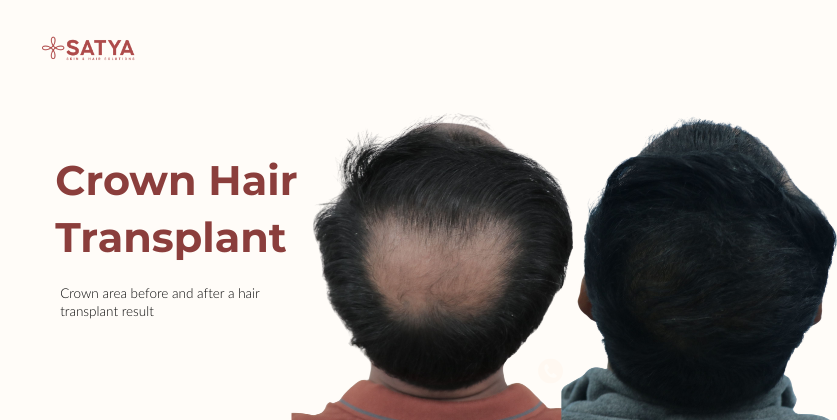
A crown hair transplant restores hair at the crown, the swirl-shaped area at the back and top of the scalp. Because the crown grows in a spiral and catches the light easily, it is one of the trickiest areas to transplant well. It can add real coverage, but it needs careful graft planning and an honest look at how much donor hair you can spare. In many cases the front hairline is treated first, and the crown is approached with a long term plan in mind.
If your hair loss shows up as a growing bald patch at the back of your head, you are dealing with crown thinning. It is one of the most common and most frustrating areas to lose hair, partly because you cannot see it easily yourself, and partly because it tends to keep spreading. Many people ask whether a crown hair transplant can fill it back in. The honest answer is yes, but with some important conditions. This guide explains how it works and how to think about it sensibly.
What Exactly Is a Crown Hair Transplant Procedure?
A crown hair transplant is a procedure that moves your own permanent follicles from the donor area at the back and sides of your scalp into the crown, also called the vertex.
The crown is the rounded area near the top and back of the head where the hair forms a natural swirl. Like any hair transplant, the relocated follicles are resistant to balding, so they keep growing once they settle. What makes the crown special is not the basic method, but the planning and artistry needed to make the swirl look natural. Get the angles right, and the result blends in. Get them wrong, and the area can look flat or unnatural.
FUE or FUT for the Crown?
Both FUE and FUT can be used to harvest grafts for the crown. FUE removes follicles one by one and leaves no linear scar, while FUT removes a donor strip and can provide a high number of grafts in one sitting. The right choice depends on your donor supply and the size of the crown area, not on a fixed rule.
Why the Crown Is Harder to Transplant
The crown is widely considered the most technically demanding area of the scalp to restore, and there are clear reasons for this.
- The swirl pattern: hair at the crown grows outward in a spiral, so grafts must be placed at constantly changing angles to copy nature.
- It is graft-hungry: the swirl and the way light falls on the crown mean it needs more grafts to look full than a flat area of the same size.
- It can keep receding: crown loss often continues around a transplant, so planning for future progression matters a great deal.
Who Is a Good Candidate for a Crown Hair Transplant?
A crown transplant suits people whose hair loss has become stable and who have enough donor hair to cover both current and likely future needs.
Good candidates usually have a defined crown patch, a healthy donor area, and realistic expectations. It is often less suitable for very young patients with fast, active loss, because treating the crown too early can use up donor hair that may be needed elsewhere later. This is why an honest look at your age, pattern, and donor supply always comes before surgery.
How Many Grafts Does a Crown Hair Transplant Need?
Most crown transplant cases need somewhere between 1,500 and 2,500 grafts, and larger or advanced crowns can need more.
The exact number depends on the size of the bald area, how much crown hair you still have, and the density you want. Because the crown is graft-hungry, be cautious of very low graft estimates, as they often lead to a thin, patchy result that does not satisfy. A proper plan counts the cost in grafts honestly, so you can decide if the crown is the best use of your donor hair right now.
Should You Treat the Crown or the Hairline First?
When hair loss affects both the front and the crown, most surgeons recommend restoring the hairline first. The front frames your face and has the biggest effect on how you look in the mirror and in photos. The crown, while important, sits at the back and gives a smaller visual return for the same number of grafts. Treating the front first also protects your limited donor supply for the area that matters most to appearance. This is a planning decision rather than a strict rule, and your own priorities are part of the conversation.
| Area | Visual impact | Graft use | Usual priority |
|---|---|---|---|
| Front hairline | High, frames the face | Efficient | Usually first |
| Crown/vertex | Moderate, seen from behind | Graft-hungry | Often later |
The Satya Approach to Crown Restoration
At Satya Skin & Hair Solutions, the crown is treated with restraint and skill rather than a rush to fill it. Our guiding philosophy is simple: Less Medicine. Less Donor. Maximum Skill. Because the crown can drain donor hair quickly, we plan it as part of your whole hair transplant journey, not in isolation.
| FROM DR. SHAIIL GUPTA, LEAD HAIR TRANSPLANT SURGEON “ The crown is where skill really shows. The swirl means every graft goes in at a slightly different angle, and a small mistake in direction is very visible. Just as important is restraint. In a young patient with an early crown, I would rather protect the donor area and stabilise the hair first than empty the bank on a patch that may keep growing. A good crown result is planned for ten years, not for the next photograph.” |
To support this, we use techniques developed for demanding cases. Our Maximum Harvesting Technique helps source grafts safely when the donor is limited, and our Mimic Nature Hairline approach carries the same attention to angle and direction into the crown swirl, so the area looks natural from every angle.
Protecting Your Crown Beyond Surgery
Surgery restores what is already lost, but it does not stop the native hair around the crown from thinning. This is where dermatology quietly protects your result over the years.
| FROM DR. RUCHI AGARWAL, DERMATOLOGIST AND CO-FOUNDER “ The crown often keeps thinning even after a transplant. If we do not support the existing hair around it, the graft can end up as an island with a widening gap behind it. A healthy scalp and the right medical care can slow that loss, so the whole area ages together. Treating the crown as living skin, not just a target to fill, is the difference between a result that holds and one that fades. That is what we mean by health bhi, hair bhi.” |
Where surgery is not the first step, or needs support, we also offer non-surgical options such as PRP hair treatment and medical management for early crown thinning.
Recovery and Realistic Timeline
The crown is the slowest area of the scalp to show results, so patience is essential.
Here is what usually happens after crown surgery.
- First two to three weeks: mild redness and scabbing settle, and the transplanted hairs shed, which is normal.
- Three to four months: early regrowth begins, often fine and thin at first.
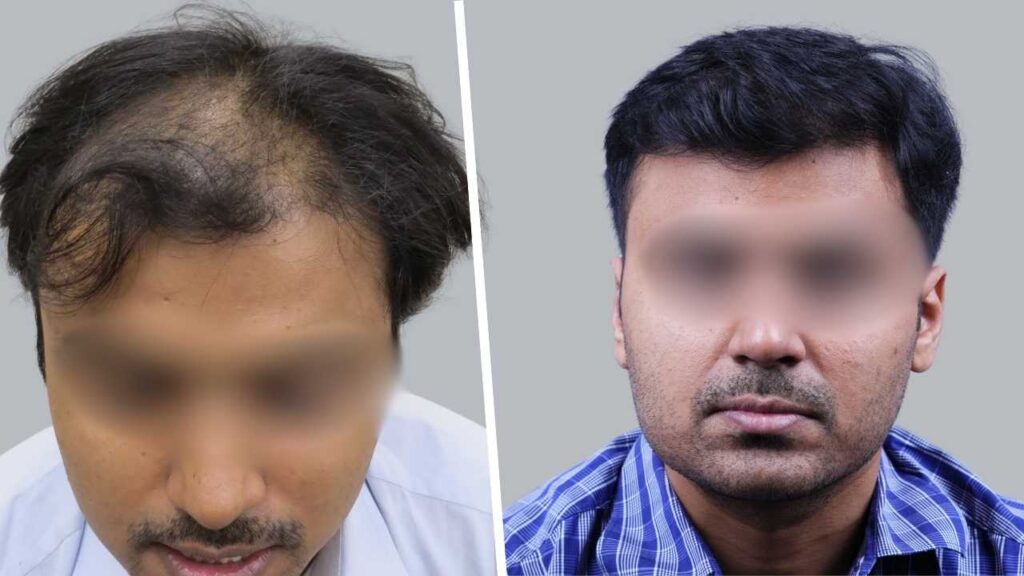
- Six to nine months: the crown starts to look fuller, and the swirl takes shape.
- Twelve to fifteen months: the final result matures, as the crown always takes longer than the front to fill in.
Taking the Next Step
If the crown is your concern, the most useful thing you can do is get an honest, in-person assessment of your donor area and your stage of loss on the Norwood scale. That tells you whether crown surgery is the right move now, how many grafts it would take, and what coverage to expect.
Book an evidence-based consultation with the team at Satya Skin & Hair Solutions in Gurgaon or Delhi. Our surgeons will assess your crown honestly and design a plan built for the long term, not just the mirror today.
Call: +919999570494
Frequently Asked Questions
A crown hair transplant procedure moves your own permanent hair follicles from the donor area at the back and sides of the scalp into the crown, the swirl-shaped area at the top and back of the head. The follicles are placed at carefully changing angles to copy the natural spiral, so the area looks natural once the hair grows.
For the right candidate with a stable pattern and enough donor hair, yes. Crown restoration can add meaningful coverage. The honest answer depends on your donor supply and whether the crown is the best use of it right now, which is why an in person assessment matters before deciding.
The crown grows in a spiral and reflects light easily, so it needs more grafts to look full than a flat area of the same size. This is why the crown is often described as graft-hungry, and why low graft estimates can leave it looking thin.
When both are affected, most surgeons treat the hairline first because it frames the face and gives the biggest visual return for the grafts used. The crown is usually planned later. This is a planning decision, and your own priorities are part of the discussion.
The transplanted follicles are taken from areas resistant to balding, so they generally keep growing for life. However, the native hair around the crown can keep thinning, so ongoing scalp care helps protect the overall result over time.
The crown is the slowest area to fill. Early regrowth usually begins around three to four months, and the final result matures between twelve and fifteen months, which is a little longer than the front of the scalp.