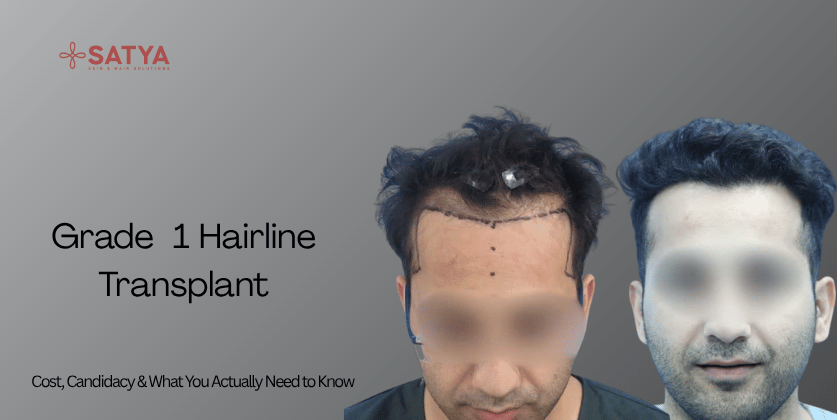

It is one of the most common questions a hair transplant patient asks: if an area looks completely bald, how can a tablet or a lotion possibly grow hair there? The honest answer reshapes how you should judge every ‘before and after’ photo you have ever seen, including your own.
Most patients assume that a bald-looking scalp is an empty scalp. But what the eye sees and what a dermatoscope reveals are often two very different things. Understanding that gap is the difference between setting realistic expectations and feeling betrayed by your results a year or two down the line.
Bald-Looking Skin Isn’t Always Empty
Even in areas where you cannot see hair, the follicles are frequently still there. They have not died, they have shrunk. These are called miniaturized hairs: thin, weak, lightly pigmented strands that are barely visible to the naked eye but are very much alive under the surface.
This is exactly why a doctor uses a dermatoscope before recommending any treatment. Under magnification, an apparently smooth bald patch can reveal a field of fine, struggling follicles that conventional photographs simply miss. Knowing they exist changes the entire treatment conversation.
How Minoxidil and Finasteride Actually Work
When a scalp still holds miniaturized follicles, the right medicines can coax them back toward strength. They do not create brand-new follicles out of nowhere, they revive and reinforce the ones already present.
Minoxidil
Minoxidil works directly on existing follicles, supporting blood flow and prolonging the active growth phase. Over time, thin miniaturized hairs can grow thicker, longer and more pigmented, making a previously sparse area look noticeably fuller.
Finasteride
Finasteride supports hair growth by addressing the hormonal driver of male-pattern thinning. By reducing the impact of the hormone that shrinks follicles, it helps protect the hairs you have and gives miniaturized follicles a chance to recover.
Together, these medicines can improve hair density and make a hairline appear fuller, sometimes dramatically so.
“Sometimes what looks like a great transplant result is partly the medicine thickening your miniaturized hairs, not the surgery alone.”
Medicine vs. Transplant: Who Gets the Credit?
Here is the point that very few ‘after’ photos ever explain. When a patient undergoes a hair transplant and takes Minoxidil and Finasteride at the same time, the visible result is a blend of two different things:
- Surgical grafts: the follicles a surgeon physically relocated, which are permanent.
- Medication-driven density: the miniaturized hairs that the medicines thickened, which depend on those medicines continuing.
Because both effects appear together, a result can look outstanding. The hairline looks denser, the crown looks fuller, and the photos look spectacular. But part of that fullness is being held up by medication, not by the transplant.
Why Some Results Seem to ‘Worsen’ Over Time
This is where the trap closes. If a patient stops their medicines, the miniaturized hairs that were thickened can thin out again. The surgical grafts stay, but the medication-dependent density fades.
To the patient, it feels as though the transplant itself failed. In reality, what disappeared was never the surgical result; it was the medicine-driven portion of the density. Understanding this distinction up front is what protects you from disappointment later.
Patient Takeaway
Before judging any hair transplant result, including yours, ask one question: how much of this density is permanent grafts, and how much depends on medicines I’m still taking? An honest clinic will tell you the difference.
Why We Built the Rescue Hair Transplant Series
This blurred line between surgery and medication is exactly why so many patients feel misled by their results. It is rarely discussed openly, and it is one of the most common traps in the industry.
The Rescue Hair Transplant Series exists to expose these traps and help patients make informed decisions, so that what you expect from a transplant matches what the surgery alone can truly deliver, and you understand the role your medicines play alongside it.
Dr. Shail leads Satya’s hair restoration practice and is known for honest, education-first guidance on hair transplant results, donor management and long-term planning.
Frequently Asked Questions
Often, yes, but not from nothing. Bald-looking areas frequently still contain miniaturized follicles that are alive but shrunken. Medicines like Minoxidil and Finasteride can thicken these existing follicles. They do not create new follicles in a truly empty area.
They are thin, weak, lightly pigmented hairs that are barely visible to the naked eye. A dermatoscope is used to see them clearly. They are a sign that the follicle is struggling but not yet gone.
Your surgical grafts are permanent. However, any density that came from medicines thickening miniaturized hairs can fade if you stop those medicines. This is why some people feel their results worsen over time, the medication-dependent portion thins again.
A proper consultation, including a dermatoscope assessment, helps your surgeon explain how much of your density comes from grafts versus medication. Book an evaluation to understand your specific case.