
If you have been researching a hair transplant in India, you have probably seen wildly different claims: “permanent results in one sitting,” “lowest price guaranteed,” “no side effects ever.” As clinicians, we believe you deserve something more useful: clinical reality. A hair transplant is a real surgical procedure, not a quick fix. This complete 2026 guide explains how a hair transplant in India actually works, the difference between FUT, FUE, and DHI, who is a suitable candidate, what it costs, and what honest results look like over 12 months.
A hair transplant in India is a day-care procedure that moves your own DHT-resistant follicles from the back of the scalp to thinning or bald areas. The three main techniques are FUT, FUE and DHI. India is now a leading destination for hair transplant because it combines experienced, qualified surgeons with a competitive investment compared with the UK, USA or Gulf. Results are gradual: visible density usually appears between 6 and 12 months. Choosing a doctor-led clinic matters far more than choosing a city.
Why India Has Become a Leading Destination for Hair Transplant
Over the last decade, a hair transplant in India has moved from “budget option” to a genuine clinical destination. The reason is not only the competitive investment compared with the UK, USA, Australia, or the Gulf. It is the depth of surgical experience: Indian centres perform a very high volume of cases each year, which builds the kind of hands-on judgment that hair restoration demands.
That said, India is also an unregulated marketplace in places. The same city can hold a doctor-led surgical clinic and a salon-style setup where technicians do most of the work. This is exactly why the choice of surgeon matters far more than the choice of city or the headline price.
First, Understand Why You Are Losing Hair
Most male and female pattern hair loss is caused by androgenetic alopecia, a genetic sensitivity of certain follicles to a hormone called DHT (dihydrotestosterone). Over time, DHT-sensitive follicles shrink and stop producing visible hair. The follicles at the back and sides of the scalp are usually DHT-resistant, which is why they are used as the donor area in a transplant.
This single fact explains why a transplant works and why it is not a cure: surgery relocates resistant follicles, but it does not switch off the genetic process affecting your native hair. Good planning accounts for future loss, something we treat as non-negotiable.
Types of Hair Transplant Techniques: FUT, FUE, and DHI
There are three established types of hair transplant. None of them is universally “best”; the right hair transplant technique depends on your grade of baldness, donor quality, and goals.
FUT (Follicular Unit Transplantation)
A thin strip of skin is removed from the donor area and divided into individual follicular grafts under magnification. FUT can yield a large number of grafts in one session, which suits advanced baldness. The trade-off is a fine linear scar at the back, usually concealed by surrounding hair.
FUE (Follicular Unit Extraction)
Individual follicles are extracted directly from the donor area, leaving tiny dot-like marks instead of a linear scar. FUE is the most widely chosen hair transplant technique today because it is versatile, leaves minimal visible scarring, and recovery is quick.
DHI (Direct Hair Implantation)
DHI is a refinement of FUE. Extracted follicles are placed using a specialised implanter pen that controls the angle, depth and direction of each follicle. This gives precise control in the hairline and high-density zones. It is meticulous, time-intensive work and rewards surgical skill.
FUE vs FUT vs DHI, at a glance
| Feature | FUT | FUE | DHI |
|---|---|---|---|
| Method | Strip of skin removed, then divided into grafts | Individual follicles extracted directly | Follicles extracted, then implanted with a special pen |
| Scarring | A thin linear scar at the back | Tiny dot-like marks, well hidden | Tiny dot-like marks, well hidden |
| Shaving | Limited shaving needed | Usually shaved (no-shave possible in select cases) | Minimal shaving in many cases |
| Best suited for | Large bald areas needing maximum grafts | Most patients; flexible donor use | Refined hairlines and high-density zones |
| Recovery | Slightly longer | Faster | Faster |
Who Is the Right Candidate, and Who Is Not
Trust is built by saying who a procedure is not for. A hair transplant in India is generally suitable for adults with stable, well-defined pattern baldness and a healthy donor area. It is usually not the right first step for:
- Very young patients whose hair loss pattern has not stabilised.
- People with active scalp disease or uncontrolled medical conditions.
- Those expecting the density of their teenage years, a transplant restores natural-looking coverage, not original volume.
- People with diffuse, unpatterned thinning where medical management is often the better path.
What Actually Happens During the Procedure
A hair transplant in India is typically a single-day, walk-in, walk-out procedure performed under local anaesthesia. In broad terms:
- Planning & hairline design: mapping your future hairline to suit your face and age.
- Anaesthesia: the scalp is numbed; at Satya, this follows our Zero-Pain Anaesthesia Protocol to keep the experience comfortable.
- Extraction: follicles are harvested from the donor area.
- Implantation: grafts are placed at the correct angle and density.
You can usually return home the same day. Mild swelling, scabbing, and redness are normal for a few days, these are expected stages of healing, not complications.
Realistic Timeline: When You Will See Results
Honest expectations are part of good care. Transplanted hair sheds in the first few weeks, this “shock loss” is normal and not a failure. New growth then follows a gradual curve:
- Months 1–3: shedding and quiet healing; little visible change.
- Months 4–6: early growth begins, often fine and patchy at first.
- Months 6–12: meaningful density develops.
- Months 12–18: final texture and maturity of results.
Hair Transplant Cost in India: What Determines the Price
There is no single hair transplant cost in India, because the price depends on the number of grafts, the technique (FUE, FUT, or DHI), the complexity of your case, and, most importantly, the surgical team. A very low price often signals technician-led work or a high graft count at the expense of donor health. We would rather you see this as a competitive investment in a result that lasts than as a bargain to be hunted.
The Satya Approach: Less Medicine. Less Donor. Maximum Skill.
At Satya Skin & Hair Solutions, our philosophy is simple to say and demanding to practise: Less Medicine. Less Donor. Maximum Skill. It means protecting your finite donor area, avoiding over-medication, and letting surgical precision do the heavy lifting. Our work is doctor-led at every stage, supported by techniques we have refined in-house, the Mimic Nature Hairline for natural angulation, the Maximum Harvesting Technique (MHT) to use the donor wisely, Direct Stimulated Follicular Transplant (DSFT), and Future-Ready Transplant Planning so today’s result still looks right in ten years.
| “A hair transplant is a one-time use of a limited donor resource. Our job is not to plant the most grafts, it is to plant the right grafts, at the right angle, so the result still looks natural decades later.”Dr. Shaiil Gupta, Lead Hair Transplant Surgeon, Satya Skin & Hair Solutions |
| “Before anyone talks about surgery, we evaluate the scalp medically. For many patients, especially women, stabilising hair loss with the right dermatological care comes first, sometimes instead of a transplant altogether.”Dr. Ruchi Agarwal Dermatologist & Hair-Loss Specialist, Satya Skin & Hair Solutions |
Common Myths About Hair Transplant in India
- “Results are permanent and limitless.” Transplanted follicles are long-lasting, but native hair can keep thinning, planning matters.
- “More grafts are always better.” Over-harvesting damages the donor area for life.
- “Cheaper city = same result.” The surgeon’s skill, not the city, decides the outcome.
- “It is painful and needs long hospital stays.” It is a day-care procedure under local anaesthesia.
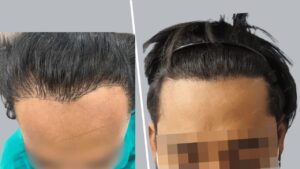
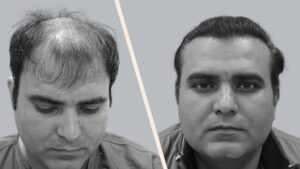
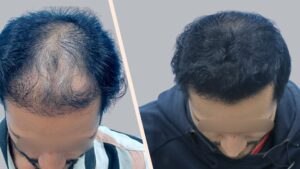
| Considering a hair transplant in India?The most useful next step is not a price quote; it is an evidence-based consultation. Our doctors will assess your scalp, donor area and expectations honestly, and tell you whether surgery, medical management, or simply waiting is right for you.Book a consultation: +919999570494 | Gurgaon (DLF Phase 4, Galleria Market) & Delhi (Pitampura). |
Frequently Asked Questions
Transplanted follicles are taken from DHT-resistant donor zones, so they are designed to last. However, a transplant does not stop genetic thinning of your remaining native hair, which is why future-ready planning and, in some cases, medical management are recommended alongside surgery.
When performed by a qualified surgeon in a sterile, doctor-led clinic, a hair transplant is considered a safe day-care procedure. Most side effects, mild swelling, scabbing, temporary numbness, are short-lived. Risks rise sharply when the procedure is run by technicians without medical supervision.
There is no single best technique. FUT suits very large bald areas, FUE is the versatile all-rounder with minimal scarring, and DHI offers precise control for the hairline. The right hair transplant technique is decided after examining your donor area and grade of baldness.
Cost depends on the number of grafts, the technique and the surgical team rather than a fixed rate. Treat unusually low “packages” with caution. A clinical consultation is the only accurate way to estimate your cost.
Yes, in suitable cases. But female hair loss is often diffuse, so a dermatological evaluation comes first. Sometimes medical management restores enough density without surgery, and a transplant is only advised when the pattern is well defined.
There is no fixed age, but very young patients are usually advised to wait until their hair loss pattern stabilises. Operating too early can lead to unnatural results as native hair continues to recede around the grafts.
No-shave and minimal-shave approaches are possible in selected cases, depending on the technique, the number of grafts and your hair length. Your surgeon will tell you what is realistic for your case.