If you are searching for a hair transplant and feel overwhelmed by the options, you are not alone. Every year, thousands of people in Gurgaon and Delhi NCR make a decision about hair restoration, and many of them get it wrong, not because the surgery failed, but because they walked into the wrong clinic with the wrong plan.
This article will give you the honest, medically accurate information you need to make the right choice about a hair transplant. We will cover the science, the techniques, the risks, and the questions your surgeon must answer before you ever agree to a procedure.
At Satya Skin & Hair Solutions, founded in 2005 and led by Dr. Shail Gupta and Dr. Ruchi Agarwal, the philosophy has always been the same: a hair transplant is a lifelong investment. Every decision must be made with that in mind.
What Is a Hair Transplant, and Who Actually Needs One?
A hair transplant is a surgical procedure in which hair follicles are relocated from a donor area (usually the back and sides of the scalp, where hair is genetically resistant to falling) to areas that are thinning or bald. These transplanted follicles continue to grow hair naturally for life.
However, not every person experiencing hair loss is an ideal candidate for a hair transplant. Hair loss caused by nutritional deficiency, thyroid imbalance, stress, or scalp inflammation often responds better to medical treatment. Surgery is the right option when hair loss has stabilised and the donor area is sufficient.
Before recommending any procedure, a qualified dermatologist will assess your Norwood-Hamilton grade (for men) or Ludwig scale (for women), examine your donor density, and discuss what realistic coverage is possible. A consultation is not a sales call. It is a medical evaluation.
FUE Hair Transplant vs. FUT Hair Transplant: Which Is Right for You?
The two most widely performed hair transplant techniques globally are FUE (Follicular Unit Extraction) and FUT (Follicular Unit Transplantation). Understanding the difference is important before you commit.
FUE Hair Transplant
In FUE, individual follicular units are extracted one by one from the donor area using a micro-punch instrument. There is no linear scar, the healing is faster, and the procedure is suitable for patients who prefer to wear their hair short. FUE is today the most commonly chosen method for hair transplant in Gurgaon and Delhi, particularly among younger patients.
FUT Hair Transplant
FUT involves removing a narrow strip of scalp from the donor region, then dissecting it under a microscope into individual grafts. This technique can yield a higher number of grafts in a single session and is often preferred for advanced hair loss or when maximum density is the goal. It leaves a linear scar, but when placed correctly, this is easily concealed.
The right technique is not about which is newer or more popular. It is about your specific hair loss pattern, donor supply, lifestyle, and long-term goals. At Satya, the recommendation is always based on what serves the patient best over a lifetime, not what is trending.
DSFT: Satya’s Patented Hair Transplant Innovation
DSFT (Direct Stimulated Follicular Transplant) is a patented technique developed exclusively by Satya Skin & Hair Solutions. It is Satya’s advanced evolution of the FUE method, built on more than two decades of surgical experience and scientific refinement.
The core principle behind DSFT is simple but powerful: extracted follicles are kept in a biologically stimulated solution at precisely controlled temperature and humidity levels before implantation. This careful preservation and stimulation of grafts leads to significantly better outcomes.
Independent results at Satya show that DSFT achieves approximately 20% better hair growth compared to direct implant techniques. That margin is not cosmetically minor, it can be the difference between full coverage and visible thinning.
DSFT also uses patented, single-use titanium-coated instruments for extraction, which optimise precision while eliminating any risk of cross-contamination. Every instrument used in a DSFT procedure at Satya’s Gurgaon and Delhi clinics is new, sterile, and designed for that single patient.
The Mimic Nature Hairline: Satya’s Second Patented Technique
Of all the aspects of a hair transplant, the hairline is the most visible and the most permanent. A poorly designed hairline, one that is too straight, too low, or too uniform, will look obviously artificial years after the procedure, regardless of how technically sound the surgery was.
Mimic Nature Hairline is a patented hairline design methodology developed by Dr. Shaiil Gupta and Dr. Ruchi Agarwal at Satya. It is built on the observation that no natural hairline is perfectly straight or symmetrical. Natural hairlines have micro-irregularities, varying follicle angles, and age-appropriate recession that make them indistinguishable from untreated hair.
At Satya’s clinic in Gurgaon, every hairline design begins with a detailed study of the patient’s facial structure, age, existing hair pattern, and likely future hair loss trajectory. The result is a hairline that will look natural not just today, but twenty years from now.
Why Donor Area Preservation Is More Important Than Graft Count
One of the most common mistakes patients make when choosing a hair transplant clinic is focusing on the number of grafts. More grafts sounds like more value. In reality, an aggressive extraction session that depletes the donor area can permanently damage your options for any future procedures.
Hair loss is a progressive condition for most patients. The grafts in the donor area are finite. A responsible hair transplant approach plans for the patient’s entire lifetime, not just the next appointment.
At Satya, donor area preservation is a clinical principle, not an afterthought. Every extraction plan considers how much donor hair the patient may need five, ten, or twenty years from now. This long-term planning protects the patient from the irreversible consequences of over-harvesting.
The Problem with Overusing Hair Loss Medications
Many patients across Delhi NCR come to Satya after years of using minoxidil or finasteride without any structured plan. These medications are not inherently harmful, but prescribing them indefinitely, without addressing the underlying cause of hair loss or planning for eventual surgical restoration, is not sound medical practice.
At Satya, the philosophy is to treat hair loss intelligently. Medication, when used, is part of a structured, time-limited plan. The goal is to stabilise hair loss, optimise scalp health, and, where appropriate, progress to a hair transplant procedure that addresses the problem permanently. Patients are never encouraged to stay on medicines longer than medically necessary.
Common Hair Transplant Myths Addressed Honestly
Myth 1: The results will look unnatural or pluggy
This was a valid concern with hair transplant techniques from the 1980s and 1990s. Modern FUE, FUT, and DSFT techniques transplant single follicular units at natural angles and densities. Patients treated with the Mimic Nature Hairline approach at Satya routinely report that even close friends cannot tell they have had a procedure.
Myth 2: Hair transplant results do not last
Transplanted hair follicles come from the donor area, which is genetically resistant to the hormonal effects that cause male and female pattern hair loss. Once established, these follicles continue to produce hair for life. The transplanted hair will behave exactly like natural hair, it grows, requires cutting, and responds to normal hair care.
Myth 3: You can transplant as many grafts as you want
There is a biological ceiling to how many grafts can be safely extracted from any donor area. Exceeding it damages the donor region and compromises both the health of the remaining hair and the viability of future procedures. Ethical hair transplant surgeons will always inform you of your safe extraction limit.
Myth 4: A cheap hair transplant is just as good as an expensive one
The cost of a hair transplant is not merely a payment for grafts. It reflects the surgeon’s training, the technology used, the quality of instruments, the post-operative monitoring, and the clinic’s ability to manage complications or provide corrective procedures if needed. Satya’s Delhi and Gurgaon clinics have performed more than 2,000 corrective hair transplants on patients who initially chose lower-cost options elsewhere.
Hair Transplant Cost in Gurgaon and Delhi: What to Expect
Hair transplant cost in Gurgaon and Delhi NCR varies significantly depending on several factors: the technique used (FUE, FUT, or DSFT), the number of grafts required, the complexity of the case, and the experience of the surgical team.
At Satya, cost estimates are provided only after a thorough in-person consultation. This is not a formality. The number of grafts a patient actually needs can only be determined after examining the donor area and the degree of hair loss in person. Online cost calculators or telephone quotes are almost never accurate.
What should concern any patient is not whether a quote is high or low, but whether the clinic’s approach is medically sound. An underpriced procedure often reflects cutting corners, on instruments, on surgical time, or on aftercare.
Recovery After a Hair Transplant: A Realistic Timeline
Recovery from a hair transplant is gradual and, for most patients, uneventful when post-operative instructions are followed correctly.
- Days 1 to 3: Mild swelling, redness, and scabbing around the recipient area. Rest is advised. Sleeping with the head elevated helps reduce swelling.
- Days 7 to 10: Scabs begin to fall off naturally. The transplanted hair may shed during this period. This is completely normal and expected.
- Weeks 2 to 4: The donor area heals and becomes less visible. Most patients return to normal daily activities within 10 days.
- Months 3 to 4: New hair growth begins to appear. Initial growth may be fine and sparse.
- Month 6 to 9: Significant density improvement becomes visible.
- Month 12 to 18: Full, final results. The hair transplant will have matured to its permanent state.
Patients at Satya’s Gurgaon clinic receive detailed written post-operative care instructions and have access to the medical team throughout their recovery.
Why Patients from Across India and the World Choose Satya in Gurgaon and Delhi
Satya Skin & Hair Solutions was established in 2005 and has since treated more than 265,000 patients from over 80 countries. The clinic is led by Dr. Shail Gupta and Dr. Ruchi Agarwal, both board-certified dermatologists and members of the American Academy of Aesthetic Medicine.
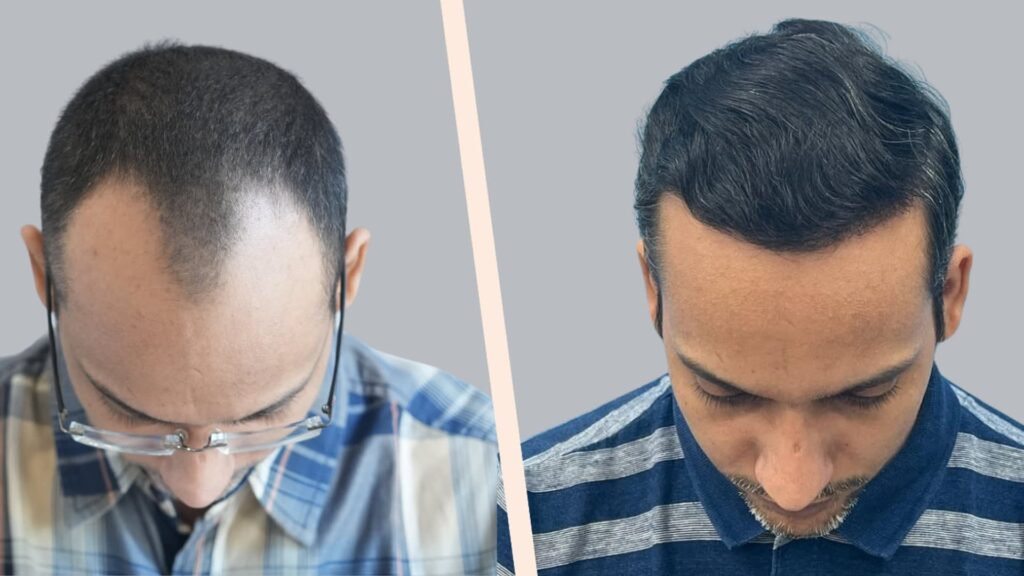
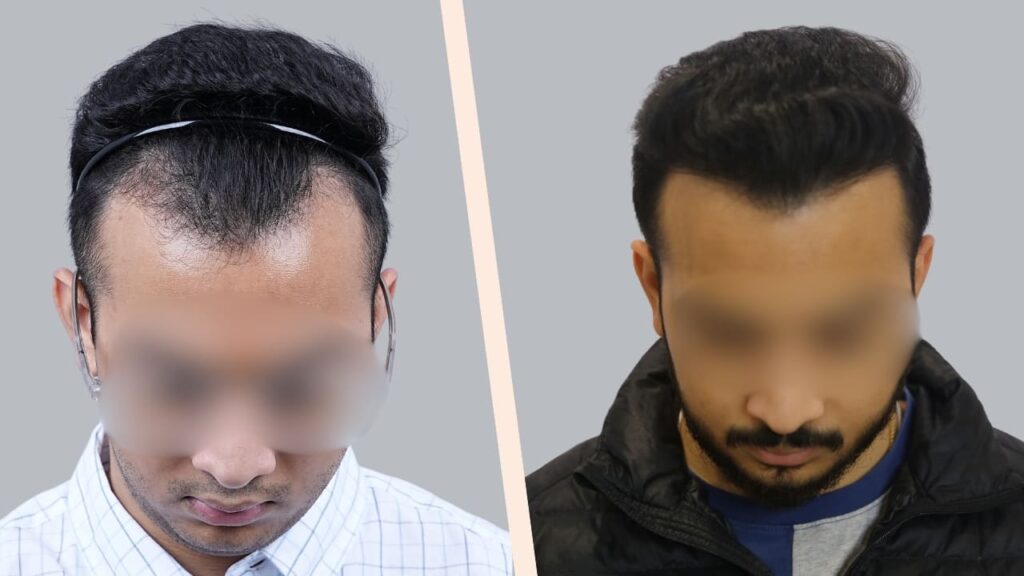
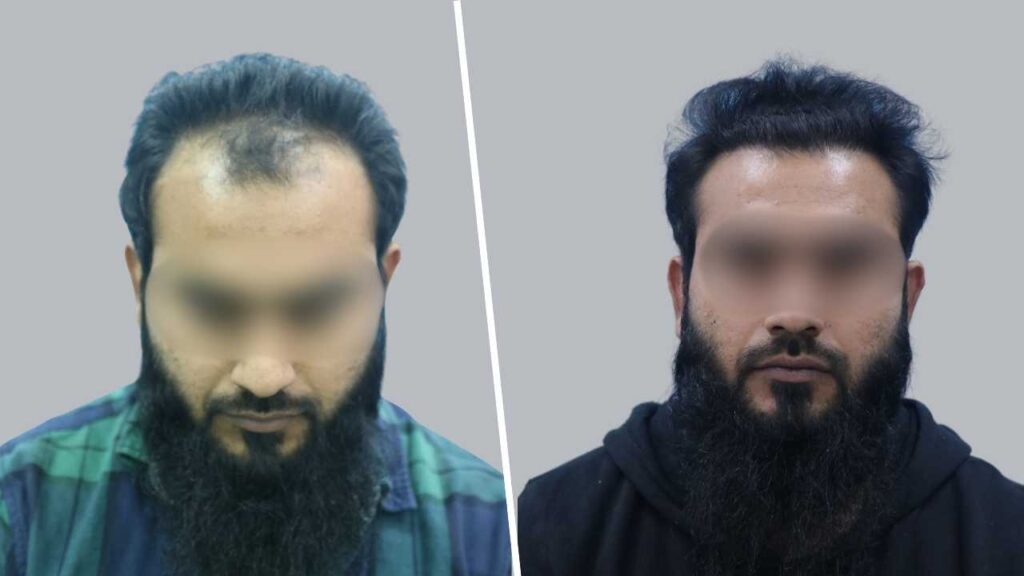
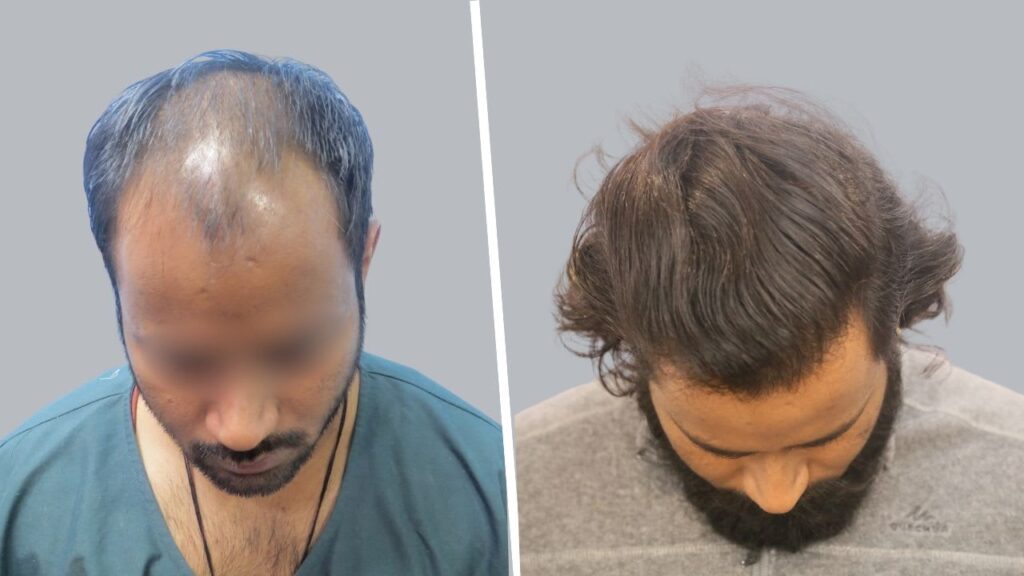
Patients come from Sweden, Australia, the Middle East, and across India, many of them having already undergone unsuccessful procedures elsewhere. Satya’s specialisation in corrective hair transplant surgery, combined with its proprietary DSFT and Mimic Nature Hairline techniques, has established it as one of the most trusted hair restoration practices in India.
The clinic’s locations in both Gurgaon and Delhi make it easily accessible for patients across Delhi NCR. For international patients, the team provides comprehensive assistance including visa support and accommodation coordination.
Frequently Asked Questions About Hair Transplant
Yes. A hair transplant performed by a qualified, board-certified dermatologist in a properly equipped clinic is a safe, well-established surgical procedure. The most common side effects, temporary swelling, scabbing, and follicle shedding, resolve on their own within two to three weeks. Serious complications are rare and are usually linked to poor clinical standards or inadequate aftercare.
Transplanted hair follicles are permanent. Because they are taken from the genetically resistant donor zone, they are not subject to the hormonal miniaturisation that causes pattern hair loss. The transplanted hair will grow for life and will behave exactly like your natural hair.
Neither technique is universally superior. FUE is preferable for patients who want no linear scar and have moderate hair loss. FUT is more appropriate for patients with advanced hair loss who need a large number of grafts in a single session. The best recommendation depends on your individual hair loss profile, donor density, and long-term goals. A qualified surgeon will assess this during your consultation.
The cost of a hair transplant in Gurgaon depends on the number of grafts required, the technique chosen, and the complexity of the procedure. At Satya, personalised cost estimates are provided during the consultation after a thorough evaluation. Transparent pricing and no hidden charges are foundational to how the clinic operates.
Most patients return to routine daily activities within 7 to 10 days. Visible scabbing and redness subside within two weeks. Hair growth becomes noticeable from month three onwards, with full results visible at 12 to 18 months post-procedure.
Satya’s differentiation rests on three pillars: patented techniques (DSFT and Mimic Nature Hairline), an ethical approach that prioritises donor area preservation and long-term planning over maximum graft count, and more than two decades of experience including specialised expertise in corrective procedures for patients who have had poor results elsewhere.
Ready to Take the First Step?
A hair transplant is one of the most permanent decisions you will make about your appearance. It deserves the same careful, researched approach you would bring to any significant medical or life decision.
If you are considering a hair transplant in Gurgaon or Delhi, we encourage you to book a consultation at Satya Skin & Hair Solutions. There is no pressure, no obligation, and no package to sell. You will receive an honest, medically grounded assessment of your hair loss, your options, and what you can realistically expect.