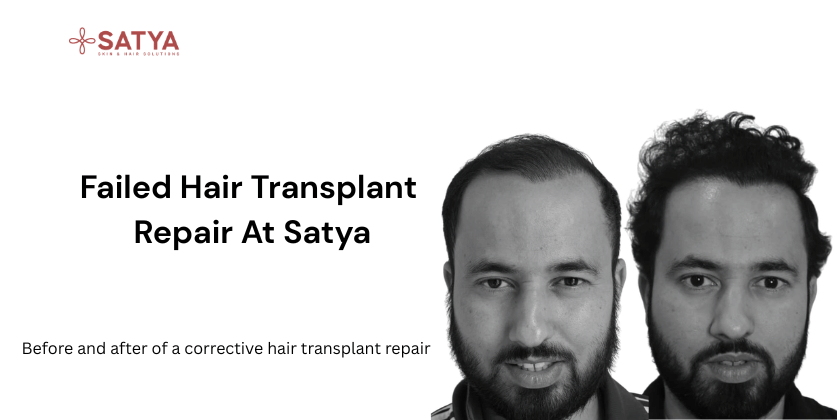
A repair hair transplant, also called a corrective hair transplant, is surgery to fix the result of a previous hair transplant that did not go well. It can correct an unnatural or too-low hairline, pluggy or wrongly angled grafts, visible donor scars, and poor density. Repair work is more complex than a first transplant because donor hair is often limited and scar tissue is present, so it needs an experienced surgeon and careful planning. Done well, it can restore a natural look and rebuild your confidence.
Few things feel worse than spending money and courage on a hair transplant, only to end up with a hairline that looks unnatural, a patchy crown, or a scar you now have to hide. If you are living with a result that went wrong, you are not alone, and you are not out of options. This guide explains what a repair hair transplant can and cannot do, why transplants fail in the first place, and how corrective surgery is planned. The aim is to give you clear, honest information, not false hope.
What Is a Repair Hair Transplant?
A repair hair transplant is a corrective procedure that fixes the problems left behind by an earlier, unsuccessful hair transplant.
It is a specialised branch of hair restoration. Instead of treating fresh hair loss, the surgeon works around existing grafts, scars, and a donor area that may already be partly used. You can read the full details of the procedure on our repair hair transplant service page. This article focuses on helping you understand whether you need one and what to expect.
Signs You May Need a Repair Hair Transplant
The most common reason people seek a repair is a result that looks obvious, unnatural, or incomplete.
You may be a candidate for corrective surgery if you notice any of the following.
- An unnatural or too-low hairline that does not suit your face or age.
- A pluggy, doll-like look, where grafts sit in visible clumps rather than blending.
- Hair growing at the wrong angle or direction, so it never lies naturally.
- Thin or patchy density that falls short of what you were promised.
- A visible linear scar or over-harvested patches in the donor area.
- Grafts that were placed but never grew as expected.
Why Do Hair Transplants Fail?
Understanding why a transplant went wrong is the first step to fixing it, and it protects you from repeating the same mistake. Most poor results trace back to a few avoidable causes.
- Poor planning and design, where the hairline and density were not mapped properly.
- Outdated techniques that leave visible scars or an uneven look.
- An inexperienced surgeon placing grafts at the wrong depth, angle, or spacing.
- Careless donor management, using up donor hair too fast or harvesting unevenly.
- Growth that depends on medicines alone, so density fades if the medicine stops.
- An unrealistically low hairline that drains the donor reserve and cannot be sustained.
What a Repair Hair Transplant Can Correct
A well planned repair can address most of the problems left by a previous transplant, though the extent depends on your donor supply.
| Problem | How repair usually addresses it |
|---|---|
| Unnatural or too-low hairline | Redesign and reposition grafts to a natural, maintainable line |
| Pluggy or wrong-angle grafts | Remove or re-implant grafts at the correct angle and direction |
| Visible donor scar | Scar revision, grafting into the scar, or scalp micropigmentation |
| Low or patchy density | Add new grafts to fill gaps and blend the result |
| Over-harvested donor area | Redistribute grafts, use body hair, or camouflage with SMP |
Scalp micropigmentation, often shortened to SMP, deserves a mention here. It uses tiny pigment dots to create the look of density or to soften a scar, and it is a useful partner to surgery when the donor area is nearly exhausted.
Why Repair Is More Complex Than the First Surgery
Corrective surgery is usually harder than an original transplant, which is why it should only be done by an experienced repair specialist.
There are three reasons for this. First, the donor area may already be depleted, so there is less healthy hair to work with. Second, scar tissue from the previous surgery has a poorer blood supply, which makes new grafts harder to place and grow. Third, the surgeon often has to remove or reposition badly placed grafts before adding new ones, which is delicate, time consuming work. A repair is as much about artistry and restraint as it is about surgery, and rushing it is how second failures happen.
The Satya Approach to Repair Hair Transplant
At Satya Skin & Hair Solutions, corrective work is one of our core strengths, and it is guided by a simple philosophy: Less Medicine. Less Donor. Maximum Skill. When a donor area has already been stretched by a failed surgery, protecting what remains is everything.
FROM DR. SHAIIL GUPTA, LEAD HAIR TRANSPLANT SURGEON
Repair patients often arrive feeling let down and anxious, and my first job is to be honest with them about what is realistically possible. With a limited donor, we cannot promise the world, but with careful planning we can usually make a real difference. We remove or re-angle the grafts that look wrong, redesign the hairline to something natural and sustainable, and use our Maximum Harvesting Technique to source grafts without further damaging the donor. The goal is a result that looks natural for life, not another quick fix.
Where the donor is stretched, we look at every option, including FUE and FUT techniques, body hair as a donor source, and our Mimic Nature Hairline design to rebuild a soft, natural front. Full details are on the repair hair transplant service page.
DR. SHAIIL GUPTA’S REPAIR EXPERIENCE
23+ years of experience · 15,000+ hair transplants · 2500+ repair and corrective cases · patients from 80+ countries.
Scars, Camouflage, and Scalp Health
A good repair is not only about grafts. The condition of the scalp and any old scarring play a big role in how well the result heals and blends.
Visit Also – Result of hair Transplant
FROM DR. RUCHI AGARWAL, DERMATOLOGIST AND CO-FOUNDER
“Scar tissue behaves differently from healthy scalp. It has less blood supply and can react unpredictably, so before any repair we assess the skin carefully and, where needed, prepare and treat it first. For some patients, combining surgery with scalp micropigmentation gives a fuller, more even look than grafts alone could achieve. Treating the scalp as living skin, not just a surface to plant into, is what makes a repair heal and last.
Timeline and Realistic Results
A repair takes time to show, and honest timelines protect you from disappointment.
The surgery itself often runs longer than a standard transplant because of the extra removal and repositioning work. After that, the healing follows a familiar path.
- First two to three weeks: redness and scabbing settle, and transplanted hairs shed, which is normal.
- Three to four months: early regrowth begins, usually fine and thin at first.
- Six to nine months: density builds and the corrected hairline starts to look natural.
- Twelve months and beyond: the final result matures, and scar camouflage settles.
Taking the Next Step
If you are unhappy with a previous transplant, the most useful first step is an honest assessment of your scalp and remaining donor hair. That single consultation tells you what a repair can realistically achieve for you. Learn more on our repair hair transplant page, or book a physician consultation directly.
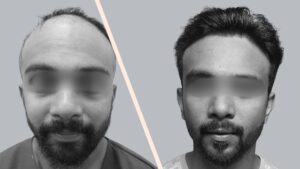
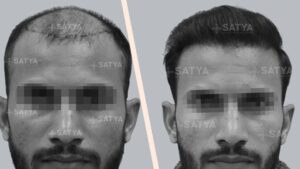
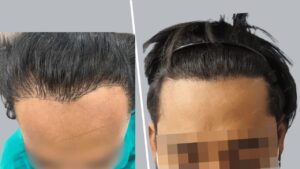
Hair Transplant Results
Frequently Asked Questions
Yes. In most cases a failed hair transplant can be improved with a repair hair transplant. Surgeons can remove or re-angle badly placed grafts, redesign an unnatural hairline, add density, and camouflage scars. How much can be achieved depends mainly on how much healthy donor hair you have left.
Common signs include an unnatural or too-low hairline, a pluggy or doll-like look, grafts growing at the wrong angle, thin or patchy density, and a visible donor scar. If you are unhappy with the overall look of a previous transplant, a repair assessment is worthwhile.
Repair usually combines several steps: assessing the previous work, removing or repositioning poorly placed grafts, redesigning the hairline to a natural and maintainable level, adding new grafts for density, and using scar revision or scalp micropigmentation where needed. The exact plan is tailored to your scalp.
It can usually be improved. Options include carefully redistributing grafts, using body or beard hair as an additional donor source, and scalp micropigmentation to reduce the contrast of thinned or scarred donor patches. A full recovery of the original donor density is not always possible, so honest assessment matters.
Yes. Repair is generally more complex because donor hair is often limited, scar tissue is present, and old grafts may need removing before new ones are placed. This is why corrective work should be done by an experienced repair specialist rather than a general provider.
The newly transplanted follicles are taken from areas resistant to balding, so they generally grow for life. As with any transplant, your existing native hair can continue to thin over time, so ongoing scalp care helps protect the overall result.