If you have been searching for hair transplant cost in India and finding nothing but vague price ranges and contradictory numbers, you are not alone. Pricing in this field varies widely, sometimes by as much as three to four times for the same procedure, and most of what you read online does not explain why.
This guide, informed by the clinical approach practised at Satya Skin & Hair Solutions in Delhi and Gurgaon, breaks down exactly what drives hair transplant cost in India in 2026, what you should be paying for, and what inflated or suspiciously low quotes often leave out.
Why Hair Transplant Pricing in India Is So Difficult to Compare
The hair transplant industry in India has grown significantly over the last decade. That growth has been uneven. You will find everything from single-chair setups in small towns to large corporatised chains running high-volume sessions, and premium surgical clinics with dedicated, experienced surgeons.
The “hair transplant cost in India” is not a single number, it is a reflection of who is performing your surgery, how they are doing it, and how much they care about where you will be in ten years.
Nationally, patients report paying anywhere from Rs. 50,000 to Rs. 5,50,000 or more for a hair transplant procedure. That range is not a pricing anomaly. It reflects genuinely different levels of service, skill, technology, and long-term surgical planning.
What Determines Hair Transplant Cost in India: The Real Factors
1. Number of Grafts Required
This is the single biggest variable in any honest cost estimate. A graft is a naturally occurring group of one to four hair follicles. Your surgeon cannot give you a precise quote before assessing the extent of your hair loss, the density of your donor area, and the coverage area you want addressed.
Approximate graft benchmarks by hair loss stage (Norwood Scale):
| Norwood Stage | Approximate Grafts Needed |
| Stage 2–3 | 1,500 – 2,500 grafts |
| Stage 3–4 | 2,500 – 3,500 grafts |
| Stage 4–5 | 3,500 – 5,000 grafts |
| Stage 5–6 | 4,500 – 6,000+ grafts |
2. Technique: FUE vs FUT and How They Differ in Cost
FUE (Follicular Unit Extraction): Individual follicular units are extracted one by one from the donor area using a micro-punch tool. There is no linear scar. Recovery is faster. The procedure is more labour-intensive, which is reflected in its cost. FUE is currently the dominant technique in India.
FUT (Follicular Unit Transplantation): A strip of scalp is surgically removed from the donor area, dissected into individual grafts, and implanted. It allows for a higher graft yield per session and can be more suitable for patients requiring very large sessions. Cost per graft tends to be slightly lower than FUE, but involves a linear scar.
At Satya Skin & Hair Solutions, both FUE and FUT are offered and the recommendation is based entirely on your individual donor characteristics, degree of hair loss, and long-term surgical plan. The right technique is not always the most expensive one.
3. Surgeon Experience and Expertise
This factor is underweighted in most cost comparisons and should be weighted most heavily.
A hair transplant performed by an experienced, trained surgeon with documented outcomes produces fundamentally different results from one performed by a technician or a recently trained doctor in a high-volume setup. The graft survival rate, the naturalness of the hairline, the implantation angle, and the preservation of your donor area for future sessions, all of these depend on who is doing the surgery, not just which tool is being used.
Also Read: Can Hair Transplants Be Done Without Medicines?
At Satya Skin & Hair Solutions, Dr. Shail Gupta have been performing hair restoration procedures since 2005.
4. Clinic Infrastructure and Hygiene Standards
A procedure performed in a proper surgical setup with sterilised instruments, trained support staff, post-operative monitoring, and a protocol for managing complications costs more to run. That cost is passed on to you, legitimately.
Clinics with unusually low pricing often compromise here. The consequences of poor sterile protocol in hair transplant surgery range from infection to permanent scarring.
5. Post-Operative Care and Follow-Up
Hair transplant cost should be evaluated as a package, not just the day of surgery. What does the clinic include after the procedure? Medications, follow-up visits, growth assessments at three, six, and twelve months, and access to the surgeon if something does not look right, these are part of the investment, and they vary significantly between providers.
Also Read: Celebrities Hair Transplant
Hair Transplant Cost Across Major Indian Cities in 2026
Pricing does vary by geography, primarily due to real estate and operational cost differences. However, the technique and surgeon quality are not city-specific, a highly skilled surgeon in Delhi will not necessarily be cheaper than one in Mumbai or Bangalore.
General indicative ranges (per graft, FUE):
These are indicative ranges. Hair transplant cost in Gurgaon specifically tends to be comparable to Delhi NCR, and in recent years several premium clinics have established themselves in DLF Phase 4 and Sector 14 catchments.
That said, geography should not be the primary decision driver. Many patients from Hyderabad, Kolkata, and Bangalore travel to Delhi NCR for surgery at Satya Skin & Hair Solutions precisely because of the surgical philosophy and long-term planning approach offered here.
The 5,000 Graft Question: What Should You Actually Pay?
This is one of the most commonly searched questions in India. Here is a realistic view.
At Rs. 40–70 per graft (mid-market, experienced surgeon, FUE), a 50,000-graft session would cost approximately Rs. 3,00,000 to Rs. 6,50,000.
If a clinic is quoting Rs. 50,000–8,50,000 for 4,000 grafts, that is a signal, not a bargain. Extremely low pricing for large sessions is often associated with:
- Technician-led surgery (not surgeon-led)
- Lower graft survival rates
- Compressed session timelines that compromise implantation quality
- Minimal post-operative support
- Poor donor zone management, limiting future transplant options
The real cost of a poor hair transplant is not what you paid. It is what you will need to spend on corrective surgery later, often at a premium, with a compromised donor area.
Affordable Hair Transplant Packages in India: What to Look For
Searching for affordable hair transplant packages in India is entirely reasonable. Cost is a legitimate factor. But “affordable” should mean good value for your money, not the cheapest procedure regardless of quality.
Evaluate packages based on:
- Is the surgeon named, experienced, and directly performing surgery?
- Is graft count confirmed before pricing, or is the session based on estimated numbers?
- Are follow-up visits included?
- Is there a clear protocol if the result is unsatisfactory?
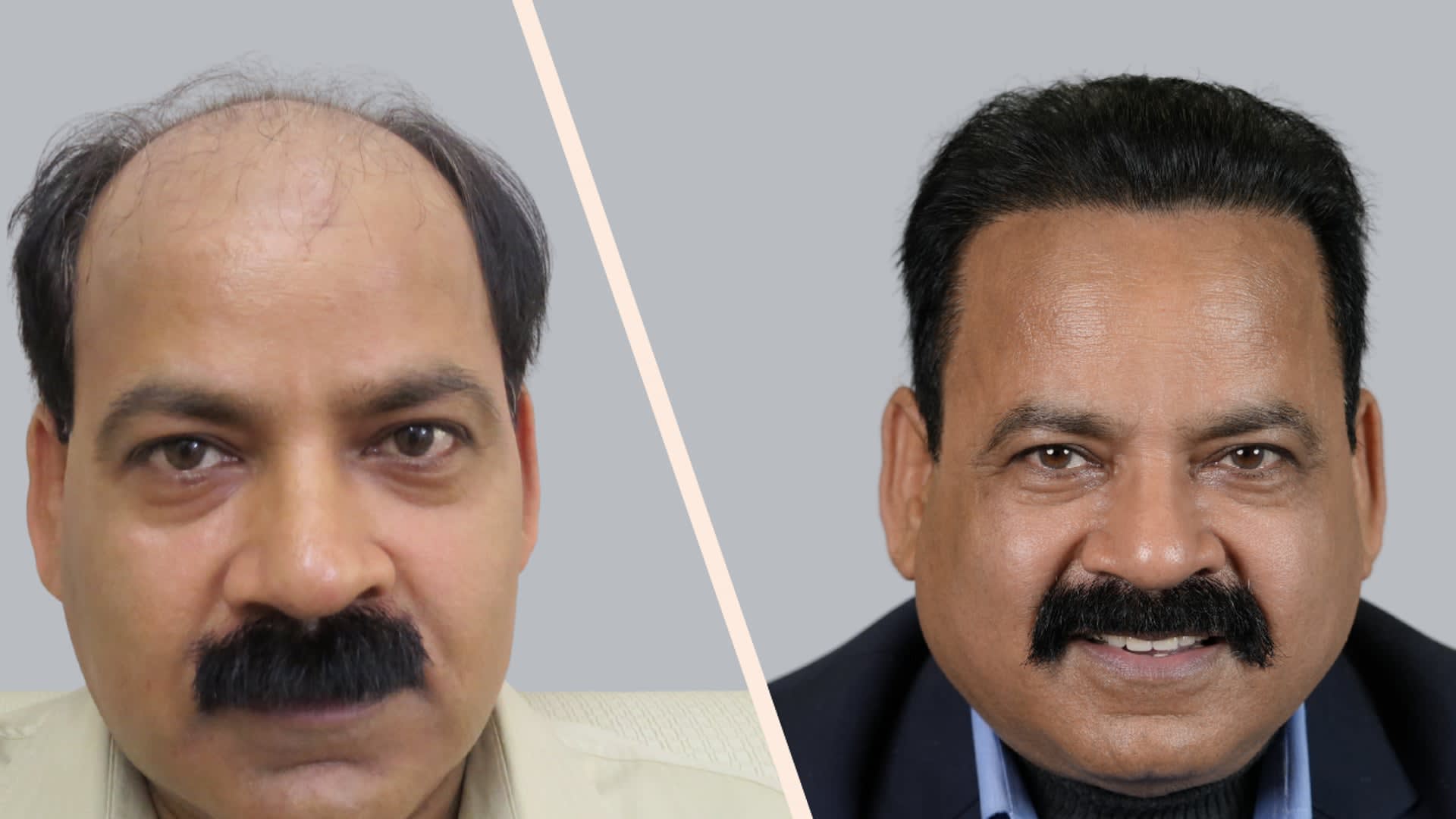
- Does the clinic have documented before-and-after cases you can review?
At Satya Skin & Hair Solutions, our philosophy is built around what we call “Less Medicine. Less Donor. Maximum Skill.” This means we do not recommend harvesting beyond what your donor area can safely give, we do not over-prescribe medication to compensate for inadequate surgical planning, and every graft is treated as a long-term asset, not just a number on an invoice.
Myths About Hair Transplant Cost in India
Myth 1: The higher the price, the better the result.
Not always. Some of the highest quoted clinics in India are large chains with high marketing spends. Price alone is not a quality indicator.
Myth 2: The newer the technology, the better the outcome.
Robotic hair transplant systems and motorised punches are tools. The outcome still depends on the surgeon’s skill, artistry, and planning. Technology does not replace experience.
Myth 3: A hair transplant is a one-time expense.
For most patients with progressive hair loss, a single session is not sufficient for lifetime coverage. Responsible surgical planning accounts for future sessions and donor preservation which is why how much hair is taken in your first procedure matters enormously.
Myth 4: FUE always costs more than FUT.
Generally true on a per-graft basis, but not always in total a well-planned FUT session for a large area may still be more cost-effective in specific clinical scenarios.
The Satya Approach to Hair Transplant Planning in Delhi and Gurgaon
Dr. Shail Gupta and Dr. Ruchi Agarwal established Satya Skin & Hair Solutions in 2005 with a specific clinical conviction: that most patients presenting for hair transplant surgery in India are not fully informed about what the procedure involves, what long-term hair loss progression looks like, or why donor management is the most important variable in surgical outcomes.
Our proprietary techniques DSFT (Direct Stimulated Follicular Transplant) and MHT (Maximum Harvesting Technique) are designed to extract and implant with precision, preserve the donor zone for future planning, and produce natural hairlines that age appropriately.
We use a zero-pain anaesthesia protocol, trichophytic closure for FUT cases, and donor zone mapping before every session. These are not marketing claims; they are surgical standards that determine your ten-year outcome, not just your six-month result.
If you are based in Delhi, Pitampura, Gurgaon, or the broader NCR region, a consultation at our clinic is the most useful first step not a quote comparison.
Internal Reference: Related Treatments at Satya Skin & Hair Solutions
Patients presenting for hair transplant consultations frequently also inquire about co-existing skin concerns. If you have been dealing with post-inflammatory scarring or breakouts alongside hair loss, we offer Acne Scar Treatment at both our Delhi and Gurgaon locations, evaluated and planned by Dr Shail & Dr. Ruchi Agarwal.

Frequently Asked Questions
Hair transplant cost in India ranges from approximately Rs. 25,000 to Rs. 2,50,000 or more, depending on the number of grafts, technique used, surgeon experience, and clinic location. On a per-graft basis, expect Rs. 25–120 for FUE at reputable clinics. A 3,000-graft session at a well-regarded clinic typically falls in the Rs. 1,20,000 – Rs. 2,00,000 range.
India is significantly more affordable than the UK, USA, or Europe for hair transplants, often by a factor of five to ten times, without a corresponding difference in surgical quality at premium clinics. This is why India has become a destination for international patients seeking quality hair restoration. Hair transplant cost in Turkey is sometimes compared; Turkey tends to be cheaper but involves the added complexity of international travel and limited post-operative follow-up.
Generally, yes, FUE is more labour-intensive and the per-graft cost is higher. However, FUT may involve additional costs related to wound closure and scarring management. The right technique depends on your individual clinical picture, not cost alone.
The number of grafts required is the largest variable. After that: surgeon experience and direct involvement, technique selected, clinic standards and infrastructure, and what is included in post-operative care.
Some are, some are not. A low price is not automatically a problem, but it requires more scrutiny. Ask who specifically performs the surgery, what the graft survival protocol is, and what follow-up support is included. Avoid packages that do not confirm graft count before pricing.
Hair transplant cost in Gurgaon is broadly comparable to Delhi NCR rates. Expect Rs. 35–100 per graft at reputable clinics for FUE. At Satya Skin & Hair Solutions (DLF Phase 4, Gurgaon), pricing is determined after a clinical assessment of your graft requirement, we do not offer package prices without evaluation.
Yes. Hair transplant for women addresses different patterns of thinning (typically Ludwig scale diffuse loss or hairline recession) and often requires a more conservative approach. Per-graft pricing is similar, but total graft counts may differ. A clinical evaluation is essential before any cost discussion.
When performed by qualified surgeons in proper clinical settings, hair transplant surgery is considered safe. Complications, including infection, poor growth, and donor scarring, are largely associated with under-trained operators and poor clinical environments. Choosing a surgeon with a documented track record significantly reduces this risk.
A quote is not a consultation. If you are serious about hair transplant surgery, the most useful step is a proper clinical evaluation, where the surgeon assesses your donor area, discusses your hair loss progression, and gives you a realistic graft count and long-term plan.