If you are searching for a non-surgical way to slow hair fall and support thicker growth, you have almost certainly come across PRP hair treatment. PRP (Platelet-Rich Plasma) hair treatment uses a small sample of your own blood to concentrate the growth factors in your platelets, which are then injected into the scalp to stimulate weak hair follicles. It is popular because it is minimally invasive and uses your body’s own biology, but like any medical procedure, PRP hair treatment has both clear advantages and honest limitations.
This guide explains the science in simple terms, weighs the pros and cons, covers the realistic side effects, and answers the question most patients quietly ask: Can PRP really regrow hair? Our goal is to help you decide whether PRP hair treatment fits your stage of hair loss, not to oversell it.
PRP hair treatment can help reduce hair fall and improve the thickness of existing, miniaturising hair in early-stage pattern hair loss. It works best as a maintenance and support therapy, not as a cure or a replacement for a hair transplant in advanced baldness. Results are gradual, vary between individuals, and need periodic top-up sessions to be maintained.
What Is PRP Hair Treatment?
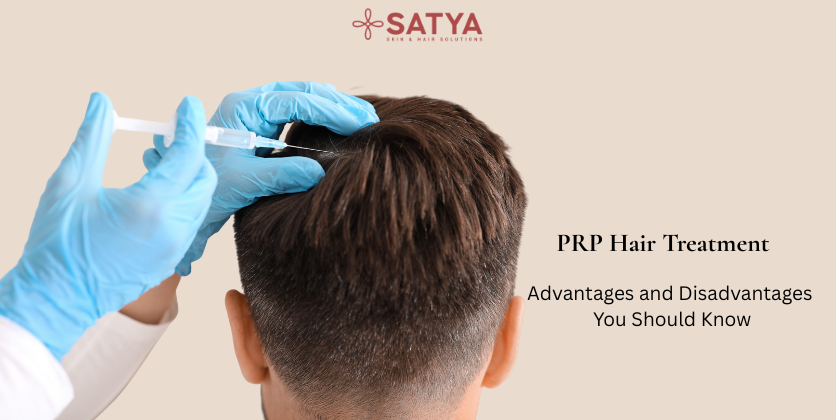
PRP hair treatment is a non-surgical procedure that uses your own blood to support hair growth. A small amount of blood is drawn, much like a routine blood test. It is then spun in a centrifuge to separate the platelet-rich plasma the portion packed with growth factors that signal repair and regeneration in the body.
This concentrated plasma is injected into the areas of the scalp where hair is thinning. The idea is simple: deliver a high dose of your own growth factors directly to follicles that are weakening but still alive, to encourage them to stay in the active growth phase longer.
How a PRP session usually works
- A blood sample is collected from your arm.
- The sample is centrifuged to separate platelet-rich plasma from red blood cells.
- The scalp is cleaned and, where needed, numbed for comfort.
- The plasma is injected into thinning zones in a structured grid.
- You return home the same day; most people resume normal activity quickly.
Can PRP Really Regrow Hair? An Honest Answer
This is the most common question patients ask, so let us answer it plainly. Can PRP really regrow hair? PRP is better understood as a treatment that revives and strengthens follicles that are still present but shrinking, rather than one that grows brand-new hair on a completely bald, smooth scalp.
In early to moderate pattern hair loss, where follicles have begun to miniaturise but have not died, PRP can reduce shedding, improve density, and make existing strands thicker and healthier. Where a follicle is already gone as in long-standing, fully bald areas, PRP cannot bring it back. In those cases, a hair transplant is the appropriate option, and PRP may be used alongside it as support.
Honesty matters here: PRP is not a one-time miracle. It is evidence-supported for the right candidate, results build gradually over months, and the improvement is maintained, not made permanent through periodic sessions.
Advantages of PRP Hair Treatment
For the right patient, PRP offers several genuine benefits:
- Uses your own biology: Because the plasma comes from your own blood, the risk of allergic reaction or rejection is very low.
- Non-surgical and minimal downtime: There are no cuts, stitches, or grafts. Most patients return to work the same day.
- Reduces active hair fall: Many patients notice less shedding within a few sessions, which is often the first encouraging sign.
- Strengthens existing hair: PRP can improve the calibre and quality of thinning strands, making the scalp look fuller.
- Excellent support therapy: It pairs well with medical treatment and can help protect the results of a hair transplant.
- Suitable for many women: For female pattern thinning, where surgery is not always the first choice, PRP is a valuable non-surgical option.
Disadvantages and Limitations of PRP Hair Treatment
A doctor-led discussion is incomplete without the limitations. PRP is helpful, but it is not right for everyone or every stage of hair loss.
- Not a cure for baldness: PRP cannot regrow hair in areas where follicles are already lost. It supports living follicles, not dead ones.
- Requires multiple and ongoing sessions: An initial course of several sessions is typical, followed by maintenance visits. Stopping usually means the benefit fades over time.
- Results vary between individuals: Response depends on age, cause of hair loss, scalp health, and consistency. No outcome can be guaranteed.
- Gradual, not instant: Visible change typically takes a few months of consistent treatment.
- Quality and technique dependent: Outcomes rely heavily on correct plasma preparation, dosing, and injection technique which is why the choice of clinic matters.
- Limited value in advanced loss: In advanced (Norwood Stage 4 and beyond) baldness, PRP alone will not deliver meaningful coverage.
PRP Hair Treatment Side Effects: What to Expect
A frequent search is whether PRP hair treatment is good for hair and what its side effects are. Reassuringly, because PRP uses your own blood, serious side effects are uncommon when the procedure is performed correctly in a sterile, medical setting. Most effects are mild and short-lived.
Common, temporary side effects
- Mild scalp tenderness or soreness for a day or two
- Slight redness or swelling at the injection sites
- Pinpoint bruising that settles on its own
- A brief headache or a tight feeling after the session
When to take extra care
PRP may not be advised if you have certain blood disorders, are on specific blood-thinning medication, have an active scalp infection, or other relevant medical conditions. This is exactly why a proper medical consultation, rather than a walk-in injection, is essential before starting PRP hair treatment.
Who Is PRP Hair Treatment Best Suited For?
PRP tends to deliver the most satisfying results when the candidate is chosen carefully. It is generally well-suited for:
- Men and women in the early to moderate stages of pattern hair loss
- People with visible thinning but follicles that are still active
- Patients looking for a non-surgical option, or who are not yet ready for surgery
- Transplant patients who want to support and protect their existing hair
It is generally less suitable as a standalone solution for fully bald zones or advanced baldness, where a transplant is the more honest recommendation.
PRP vs Hair Transplant vs GFC: A Quick Comparison
Patients often ask whether a hair transplant or PRP is better, or how PRP compares to GFC (Growth Factor Concentrate). They solve different problems, so the right choice depends on your stage of hair loss.
| Factor | PRP | GFC | Hair Transplant |
|---|---|---|---|
| Type | Non-surgical | Non-surgical | Surgical |
| Best for | Early/moderate thinning | Early/moderate thinning | Bald or advanced areas |
| What it does | Strengthens existing follicles | Concentrated growth factors | Relocates your own follicles |
| Permanence | Needs maintenance | Needs maintenance | Long-lasting result |
| Downtime | Minimal | Minimal | Short recovery period |
Many patients do best with a combination, for example, a transplant for bald zones plus PRP to protect the surrounding native hair.
The Satya Approach: Treat the Cause, Not Just the Symptom
At Satya Skin & Hair Solutions, PRP is never offered as a standalone “package” before the cause of your hair loss is understood. Dr. Ruchi Agarwal, our dermatologist and co-founder, leads scalp and non-surgical hair assessment because thinning can be driven by genetics, nutrition, hormones, stress, or scalp conditions, and PRP works best when these underlying factors are addressed together.
Where hair loss is more advanced, Dr. Shail Gupta, our lead hair transplant surgeon, advises honestly on whether surgery is the better path and how PRP can support, rather than replace, that result. This dual hair-and-skin perspective reflects our promise of “health bhi, hair bhi”.
Less Medicine. Less Donor. Maximum Skill.Our philosophy is to recommend the least invasive treatment that can genuinely help you, and to be clear when PRP is, and is not, the right tool for your stage of hair loss.
Considering PRP Hair Treatment in Delhi NCR?
If you are weighing the advantages and disadvantages of PRP hair treatment, the most useful next step is a proper diagnosis rather than guesswork. Our clinics in Gurgaon (DLF Phase 4, Galleria Market) and Delhi (Pitampura) offer doctor-led consultations where we assess your scalp, explain your realistic options, and tell you honestly whether PRP, a transplant, or a combination suits you best.
Frequently Asked Questions About PRP Hair Treatment
Yes, for the right candidate, PRP can be good for hair by reducing shedding and strengthening existing follicles. Side effects are usually mild and temporary, such as scalp tenderness, slight redness, or pinpoint bruising, because the treatment uses your own blood.
PRP mainly revives and thickens follicles that are weakening but still alive. It can improve density in early to moderate hair loss, but it cannot regrow hair where follicles are already lost; those areas need a hair transplant.
Most patients start with an initial course of several sessions spaced a few weeks apart, followed by periodic maintenance sessions. The exact plan depends on your scalp and is decided during consultation.
They solve different problems. PRP supports existing hair in early thinning, while a hair transplant restores bald areas. Neither is universally “better”; the right choice depends on your stage of hair loss, and the two are often combined.
Results are gradual. Many patients first notice reduced hair fall, with visible improvement in thickness typically building over a few months of consistent treatment. Results are maintained, not made permanent, through follow-up sessions.
Discomfort is usually minor. The scalp can be numbed for comfort, and most patients describe the sensation as mild and brief, with normal activity resuming the same day.