If acne scars, sun damage, deep wrinkles, or uneven skin tone have been affecting your confidence, you have likely come across CO2 laser treatment as a solution. It is one of the most clinically established procedures in modern dermatology and for good reason.
CO2 laser treatment works by delivering concentrated light energy that precisely removes damaged skin layers while simultaneously stimulating the deeper collagen network. The result is smoother, firmer, and more evenly toned skin.
This 2026 guide covers everything you need to know: how CO2 laser treatment works, the different types available, its benefits, what recovery looks like, and who makes a good candidate with clinical perspective from Dr. Ruchi Agarwal, Senior Dermatologist and Co-Founder of Satya Skin & Hair Solutions, Gurgaon.
What Is CO2 Laser Treatment and How Does It Work?
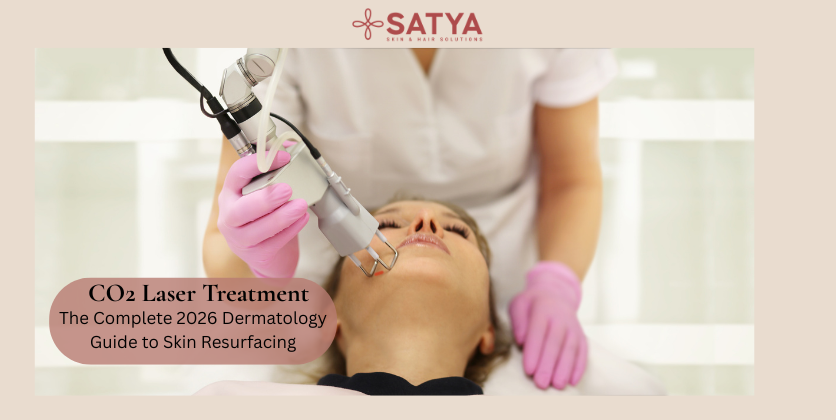
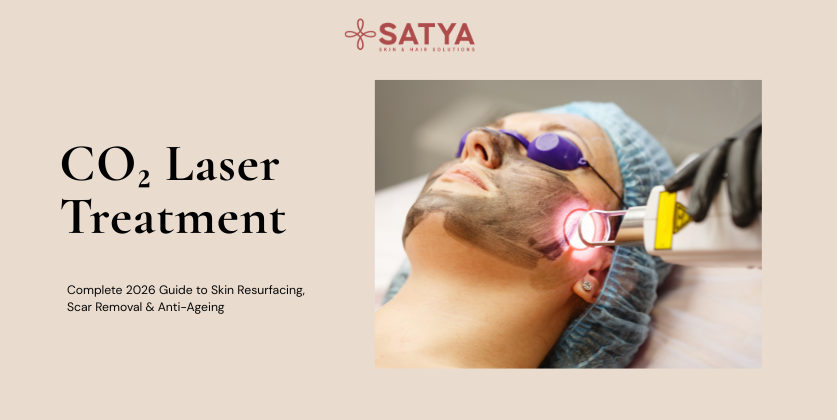
CO2 laser treatment uses a carbon dioxide laser emitting a wavelength of 10,600 nanometres a wavelength highly absorbed by water in skin cells. When this energy is delivered to the skin, it vaporises the outermost damaged layer while generating a controlled thermal effect in the deeper dermis.
This dual action achieves two things simultaneously:
- Ablation removal of the top layer of damaged skin (epidermis and upper dermis)
- Collagen stimulation the thermal injury triggers the body’s wound-healing response, generating fresh collagen fibres over the following 3–6 months
The net effect is visible resurfacing of the skin’s surface alongside a deeper structural improvement in firmness and elasticity something topical creams simply cannot replicate.
“CO2 laser treatment remains one of the gold standards in dermatology for skin resurfacing precisely because it works at two levels the surface and the foundation. The key lies in patient selection, correct settings, and post-procedure care.” Dr. Ruchi Agarwal, Satya Skin & Hair Solutions, Gurgaon
Types of CO2 Laser Treatments: Which One Is Right for You?
Not all CO2 laser treatments are the same. The technology has evolved significantly, and today there are several distinct types, each suited to different concerns and skin conditions.
| CO2 Laser Type | Best Suited For | Downtime |
| Traditional CO2 | Deep wrinkles, acne scars | 7–14 days |
| Fractional CO2 | Skin resurfacing, pigmentation, fine lines | 3–7 days |
| Ultra-Pulse CO2 | Precise scar revision, mole removal | 5–10 days |
| CO2 for Skin Tightening | Sagging skin, early jowls, neck laxity | 4–7 days |
| Vaginal CO2 Laser | Post-partum laxity, dryness (gynaecology) | 1–2 days |
Fractional CO2 Laser The Most Commonly Used
Fractional CO2 laser divides the beam into thousands of micro-columns, treating only a fraction of the skin surface at a time. This leaves surrounding tissue intact, dramatically reducing downtime while still delivering meaningful results. It is the most widely recommended type for acne scars, general skin resurfacing, and anti-ageing treatments in Indian skin types.
Traditional (Fully Ablative) CO2 Laser
Traditional CO2 laser treats the entire skin surface uniformly. It delivers more aggressive results for deep wrinkles and significant solar damage but requires longer recovery. It is typically recommended for patients with fair skin and more pronounced textural concerns.
Key Benefits of CO2 Laser Treatment
CO2 laser treatment is valued in clinical dermatology for its versatility. The same technology can address a wide range of concerns with measurable, evidence-backed outcomes.
| Benefit | How CO2 Laser Achieves It |
| Acne Scar Reduction | Breaks down scar tissue and stimulates new collagen to remodel indented scars |
| Skin Resurfacing | Removes the outermost damaged skin layer, revealing fresher, smoother skin beneath |
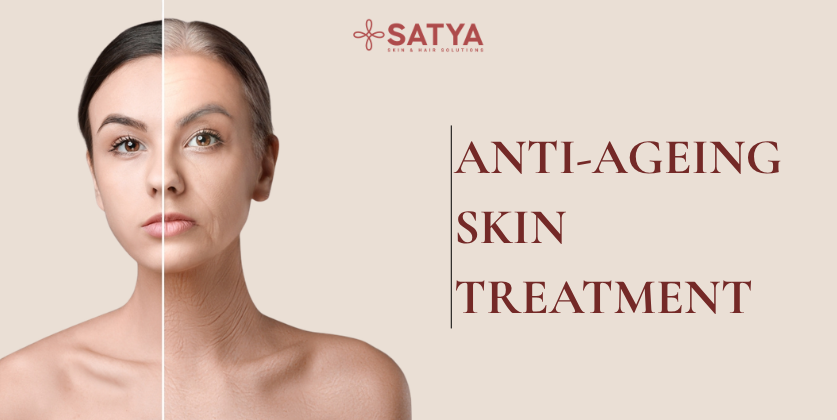
| Anti-Ageing | Reduces fine lines, wrinkles, and crepe-paper texture through deep collagen stimulation |
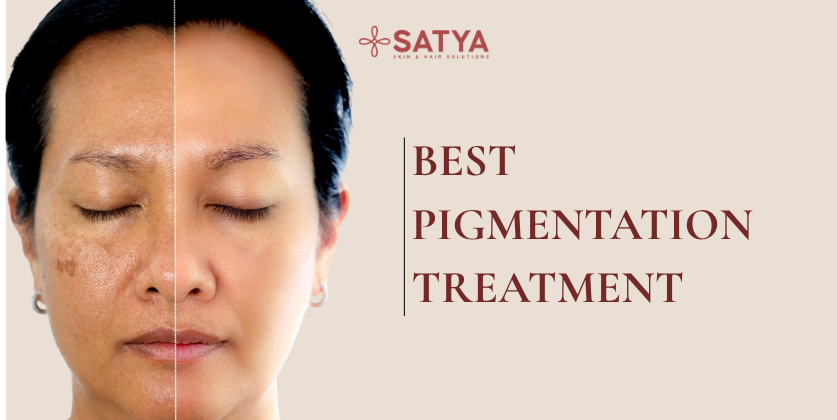
| Pigmentation Correction | Targets melasma, sun spots, and uneven tone by selectively targeting melanin-rich layers |
| Skin Tightening | Thermal energy triggers neo-collagenesis, improving laxity on the face and neck |
| Mole / Wart Removal | Precise ablation of benign skin lesions with minimal scarring |
At Satya Skin & Hair Solutions, CO2 laser treatment is not applied as a one-size-fits-all protocol. Dr. Ruchi Agarwal personalises the energy settings, pass depth, and density based on each patient’s skin type, concern, and lifestyle a principle that guides every treatment decision at the clinic since its founding in 2005.
Who Is a Good Candidate for CO2 Laser Treatment?
CO2 laser treatment is suitable for a broad range of patients, but a clinical consultation is essential before proceeding. Broadly, good candidates include:
- Adults with persistent acne scars (atrophic boxcar, rolling, or ice-pick types)
- Patients with sun-damaged skin, including dark spots and uneven texture
- Individuals experiencing early to moderate facial ageing (fine lines and laxity)
- Those with benign skin lesions (moles, warts, sebaceous hyperplasia) requiring precise removal
- Patients with melasma or diffuse pigmentation unresponsive to topical treatment
CO2 laser treatment requires careful assessment in patients with:
- Active acne breakouts or active skin infections
- Recent use of isotretinoin (typically within the past 6–12 months)
- Darker skin tones (Fitzpatrick V–VI) a modified fractional protocol and experienced hands are essential
- Keloid tendency
Recovery and Results After CO2 Laser Treatment
Understanding what to expect after CO2 laser treatment is critical to preparing appropriately and achieving the best possible outcome. Recovery varies based on the type and depth of treatment.
Immediate Post-Procedure (Days 1–3)
Redness, mild swelling, and a sensation similar to sunburn are normal immediately after CO2 laser treatment. The skin will feel warm and tight. Cool compresses, prescribed moisturisers, and strict sun avoidance are essential during this phase.
Peeling and Healing Phase (Days 4–10)
The outer skin layer begins to peel this is the expected healing process and should not be manually accelerated. Peeling indicates that the old, damaged skin is being replaced. Patients are advised against picking or exfoliating during this phase.
Revealing Phase (Weeks 2–4)
Once peeling resolves, fresher skin is visible. Redness gradually fades and skin tone begins to even out. SPF 50+ sunscreen is mandatory during this phase the new skin is sensitive to UV exposure.
Collagen Remodelling (Months 1–6)
This is where CO2 laser treatment delivers its most significant impact. Newly stimulated collagen continues to remodel over months, progressively improving skin texture, firmness, and depth of scars. Most patients report continued improvement for up to six months after a single session of CO2 laser treatment.
Following post-care instructions precisely particularly sun protection and hydration has a direct impact on outcome quality and the prevention of post-inflammatory hyperpigmentation, especially relevant in Indian skin.
The Satya Approach to CO2 Laser Treatment
At Satya Skin & Hair Solutions in Gurgaon (DLF Phase 4 / Galleria Market) and Delhi (Pitampura), CO2 laser treatment is part of a comprehensive skin health programme not a standalone procedure marketed for its own sake.
Dr. Ruchi Agarwal, with over two decades of dermatology practice, approaches CO2 laser treatment through a diagnostic-first lens. Before any laser session is scheduled, patients undergo:
- Detailed skin type assessment (Fitzpatrick grading)
- Concern mapping differentiating scar types, pigmentation depth, and tissue laxity
- Combination protocol design where CO2 laser is frequently paired with skin boosters, PRP, or topical actives for enhanced and sustained results
- Patient education on realistic timelines and recovery expectations
This structured approach reflects the clinic’s philosophy: clinical precision over aggressive promises. Patients consulting at Satya receive a protocol built around their individual skin not a generic treatment menu.
What People Also Ask About CO2 Laser Treatment
Based on current search trends, patients researching CO2 laser treatment commonly seek answers on:
- CO2 laser treatment vs chemical peel: which is more effective for acne scars?
- CO2 laser vs IPL for pigmentation: what is the difference?
- Is CO2 laser treatment safe during pregnancy or breastfeeding?
- Can CO2 laser be used around the eyes (periorbital area)?
- CO2 laser treatment before and after for Indian skin
- How to prepare skin before CO2 laser treatment
- CO2 laser treatment for stretch marks does it work?
- CO2 laser resurfacing vs microneedling RF
These topics are addressed in depth during the consultation at Satya Skin & Hair Solutions, where Dr. Ruchi Agarwal ensures each patient has a clear, realistic understanding of their treatment pathway.
Book a CO2 Laser Consultation at Satya Skin & Hair Solutions, Gurgaon
If you have been considering CO2 laser treatment for acne scars, skin resurfacing, anti-ageing, or pigmentation correction, the first step is a thorough skin assessment not a treatment booking.
At Satya Skin & Hair Solutions, every consultation with Dr. Ruchi Agarwal begins with understanding your skin’s specific needs, your lifestyle, and your realistic goals. CO2 laser treatment is recommended only when it is the most appropriate and effective option for your condition.
Frequently Asked Questions About CO2 Laser Treatment
Below are the most commonly researched questions about CO2 laser treatment, answered with clinical accuracy.
Is CO2 laser treatment painful?
A topical numbing cream is applied 30–45 minutes before the procedure. Most patients report a mild warmth or tingling sensation rather than pain. Dr. Ruchi Agarwal’s team at Satya ensures comfort throughout the session.
How many sessions of CO2 laser are needed?
For skin resurfacing and scar reduction, 1–3 sessions are typically sufficient, spaced 6–8 weeks apart. Mild pigmentation may resolve in a single session. Your doctor will advise the right plan based on your skin assessment.
What is the downtime after CO2 laser treatment?
Fractional CO2 requires 3–7 days of social downtime. Traditional ablative CO2 may need up to 14 days. During this period, redness, mild swelling, and peeling are expected and indicate active skin healing.
Can CO2 laser remove acne scars permanently?
CO2 laser significantly reduces the appearance of acne scars particularly atrophic (boxcar and rolling) scars with long-lasting results. However, no treatment guarantees complete elimination; results vary based on scar depth and skin type.
Is CO2 laser safe for Indian skin tones?
With proper protocol and the right settings, fractional CO2 laser is safe for Indian skin (Fitzpatrick III–V). The key is choosing an experienced dermatologist who calibrates the energy and density settings appropriately to minimise post-inflammatory hyperpigmentation risk.
What is the cost of CO2 laser treatment in Gurgaon?
CO2 laser treatment cost in Gurgaon typically ranges from Rs. 10,000 per session depending on the area treated, the type of laser used, and the clinic’s expertise. A thorough consultation helps determine the exact protocol and pricing.
Initial improvement is visible within 1–2 weeks after peeling subsides. Full collagen remodelling takes 3–6 months, during which skin texture, tone, and firmness continue to improve progressively.