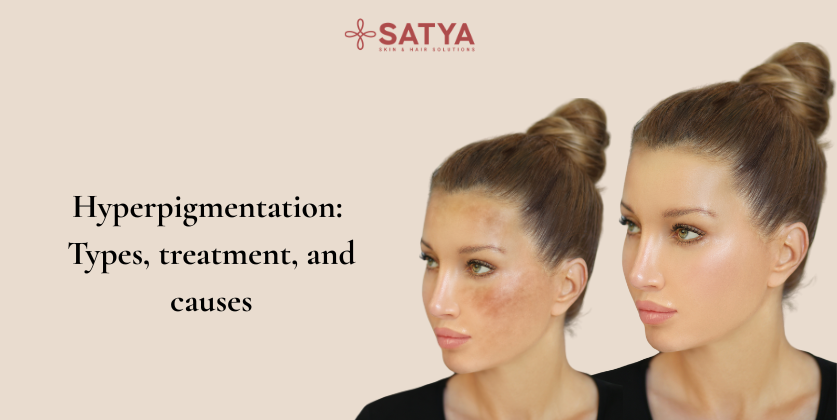
Discovering dark patches, uneven spots, or stubborn facial discoloration can be an incredibly frustrating experience. For many individuals in Gurgaon and Delhi NCR, these uneven tones feel like an obstacle to clear, radiant skin. If you are struggling with hyperpigmentation, you are dealing with a highly common but medically complex skin concern that affects people of all skin types.
Treating it effectively requires moving past temporary salon facials or heavily marketed internet serums. At Satya Skin & Hair Solutions, led by the clinical expertise of Dr. Ruchi Agarwal, we believe that restoring an even skin tone demands a scientific approach. By diagnosing the precise depth and biological trigger of the excess pigment, we can replace guesswork with medically proven clinical solutions.
What is Hyperpigmentation?
Hyperpigmentation is a broad medical term used to describe skin discoloration where certain areas of your skin become darker than the surrounding tissue. This condition can manifest in small, localized spots, cover larger patches across the face, or, in rare instances, affect the entire body.
At a biological level, this darkening occurs when specialized cells called melanocytes produce an excess amount of melanin the natural pigment responsible for giving your skin, hair, and eyes their distinct color. When these cells become overactive or damaged, the excess pigment is deposited deep within the structural layers of the skin, resulting in flat patches that look brown, black, gray, or red compared to the healthy skin around them.
What Factors Cause Hyperpigmentation?
To clear dark spots permanently, we must first answer a critical question: what triggers the overproduction of melanin? At our clinics, we encounter several distinct factors that cause hyperpigmentation. Pinpointing your exact trigger is essential because the wrong treatment can inadvertently aggravate the cells and make the darkening worse.
Sun Damage and UV Exposure
It is well-established that ultraviolet (UV) radiation from the sun is highly damaging to the skin. In fact, chronic UV exposure is responsible for up to 80% of the signs of premature skin aging. When solar rays hit unprotected skin, they stimulate melanin production as a defense mechanism to shield your DNA. Over time, this cumulative exposure leads to localized clusters of pigment known as sunspots, age spots, or solar lentigines.
Chloasma and Melasma (Hormonal Triggers)
Deep, symmetrical patches of dark pigmentation appearing on the cheeks, forehead, nose, or upper lip often point to hormonal shifts. This specific condition is called melasma or chloasma. It is frequently, though not exclusively, triggered by fluctuations in pregnancy hormones, earning it the clinical nickname “the mask of pregnancy.” Fluctuations in birth control pills or underlying endocrine shifts can also cause hyperpigmentation of this nature, requiring careful hormonal balancing alongside topical care.
Post-Inflammatory Hyperpigmentation (PIH)
When the skin experiences an inflammatory injury or trauma, it responds by triggering a healing cascade. Unfortunately, this inflammation can also send nearby melanocytes into overdrive. Once conditions like cystic acne, eczema, or psoriasis heal, they often leave behind flat, dark red or brown marks. PIH is particularly prevalent in richer Indian skin tones, where the baseline melanin activity is naturally higher.
Medical Conditions and Medications
In some clinical scenarios, systemic changes within the body can manifest on the surface of the skin. Certain medical conditions, such as Addison’s disease (an adrenal gland disorder), can cause widespread darkening.
Additionally, specific medications, including non-steroidal anti-inflammatory drugs (NSAIDs) or antimalarials, can trigger pigment retention. If you are uncertain about the true underlying cause, seeking a professional evaluation from a certified dermatologist is always the safest course of action.
How to Prevent Hyperpigmentation Effectively
While you cannot completely alter your genetic predisposition or prevent inevitable hormonal shifts, you can take deliberate, proactive steps to defend your skin. Learning how to prevent hyperpigmentation from worsening is half the battle in maintaining long-term skin clarity.
Minimize Direct Sunlight Exposure
The intense sun in the Delhi NCR region is a major catalyst for pigment activation. Try to restrict your time outdoors during peak UV hours, typically between 10 AM and 2 PM. When you are outside, actively seek shade under an awning or use a physical umbrella to shield your skin from direct exposure.
Wear a Wide-Brimmed Hat
Physical barriers provide highly reliable protection. Incorporate a wide-brimmed hat into your outdoor routine to throw a consistent shadow over your face, scalp, and neck, preventing the sun from exciting your melanocytes.
Avoid Picking and Touching the Skin
Scratching, picking, or forcefully squeezing an acne lesion, insect bite, or minor scab inflicts mechanical trauma on the tissue. This mechanical injury intensifies the localized inflammatory phase, directly leading to post-inflammatory marks. Keep your hands off active spots, and always wash your hands thoroughly before applying skincare or makeup.
Integrate Targeted Antioxidants
Antioxidants work by neutralizing free radicals unstable molecules generated by sun exposure and pollution that degrade cellular health and trigger uneven pigmentation. Utilizing topical formulations featuring clinical-grade Vitamin C, Niacinamide, or Kojic Acid can help suppress melanin synthesis pathways, providing a brighter and more uniform complexion over time.
Apply a High-Quality SPF Daily
Unprotected exposure to daily daylight, even on overcast or cooler winter days, will darken existing spots. Make it a non-negotiable rule to apply a broad-spectrum sunscreen with an SPF of 30 or higher every single morning. For residents dealing with the intense urban climate of Gurgaon and Delhi, reapplication every three hours during prolonged outdoor activity is essential to keep the protective shield intact.
Advanced Clinical Hyperpigmentation Treatment Options
When lifestyle changes and over-the-counter serums fail to reach the deep-seated melanin deposits, professional dermatological intervention becomes necessary. At Satya Skin & Hair Solutions, we specialize in advanced, medical-grade hyperpigmentation treatment protocols tailored for Indian skin.
Q-Switched Laser Toning
This is widely considered a gold-standard technology for deep dermal pigment. The laser emits ultra-short, nanosecond pulses of light energy that pass harmlessly through the surface layer of the skin. This energy is selectively absorbed by the dense clusters of melanin, shattering them into microscopic particles.
Your body’s natural lymphatic system then naturally flushes these fragments away over the following weeks. This non-invasive hyperpigmentation treatment is highly effective for melasma and deep tanning, requiring zero downtime.
Medical-Grade Chemical Peels
Unlike standard salon facials, our clinical chemical peels utilize highly controlled, precise concentrations of alpha-hydroxy acids (AHAs) and beta-hydroxy acids (BHAs), such as Glycolic, Salicylic, or customized TCA blends. These peels gently dissolve the intercellular glue holding dead, pigmented cells together, accelerating cellular turnover. This process lifts away surface discoloration, refines overall texture, and reveals unblemished skin underneath.
Carbon Laser Facials
Often utilized for instant rejuvenation and skin clarifying, Carbon Laser Facials procedure involves applying a thin layer of liquid carbon across the face. The carbon sinks deep into the pores, binding to dead skin cells, excess sebum, and superficial pigment. When a specialized laser is passed over the area, it instantly vaporizes the carbon particles, clearing away surface debris and providing immediate brightness.
Microneedling Radiofrequency (MNRF) & Mesotherapy
When pigmentation is accompanied by structural issues like acne scarring or premature aging, advanced therapies like MNRF or targeted mesotherapy are employed. Mesotherapy allows us to deliver potent skin-brightening cocktails containing ingredients like Tranexamic Acid or Glutathione directly into the deeper layers of the skin where topical creams can never fully penetrate.
Comparing Treatment Pathways: Lasers vs. Chemical Peels
Choosing the right intervention depends entirely on where the excess melanin is residing within your skin’s layers.
| Clinical Feature | Q-Switched Laser Toning | Medical Chemical Peels |
| Primary Target | Deep dermal pigment, melasma, and severe tanning | Superficial epidermal pigment, acne marks, and sunspots |
| How it Works | Shatters deep melanin via acoustic light energy | Exfoliates the surface layer to lift superficial pigment |
| Expected Downtime | Zero downtime; minor temporary redness for an hour | 2 to 5 days of mild, dry flaking or peeling |
| Treatment Sensation | Mild, snap-like tingling sensation | Warmth, mild stinging, or a prickling sensation |
| Collagen Benefit | Stimulates deep dermal collagen over time | Primarily focused on surface texture refinement |
The Satya Philosophy: Dr. Ruchi’s Expert Approach to Skin Health
At Satya Skin & Hair Solutions, we do not believe in offering generic, pre-packaged skin plans. Dr. Ruchi Agarwal approaches hyperpigmentation through a rigorous medical lens. Indian skin is structurally unique; its high concentration of natural melanin means it is highly sensitive to heat and friction.
An aggressive approach or using incorrect laser settings can cause “rebound hyperpigmentation,” leaving the skin darker than it was before.
Dr. Ruchi prioritizes patient safety and long-term skin health above all else. Our diagnostic process includes evaluating your internal health, such as checking for hormonal imbalances or vitamin deficiencies alongside an in-depth scalp and skin analysis. By combining internal optimization with state-of-the-art, non-invasive clinical therapies, we ensure your results are both safe and highly sustainable.
Take the First Step Toward Even, Glowing Skin
You do not have to let uneven patches and stubborn dark spots affect how you feel about your appearance. Realizing a clear, uniform skin tone is entirely achievable when you transition from cosmetic trends to evidence-based medical treatments.
Schedule a comprehensive, doctor-led skin evaluation with Dr. Ruchi Agarwal at Satya Skin & Hair Solutions to discover a personalized roadmap back to your skin’s natural radiance.
Frequently Asked Questions (FAQs)
Yes, clinical treatments are highly safe when conducted by an experienced dermatologist using devices specifically calibrated for darker skin phenotypes. At Satya, Dr. Ruchi Agarwal customizes the energy parameters of our lasers and the strength of our peels to ensure effective clearing without triggering post-inflammatory darkening.
The removal of existing dark spots and surface pigment is long-lasting, but it requires ongoing maintenance. Because your melanocytes retain a biological memory of sun damage or hormonal shifts, absolute dedication to sun protection and a customized skincare routine is required to prevent new spots from forming in the future.
For very mild, superficial tanning or faint post-acne marks, high-quality topical serums can be effective over several months. However, for deep-seated dermal pigment, stubborn melasma, or long-term sun damage, clinical lasers are significantly superior. Lasers can penetrate into the deeper layers of the dermis to break up pigment clusters that topical creams simply cannot reach.
The overall cost is highly variable and depends on the specific technology used, the surface area being treated, and the total number of sessions required for optimal clearing. During your personal consultation at Satya, we provide a complete, transparent breakdown of the costs based on your specific diagnosis.
Our advanced laser toning sessions feature virtually zero downtime. You may experience a very mild, pinkish flush across the treated area immediately following the procedure, which typically subsides within an hour. You can easily return to your normal workspace or daily routine in Gurgaon or Delhi right after leaving the clinic.