When Rohit Sharma lifted the T20 World Cup trophy in 2024, millions of fans celebrated the greatest captain Indian cricket has ever seen. But alongside talk of his batting and leadership, a quieter conversation has been growing for years about the Rohit Sharma hair transplant, his visibly fuller hairline, and what lies beneath that famous cap.
As a dermatologist and hair transplant specialist, I get asked about this regularly at Satya Skin & Hair Solutions. The question is not idle gossip it is a genuinely useful case study in modern hair restoration, the real decisions patients face, and the risks that can follow a transplant if not managed carefully.
Dr. Shail Gupta, Hair Transplant Surgeon, Satya Skin & Hair Solutions, Gurgaon & Delhi
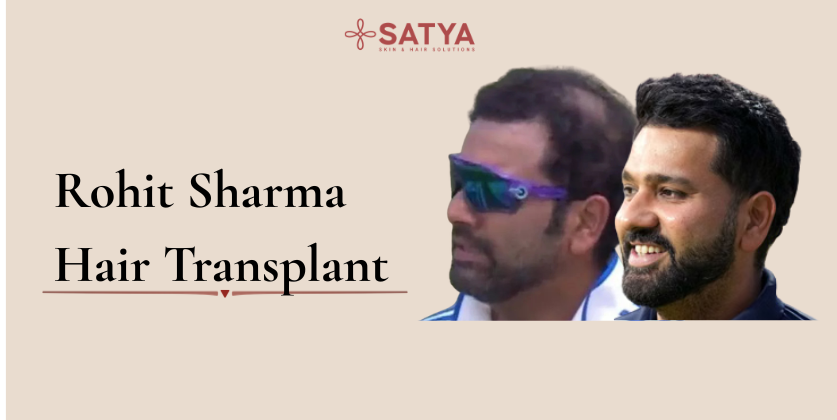
What Publicly Available Pictures Suggest About Rohit Sharma’s Hair
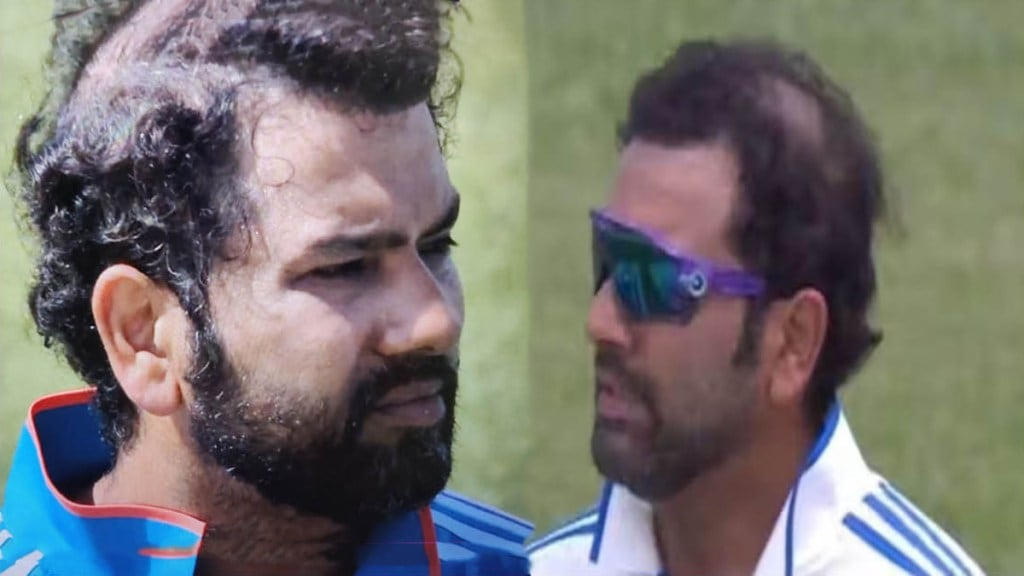
Looking at photographs of Rohit Sharma across different years, a visible change in hairline density and frontal coverage is evident. Based on these public images alone and emphasising that these are clinical observations, not confirmed facts the following pattern appears likely:
- Significant hair loss in the frontal and crown regions in earlier photographs
- A noticeably restored frontal hairline in more recent images
- What appears to be a hairpiece or scalp system covering the crown and mid-scalp area
This combination a hair transplant at the front and a patch or scalp system at the back is a practical and increasingly common strategy. We see this approach used by many public figures, including actors and sportsmen. The transplanted zone gives a natural-looking hairline, while the crown, which requires a far larger graft count, is covered cosmetically.
Rohit Sharma Hair Transplant Before and After: Reading the Visual Evidence
The Rohit Sharma hair transplant before and after comparison in publicly available images is instructive. In earlier photographs, there is clear thinning and recession at the temples and a visible bald area progressing toward the crown. In recent appearances, the frontal hairline appears denser, more defined, and younger in character.
This is consistent with a well-performed FUE (Follicular Unit Extraction) hair transplant in the frontal zone. The hairline design appears natural not unnaturally straight or aggressive which suggests experienced hands were involved.
What the Crown Region Tells Us
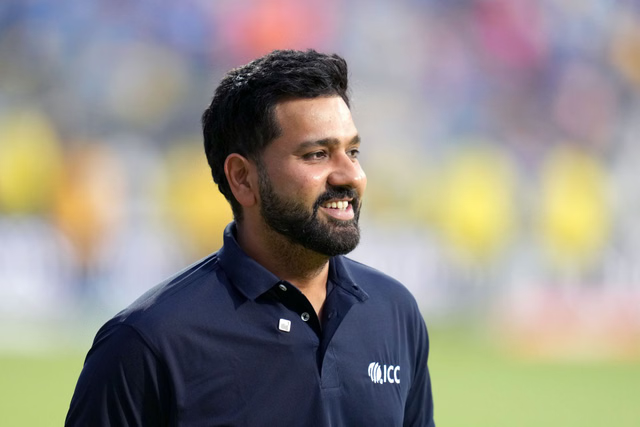
The crown and mid-scalp show a different picture. The coverage in recent photos suggests a hairpiece or scalp system rather than transplanted hair. This is an entirely reasonable clinical decision. Restoring the crown through surgery alone requires 2,500 to 4,000 additional grafts, and in progressive hair loss especially in younger menusing those grafts at the crown can exhaust the donor supply prematurely, leaving nothing for future needs.
At Satya, we call this long-term thinking our Future-Ready Transplant philosophy. Grafts are not unlimited. How you allocate them today determines what is possible five or ten years from now.
The Risk That Rarely Gets Discussed: Post-Transplant Medications in Sportsmen
This is perhaps the most important section of this article and the one most relevant to every patient considering a hair transplant, not just public figures.
After a hair transplant, the standard of care in many clinics includes prescribing Finasteride (1mg daily) and Minoxidil (topical or oral) to preserve existing hair and slow further loss. For most patients, this is presented as routine and necessary. What is rarely communicated clearly are the risks especially for active individuals, athletes, and anyone with demanding professional responsibilities.
Finasteride: The Side Effects That Can Derail a Career
Finasteride works by reducing DHT (dihydrotestosterone), the hormone responsible for male pattern hair loss. However, the same hormonal pathway it blocks plays a role in many other bodily functions. The documented side effects, though they do not affect every patient, include:
- Sexual dysfunction: reduced libido, erectile difficulty, ejaculatory changes
- Brain fog and clouding of consciousness: difficulty with focus and cognitive sharpness
- Depression and low mood, including in some cases suicidal ideation
- Cardiac effects: tachycardia (elevated heart rate) and in rare cases arrhythmias
- Post-Finasteride Syndrome: a cluster of symptoms that can persist even after stopping the drug
For a professional cricketer or any elite sportsman these are not abstract statistics. Cognitive sharpness, reaction time, cardiovascular health, and mental stability are not peripheral concerns. They are the foundation of performance. Cardiac arrhythmias in a sportsman are a serious clinical risk. Depression or brain fog can end careers quietly, in ways that are never attributed to the medication.
We have seen cases involving Indian and international cricketers, as well as athletes from other sports, where long-term use of standard post-transplant medications has had a measurable impact on performance and wellbeing. These conversations do not happen publicly, but they happen in consulting rooms.
Satya’s Min-Made Microdosing Approach: Health Bhi, Hair Bhi
At Satya Skin & Hair Solutions, we refuse to treat post-transplant medication as a routine checkbox. Our approach is built on a principle we describe simply: health bhi, hair bhi your hair and your health, together, not at the expense of one another.
The Min-Made Microdosing Protocol developed at our clinic offers a different path:
- Medications are personalised to the lowest effective dose, not given at full standard doses automatically
- Finasteride use is carefully evaluated in many cases, alternatives or topical formulations are preferred to reduce systemic exposure
- Minoxidil dosing is calibrated cardiac safety is reviewed, particularly for patients with active lifestyles or athletic demands
- Regular monitoring of side effects using specific assessments, not just symptom self-reporting
- A clear plan for tapering or substituting medications if any concerning symptoms emerge
This protocol is especially relevant for sportsmen, young professionals, and anyone whose career, focus, or physical performance would be affected by cognitive or cardiovascular side effects.
Is a Hair Transplant the Right Choice? Understanding the Full Picture
Who Is a Good Candidate?
A hair transplant is appropriate when hair loss has stabilised, there is adequate donor hair, and the patient has realistic expectations. For younger men with active, progressive loss, timing matters enormously.
If Rohit Sharma’s hair loss was addressed early and strategically which the images suggest it may have been the grafts could be preserved and results sustained for longer. That is the goal of any well-planned hair restoration programme.
What Happens If You Rush the Process?
- Transplanted hair survives, but surrounding native hair continues to thin
- Further transplants are needed, depleting the donor area prematurely
- A young patient may look restored at 30 but have nothing left to work with at 45
This is why at Satya, every patient consultation includes a long-term hair loss projection, not just a count of grafts for today.
Also Read: Mohammad Shami Hair Transplant
What Technique Was Likely Used? FUE vs FUT
Based on the visual evidence of Rohit Sharma’s hair transplant before and after images, and the absence of any visible linear scar at the back of the head (seen in public photos without hats), the procedure is most likely FUE (Follicular Unit Extraction).
| Feature | FUE | FUT (Strip) |
| Scarring | Minimal dot scars | Linear scar at donor site |
| Recovery | 7–10 days | 10–14 days |
| Graft yield per session | 1,500–4,000 | 2,000–5,000 |
| Best for | Athletes, shorter hair styles | Maximum volume in one sitting |
| Long-term donor impact | Lower if MHT used | Moderate, depends on laxity |
At Satya, our signature DSFT (Direct Stimulated Follicular Transplant) and MHT (Maximum Harvesting Technique) protocols are designed to maximise graft quality while preserving the donor area critical for long-term results and for patients who may need future procedures.
The Satya Approach to Hair Transplant: Less Medicine, Less Donor, Maximum Skill
Our founding philosophy Less Medicine. Less Donor. Maximum Skill. is not a marketing slogan. It is the clinical framework that guides every decision at Satya Skin & Hair Solutions.
- Less Medicine: We do not prescribe full-dose systemic medications unless genuinely necessary. The Min-Made Microdosing approach is our default, not an exception.
- Less Donor: Every graft is treated as a non-renewable resource. We plan conservatively for the long term, not aggressively for immediate impact.
- Maximum Skill: Results come from surgical precision and artistry natural hairline design, correct angulation, appropriate density not from volume of grafts alone.
Whether a patient is a professional cricketer, a working professional, or a student these principles apply equally.
What Would the Right Treatment Plan Look Like in Such a Case?
Without examining any patient directly, a clinically sound plan for a case presenting as Rohit Sharma’s hair loss pattern might include:
- FUE transplant to the frontal hairline1,800 to 2,500 grafts, placed with natural angulation using our Mimic Nature Hairline technique
- Scalp system or SMP (scalp micropigmentation) for the crown and mid-scalp to conserve grafts for future use
- Zero-Pain Anaesthesia Protocol during the procedure for a comfortable, low-stress experience
- Microdosed post-operative medication plan avoiding full-dose Finasteride, monitoring for any cardiac or neurological symptoms
- Annual review of hair loss progression with future graft planning built in from day one
Thinking About a Hair Transplant? Start With the Right Consultation.
The Rohit Sharma hair transplant discussion is a useful mirror for every patient considering hair restoration. It raises the right questions: Am I acting at the right time? Are my grafts being planned for the long term? Is my post-operative medication plan safe for my health and my life?
At Satya Skin & Hair Solutions, Dr. Shaiil Gupta and his team provide a thorough assessment that covers not just today’s hair loss, but your 10-year projection, donor supply planning, technique selection, and a medication protocol that genuinely protects your health.
| Book a consultation at Satya Skin & Hair Solutions – Gurgaon (DLF Phase 4 / Galleria Market) or Delhi (Pitampura).Visit: [satyaskinhair.com] | Call: [+919999570494] |
Frequently Asked Questions About Hair Transplants
Did Rohit Sharma actually have a hair transplant?
There is no official confirmation from Rohit Sharma or his representatives. However, comparing publicly available photographs across different years, clinical changes consistent with a frontal hair transplant are visible. This article is entirely based on publicly available images and is educational in nature.
What does the Rohit Sharma hair transplant before and after show?
Publicly available photographs suggest a restored frontal hairline, with denser coverage at the temples and front compared to earlier images. The crown area in recent photographs is consistent with a hairpiece or scalp system. This is a commonly used combination approach in hair restoration.
Is Finasteride safe for sportsmen and athletes?
Finasteride carries real side effect risks including cardiovascular effects, depression, and cognitive fog that are particularly significant for athletes and active professionals. At Satya, we do not prescribe full-dose Finasteride routinely. Our Min-Made Microdosing protocol is designed to protect performance and health while managing hair loss.
How many grafts are needed for a result like this?
For a frontal hairline restoration with temple coverage, typically 1,800 to 2,500 grafts are sufficient in a single session. The crown area, if addressed surgically, would require an additional 2,000 to 4,000 grafts. This is why preserving donor supply is a critical long-term planning decision.
What is the best hair transplant technique for someone who plays sport?
FUE (Follicular Unit Extraction) is generally preferred for active individuals it leaves no linear scar, allows shorter hairstyles, and has a faster return-to-activity timeline. At Satya, our DSFT technique combines FUE precision with Direct Implantation for superior graft survival rates.
Can hair loss be treated without a transplant?
Yes, in early stages particularly with microdosed medications, PRP (Platelet-Rich Plasma) therapy, and lifestyle management. A transplant is most effective when combined with a medical plan that slows ongoing loss. A transplant alone does not stop hair loss in the surrounding native hair.
What is the Zero-Pain Anaesthesia Protocol at Satya?
Satya’s Zero-Pain Anaesthesia Protocol is a technique developed to make the anaesthesia injection itself comfortable and virtually painless the part of the procedure that patients most commonly find uncomfortable. This is achieved through a combination of needle technique, pressure buffering, and sequential application.
Editorial Disclaimer: This article is based entirely on publicly available photographs and media reports. Satya Skin & Hair Solutions has not treated Rohit Sharma, and no clinical relationship exists. All clinical observations are educational and speculative in nature.